
Sidemount in Mexico’s Cenotes: Benefits and Configuration
Sidemount diving has become one of the most versatile configurations for exploring the cenotes and underwater cave systems of Mexico’s Yucatan Peninsula.
With the cylinders positioned alongside the diver rather than mounted on the back, sidemount offers excellent streamlining, flexibility and independent gas supplies. These advantages make it particularly well suited to cave diving, technical diving and cenote diving around Playa del Carmen.
Discover our Sidemount Diver Course in Playa del Carmen
What Is Sidemount Diving?
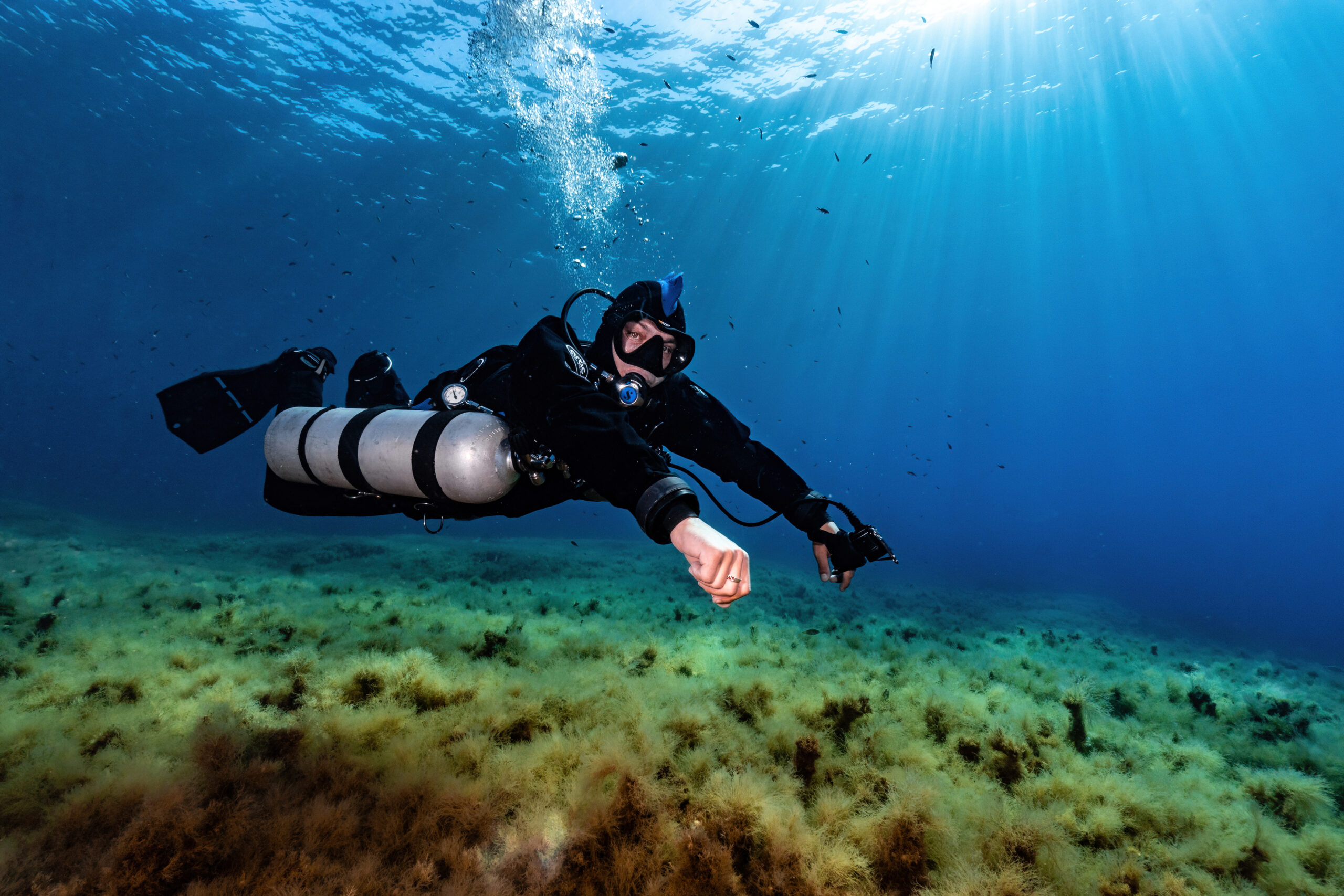
Sidemount diving is a configuration in which the cylinders are attached along the sides of the diver instead of being mounted on the back.
Originally developed for access to confined environments, sidemount is now widely used in cave diving, technical diving and recreational diving.
Around Playa del Carmen and the Riviera Maya, it is particularly popular among divers exploring the extensive cenote and underwater cave systems of the Yucatan Peninsula.
Why Is Sidemount Ideal for Mexico’s Cenotes?
The underwater cave systems of the Yucatan include passages of very different shapes and dimensions.
A properly configured sidemount system can provide several advantages:
- Excellent streamlining
- Greater freedom of movement
- Easier access to confined passages
- Independent cylinder management
- Ability to reposition cylinders when necessary
- Excellent control in complex environments
For trained cave divers, the possibility of adjusting or temporarily moving a cylinder can also provide access to passages that would be difficult or impossible to negotiate with a traditional back-mounted configuration.
This versatility has made sidemount an important configuration in cave diving throughout the Riviera Maya.
Why do so many cave divers choose sidemount?
Trim and Streamlining
Good trim is fundamental in sidemount diving.
When the system is properly configured, the cylinders remain streamlined alongside the diver’s body, helping maintain an efficient horizontal position.
The benefits include:
- Reduced drag
- Efficient propulsion
- Greater stability
- Better control in confined environments
- Less unnecessary effort during longer dives
However, sidemount does not automatically create good trim. Correct equipment adjustment, weighting, cylinder positioning and buoyancy control must all be learned and practiced.
This is one of the main reasons why proper sidemount training is so important.
Learn Sidemount Diving in Playa del Carmen
Independent Gas Supplies and Redundancy
A typical two-cylinder sidemount configuration provides two independent gas supplies.
Each cylinder has its own regulator, allowing the diver to monitor and manage the cylinders independently.
This provides important redundancy for technical and overhead-environment diving.
But redundancy alone does not create safety. The diver must also learn correct gas management, regulator procedures and responses to equipment failures.
These skills form an essential part of serious sidemount training.
Greater Comfort and Flexibility
Another major advantage of sidemount is that the cylinders do not have to remain permanently attached to the diver’s back.
Depending on the dive site and logistics, cylinders can often be attached in the water or transported individually.
This can make entries and exits easier and may reduce the amount of heavy equipment carried on the back.
For some divers, this provides greater comfort and flexibility than a traditional back-mounted twinset.
Access to Restricted Passages and Advanced Exploration
One of the reasons sidemount became so closely associated with cave diving is its adaptability in confined environments.
For appropriately trained cave divers, sidemount can facilitate:
- Navigation through low passages
- Movement through narrow sections
- Better positioning around obstacles
- Repositioning cylinders when necessary
- Exploration of passages unsuitable for larger back-mounted configurations
These capabilities become particularly valuable in some of the complex underwater cave systems of the Yucatan.
It is important, however, to distinguish sidemount training from cave-diving training. Using sidemount does not qualify a diver to enter a cave environment beyond the limits of their certification.
Explore Cave Diving Training in Mexico
Sidemount and Wreck Diving
Sidemount is not limited to cenotes and caves.
The configuration can also be useful for wreck diving, particularly when penetration or confined spaces are involved.
Its advantages may include:
- Streamlined equipment
- Greater mobility
- Independent cylinders
- Easier movement through restricted areas
- Ability to adjust cylinder position when required
For appropriately trained technical wreck divers, these characteristics can make sidemount a highly versatile configuration.
Sidemount for Technical and Decompression Diving
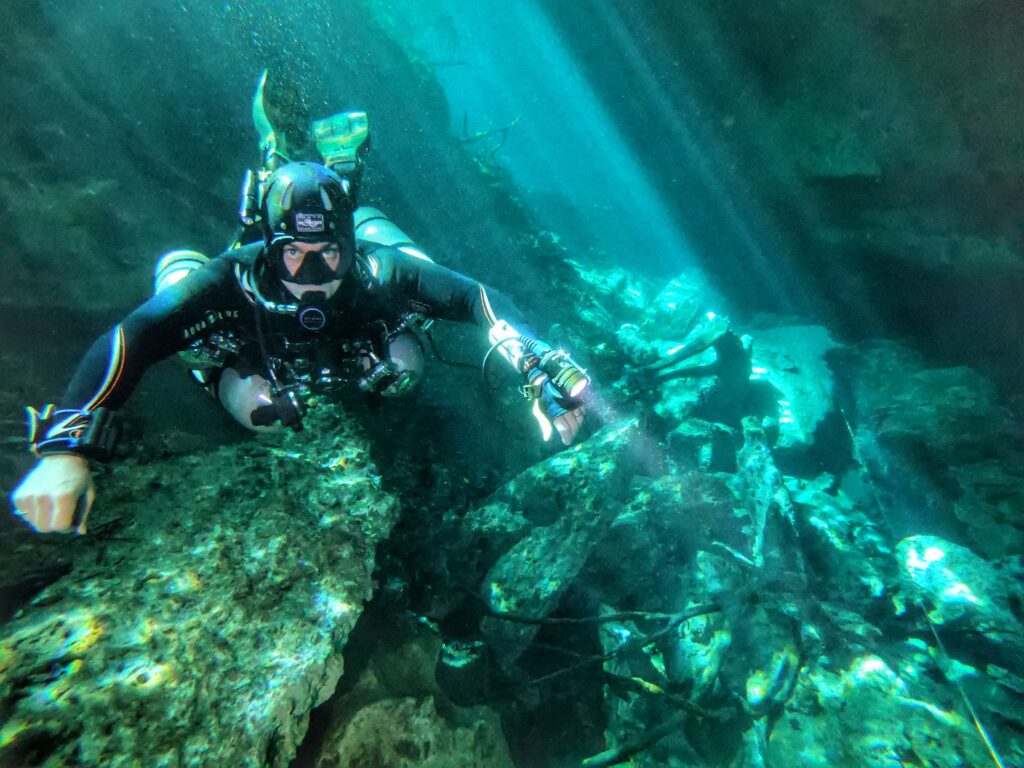
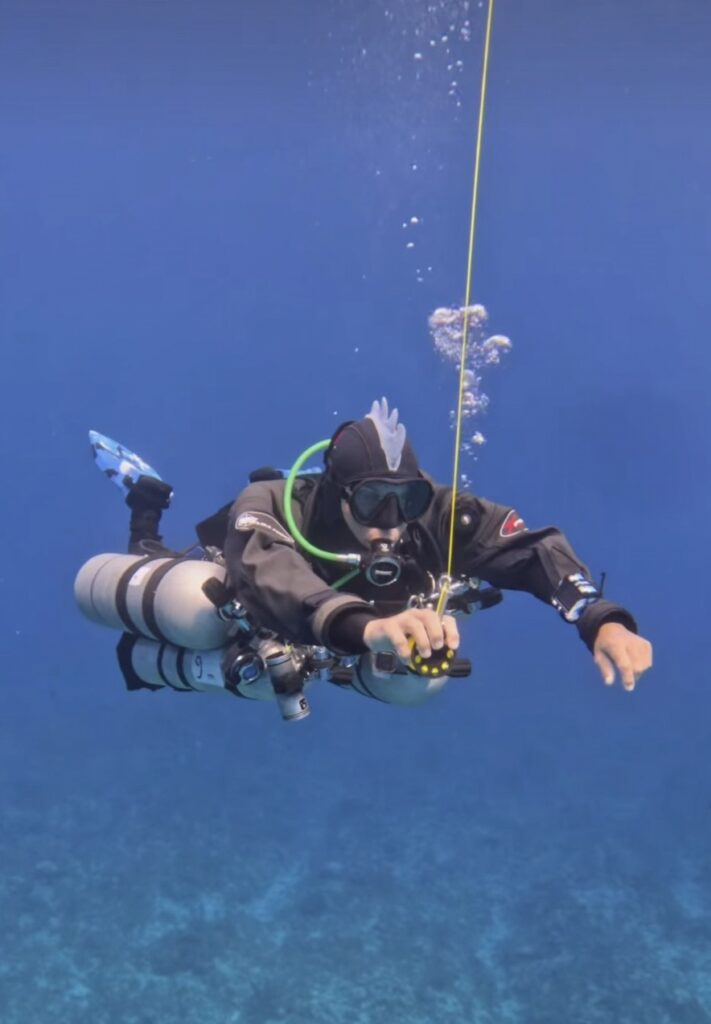
Sidemount can also be used for technical dives involving decompression.
Depending on the training, dive plan and configuration, additional cylinders can be carried for decompression gases.
This allows sidemount to be used for progressively more advanced technical diving while maintaining the fundamental advantages of lateral cylinder positioning.
Correct configuration and gas management become increasingly important as the complexity of the dive increases.
IANTD Sidemount Training in Playa del Carmen
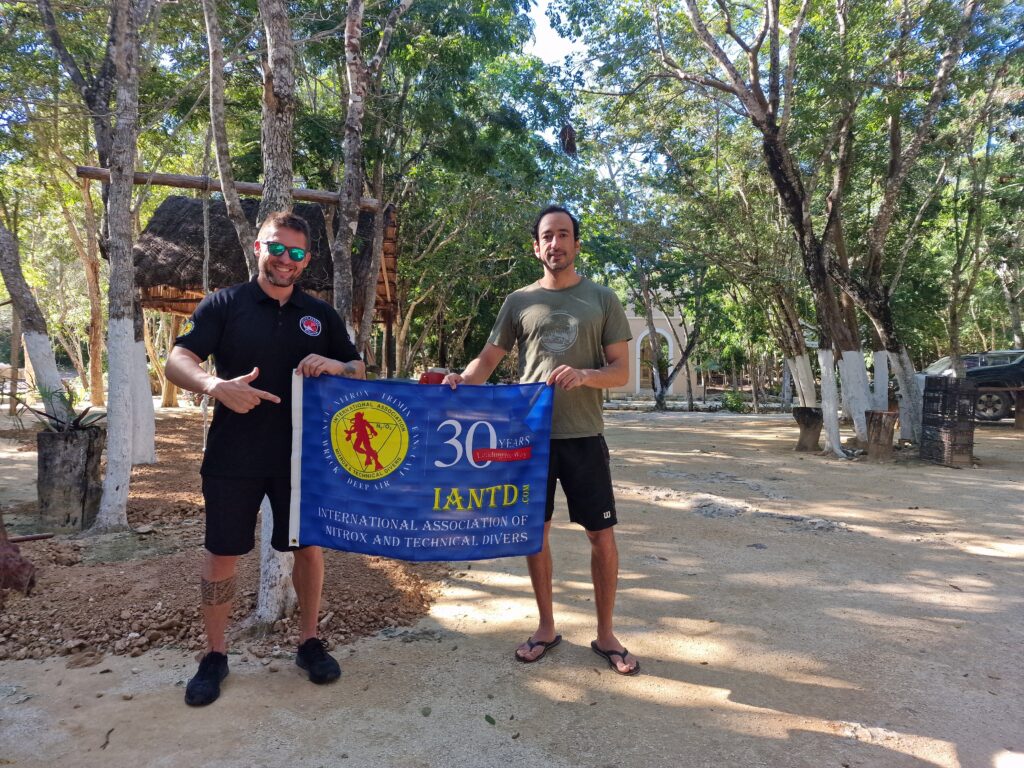
Sidemount is much more than simply moving the cylinders from your back to your sides.
A well-designed training program develops the skills necessary to configure and manage the system efficiently underwater.
Training focuses on areas such as:
- Sidemount equipment configuration and adjustment
- Buoyancy and trim
- Cylinder positioning and management
- Gas management
- Propulsion techniques
- Equipment procedures
- Problem solving and emergency procedures
The objective is to develop a configuration that is stable, streamlined and adapted to the diver, rather than simply copying another diver’s equipment setup.
Discover the IANTD Sidemount Diver Course
Sidemount Training with Halocline Explorers
Based in Playa del Carmen, Halocline Explorers provides personalized sidemount training in one of the world’s most renowned regions for cenote and cave diving.
Training with Julien Garnier, IANTD Instructor Trainer, focuses on developing genuine control of the configuration rather than simply completing the minimum requirements for certification.
Particular attention is given to:
Buoyancy • Trim • Propulsion • Equipment configuration • Gas management • Problem solving
The cenotes of the Riviera Maya provide an exceptional environment in which to develop these skills progressively and understand how sidemount can be applied to different types of diving.
Start Your Sidemount Training in Playa del Carmen
Who Is Sidemount Diving For?
Sidemount can be useful for very different types of divers.
Some choose it for comfort and equipment flexibility. Others use it as a progression toward technical diving, cave diving or more advanced exploration.
Whatever the objective, good buoyancy control, awareness and equipment discipline are important foundations.
The most important point is not simply to dive with cylinders on your sides, but to learn how to configure and manage the complete system correctly.
Is Sidemount Only for Cave Divers?
No.
Although sidemount has strong historical links with cave exploration, it is now used in many different environments.
It can be used for:
- Recreational diving
- Cenote diving
- Technical diving
- Cave diving
- Wreck diving
- Decompression diving
The configuration should always be selected according to the environment, the dive objectives and the diver’s training.
If your objective is eventually to progress into cave diving, you can also read our complete guide:
How to Start Cave Diving in Mexico
Sidemount or Backmount: Which Is Better?
Neither configuration is universally better.
Backmount and sidemount each have advantages depending on the dive.
Back-mounted doubles remain highly effective for many technical dives, while sidemount offers exceptional flexibility, independent cylinders and adaptability in confined environments.
The best configuration is therefore the one suited to the dive, the environment and the diver’s objectives.
For the underwater cave systems of the Yucatan, sidemount can offer significant advantages when used by properly trained divers.
Why Learn Sidemount in Playa del Carmen?
Playa del Carmen is located close to an extraordinary concentration of cenotes and underwater cave systems.
This gives divers access to environments where the benefits of good trim, precise propulsion, streamlined equipment and cylinder management become immediately apparent.
Rather than learning sidemount only as an equipment configuration, training in the Riviera Maya provides an opportunity to understand why the system was developed and how it can be used effectively underwater.
View the Sidemount Diver Course in Playa del Carmen
Conclusion: Sidemount Diving and the Cenotes of Mexico
Sidemount is one of the most versatile equipment configurations available to modern divers.
Its combination of streamlining, independent gas supplies, flexibility and adaptability makes it particularly well suited to the cenotes and underwater cave systems of Mexico.
But the real advantage of sidemount comes from learning to use it correctly.
With proper training, precise equipment adjustment and strong fundamental diving skills, sidemount can become an exceptional tool for progression toward cenote diving, technical diving, cave diving and advanced exploration.
At Halocline Explorers in Playa del Carmen, the objective is not simply to teach you how to wear sidemount cylinders, but to help you develop a configuration you can genuinely control and use efficiently underwater.
Ready to discover sidemount diving in Mexico?
Discover our Sidemount Diver Course in Playa del Carmen