
Scuba Diving in Cozumel: One of the Best Diving Experiences in the Caribbean
Located just 19 km off the coast of Playa del Carmen, Cozumel is considered one of the best scuba diving destinations in the Caribbean.
Famous for its crystal-clear water, spectacular coral reefs and world-renowned drift diving, the island attracts divers from around the world every year.
From the impressive coral formations of Palancar Reef to the dramatic drop-offs of Santa Rosa Wall and the C-53 wreck, scuba diving in Cozumel offers an incredible variety of underwater environments for both recreational and experienced divers.
How to Get to Cozumel from Playa del Carmen
Getting to Cozumel from Playa del Carmen is simple and convenient.
Passenger ferries connect Playa del Carmen with Cozumel in approximately 30 to 45 minutes, depending on sea conditions.
This proximity makes it possible to enjoy a full day of scuba diving in Cozumel while staying in Playa del Carmen or elsewhere on the Riviera Maya.
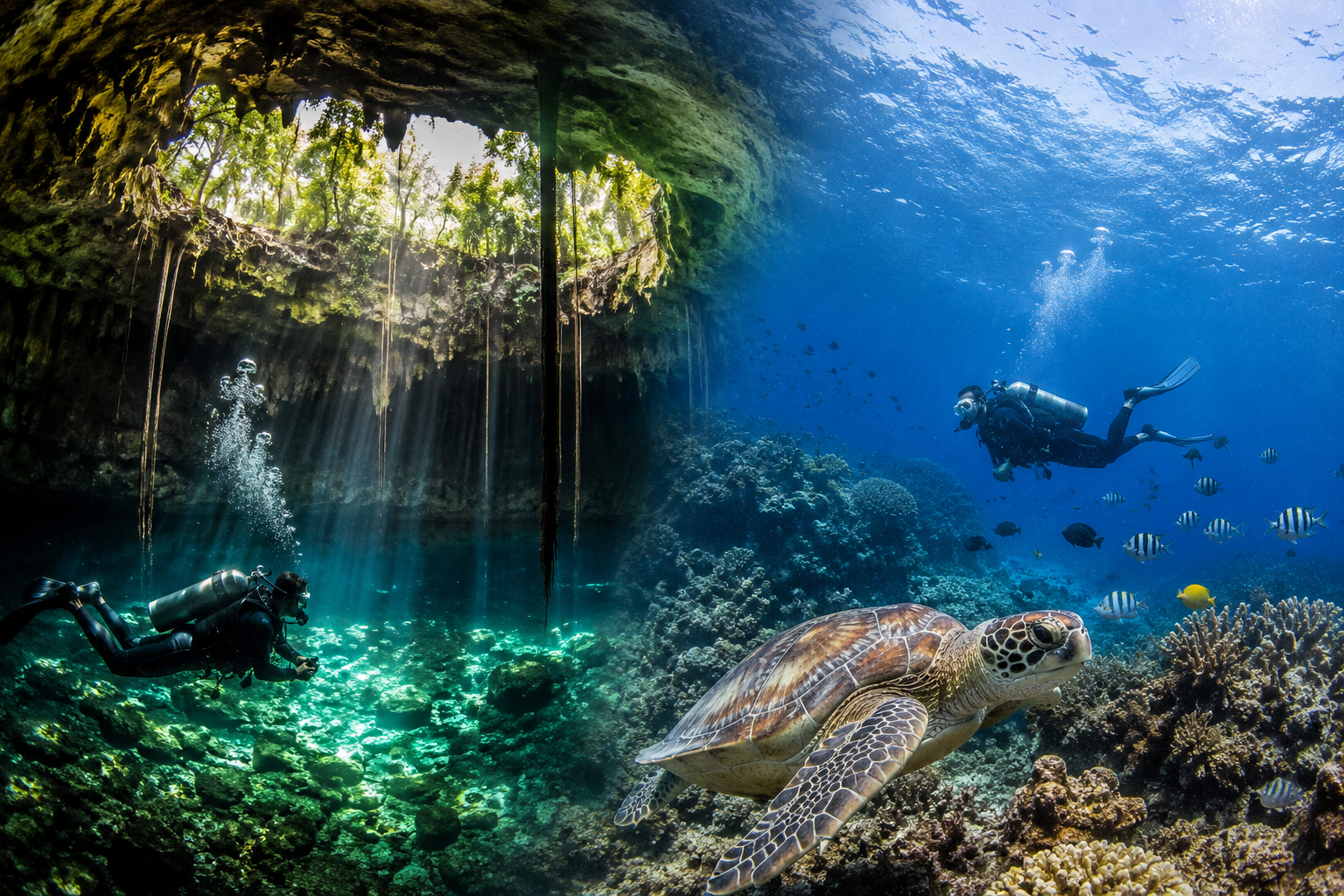
For divers visiting the region, it is also a great way to combine the cenotes of the Yucatan with the spectacular coral reefs of the Caribbean.
The Most Famous Dive Sites in Cozumel
Cozumel offers numerous dive sites, ranging from colorful reefs to dramatic walls, swim-throughs and wreck diving.
Palancar Reef
Palancar Reef is probably the most iconic reef system in Cozumel.
It includes several famous sections such as Palancar Gardens, Palancar Caves and Palancar Bricks.
Divers can explore enormous coral formations, canyons, natural tunnels and spectacular swim-throughs illuminated by Caribbean sunlight.
Visibility frequently exceeds 30 meters, creating exceptional underwater panoramas and making Palancar one of Cozumel’s signature diving experiences.
Santa Rosa Wall
Among the island’s most famous dives, Santa Rosa Wall is known for its dramatic drop-off descending into the deep blue waters of the Caribbean.
Huge sponges, overhangs and natural passages create an impressive underwater landscape.
The site is particularly popular with intermediate and advanced divers looking to experience the spectacular wall diving for which Cozumel is famous.
Colombia Reef
Located in the southern part of Cozumel, Colombia Reef is known for its massive coral formations, natural arches and frequent encounters with marine life.
Divers may encounter sea turtles, barracudas and eagle rays while drifting along the reef.
Currents are generally moderate, making Colombia an excellent example of classic Cozumel drift diving.
The C-53 Wreck: Diving into History
For wreck diving enthusiasts, the C-53 offers a completely different experience from Cozumel’s coral reefs.
Originally built during World War II and later operated by the Mexican Navy, the vessel was intentionally sunk in 2000 to create an artificial reef.
Today, the wreck is covered with coral and sponges and provides habitat for a variety of marine life.
Exploring the C-53 adds another dimension to a Cozumel diving trip and offers a fascinating contrast to the island’s natural reef systems.
Exceptional Marine Life
Cozumel’s waters support an impressive variety of marine life.
Divers can frequently encounter:
- Green and hawksbill turtles
- Spotted eagle rays
- Nurse sharks
- Barracudas
- Large groupers
- Moray eels
- Schools of snappers and jacks
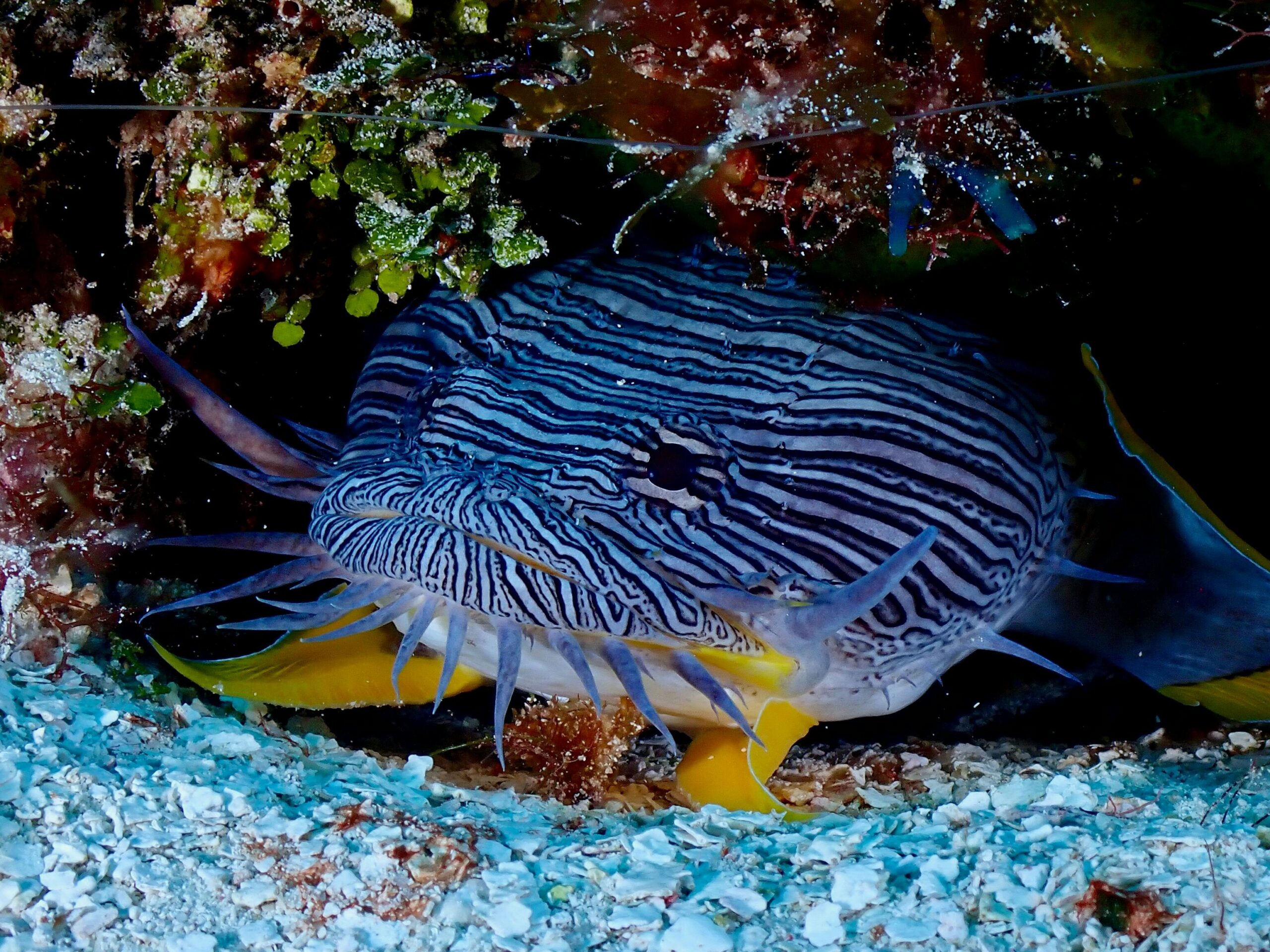
- The famous Splendid Toadfish, a species closely associated with Cozumel
This biological richness is one of the reasons so many divers return to the island year after year.
Cozumel’s Famous Drift Diving
Cozumel is internationally renowned for its drift diving.
Currents, often mild to moderate, naturally carry divers along the reefs, reducing the need for constant swimming.
The sensation of effortlessly flying above coral formations while the reef passes beneath you is one of the defining experiences of diving in Cozumel.
Some exposed dive sites can experience stronger currents, particularly around the southern walls of the island.
Conditions can therefore vary from one site and one day to another.
What Is the Best Time of Year to Dive in Cozumel?
Scuba diving in Cozumel is possible year-round, with water temperatures generally ranging from approximately 25°C to 29°C.
November to April often offers excellent visibility and the possibility of encountering eagle rays.
May to October generally brings warmer water, often calm conditions and excellent opportunities for underwater photography.
Whatever the season, Cozumel offers outstanding diving throughout most of the year.
Why Combine Cozumel Diving with the Cenotes?
One of the great advantages of staying in Playa del Carmen is the opportunity to experience two completely different underwater environments during the same trip.
On one day, you can drift over the coral reefs and walls of Cozumel.
On another, you can explore the crystal-clear freshwater and spectacular geological formations of the Yucatan cenotes.
For visiting divers, combining Caribbean reef diving with cenote diving is one of the best ways to experience the extraordinary underwater diversity of the Riviera Maya.
Dive Cozumel with Halocline Explorers
At Halocline Explorers, we organize Cozumel diving trips from Playa del Carmen.
Whether you are an Open Water diver or an experienced technical diver, dive sites can be selected according to the conditions and the experience level of the divers.
From the legendary reefs of Palancar to the dramatic drop-offs of Santa Rosa Wall and the C-53 wreck, every trip is an opportunity to discover why Cozumel is considered one of the Caribbean’s great scuba diving destinations.
If you are staying in Playa del Carmen and want to add Cozumel to your diving trip, contact us to organize your next underwater adventure in the turquoise waters of the Caribbean.
➜ Discover our Cozumel diving trips