
IANTD vs PADI vs SSI vs CMAS: Which Scuba Diving Agency Should You Choose?
When you start scuba diving, you quickly discover that there are several major training organizations and certification agencies.
Among the best known are PADI, SSI, CMAS and IANTD.
All of them provide pathways for learning to dive safely, but each organization has its own training philosophy, structure and areas of specialization.
So, what are the main differences between IANTD, PADI, SSI and CMAS, and why do some divers choose IANTD as they progress toward more advanced and technical diving?
PADI: The World’s Most Widely Known Scuba Diving Agency
PADI (Professional Association of Diving Instructors) is one of the most recognized and widely represented scuba diving organizations in the world.
Its approach focuses strongly on accessibility and recreational diving. Training programs are standardized, easy to follow and internationally recognized.
Strengths of PADI
- Worldwide presence
- Large network of dive centers
- Straightforward progression for recreational divers
- International recognition
Who Is PADI Best For?
PADI is particularly suitable for beginner and recreational divers who want a widely recognized certification that allows them to dive while traveling around the world.
SSI: A Modern and Flexible Approach to Scuba Training
SSI (Scuba Schools International) has become one of the world’s major scuba diving training organizations.
It is particularly known for its extensive digital learning materials and flexible educational approach.
For recreational diving, many of its training pathways are comparable to those offered by PADI.
Strengths of SSI
- Modern digital learning materials
- Flexible learning approach
- Large and growing international network
- Accessible training for beginner divers
Who Is SSI Best For?
SSI can be an excellent option for divers looking for a modern training system with a strong digital learning component.
CMAS: A Heritage of Clubs, Independence and Exploration
CMAS (Confédération Mondiale des Activités Subaquatiques) has a history closely connected to the development of modern scuba diving.
Founded with the participation of renowned underwater explorer Jacques-Yves Cousteau, CMAS remains particularly well represented through diving clubs, associations and national federations.
Strengths of CMAS
- Often very comprehensive training
- Strong culture of diver independence
- Extensive theoretical education
- International recognition
Who Is CMAS Best For?
CMAS is particularly suited to divers who appreciate in-depth training and the traditional diving-club environment.
IANTD: A Pioneer in Technical Diving
IANTD (International Association of Nitrox and Technical Divers) is closely associated with the development of modern technical diving.
Since the 1980s, IANTD has been one of the pioneering organizations involved in the development and wider adoption of Nitrox, advanced decompression procedures, mixed-gas diving and cave diving.
Today, IANTD provides training pathways for both recreational divers and highly experienced technical divers.
Strengths of IANTD
- Strong culture of safety and dive planning
- Training focused on understanding rather than simple repetition
- Strong reputation in technical diving
- Expertise in cave diving, Trimix and rebreather (CCR) diving
- Progressive development of diver independence
Who Is IANTD Best For?
IANTD is particularly suited to divers who want to progress beyond recreational diving and develop a deeper understanding of their equipment, diving environment and risk management.
IANTD vs PADI vs SSI vs CMAS: Which One Should You Choose?
There is no single answer that applies to every diver.
All of these organizations provide recognized scuba diving training pathways, and the best choice depends primarily on your goals as a diver.
If your priority is recreational diving and traveling around the world, PADI or SSI may offer a straightforward and widely available pathway.
If you enjoy comprehensive training within a traditional club environment, CMAS may be particularly appealing.
If your goal is to progress toward technical diving, cave diving, advanced wreck exploration, mixed gases or rebreather diving, IANTD offers a training structure strongly associated with these disciplines.
Ultimately, however, choosing a training agency is only part of the decision.
The quality of your instructor, the time dedicated to developing real skills and the training environment are also extremely important factors in your development as a diver.
Why We Chose IANTD at Halocline Explorers
At Halocline Explorers, we chose to train divers according to IANTD standards because of the organization’s emphasis on understanding, independence and mastery of diving skills.
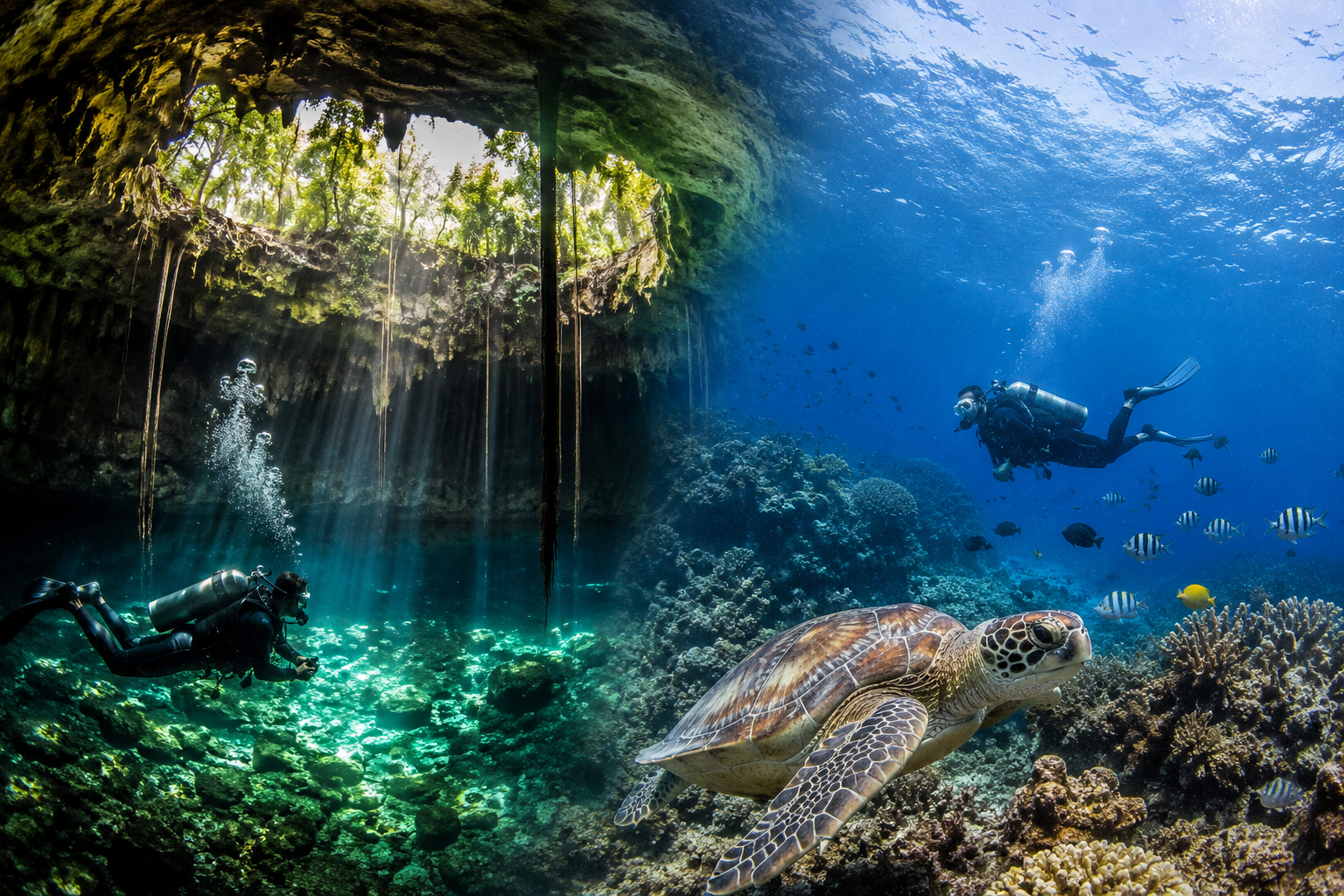
Whether you are an Open Water diver looking to discover the cenotes of Mexico or an experienced technical diver preparing for more advanced exploration, IANTD provides a structured progression through different levels of diving.
Our objective is not simply to help a diver obtain another certification.
It is to help develop better understanding, stronger skills, greater confidence and greater independence underwater.
This philosophy is particularly relevant in the environments in which we specialize: the cenotes and caves of Mexico, sidemount diving, technical diving and CCR.
➜ Discover our IANTD diving courses in Mexico