
Why Most Cave Divers Choose Sidemount
Last updated: August 2026
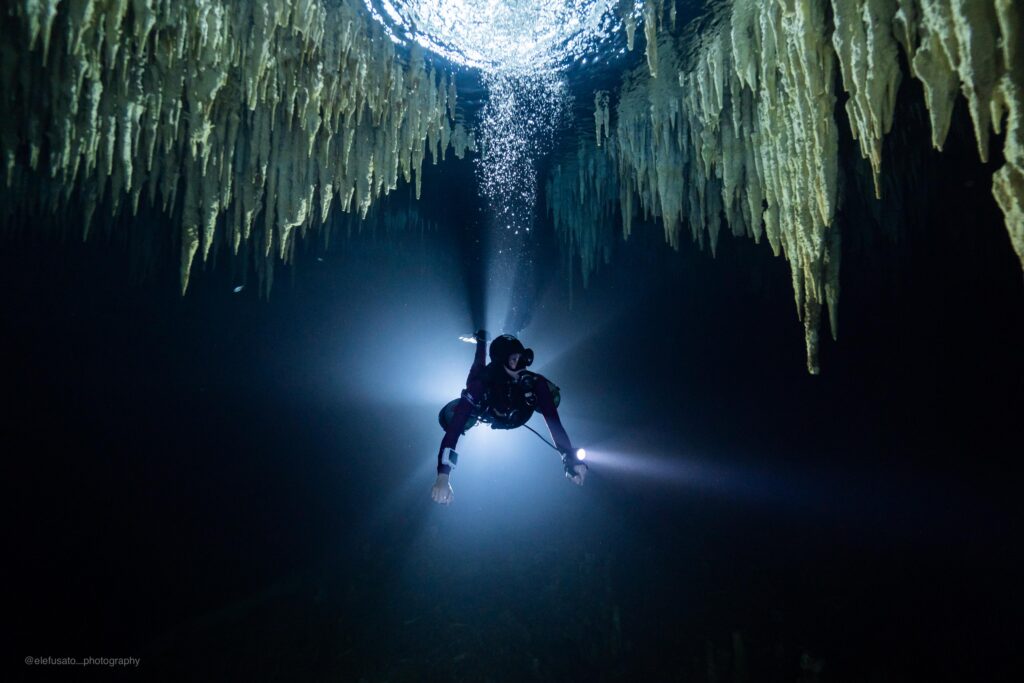
Imagine watching a team of explorers enter a submerged passage that has never been explored before.
None of them is carrying a traditional back-mounted twinset.
Their cylinders are attached along each side of their bodies, their profile is remarkably streamlined, and every diver seems to move with an extraordinary degree of freedom.
This is not a trend.
Nor is it simply an aesthetic choice.
If sidemount has become a preferred configuration for a large part of modern cave diving, it is because it addresses very real challenges that explorers have encountered underground for decades.
Yet many divers still believe that sidemount is reserved for technical divers or that it is simply another way of carrying cylinders.
The reality is quite different.
Sidemount developed from genuine constraints encountered underground. Its evolution is directly linked to the history of cave exploration and the constant search for a configuration that is safer, more efficient and better suited to confined environments.
Today, this configuration is no longer used only in caves.
It has become an excellent option for many ocean, wreck and technical dives, and every year more recreational divers are discovering its advantages.
In this article, we will explore how sidemount developed, why it became such an important configuration in cave diving, and when it can be one of the most effective equipment configurations available to divers today.
Sidemount Wasn’t Invented to Be Fashionable
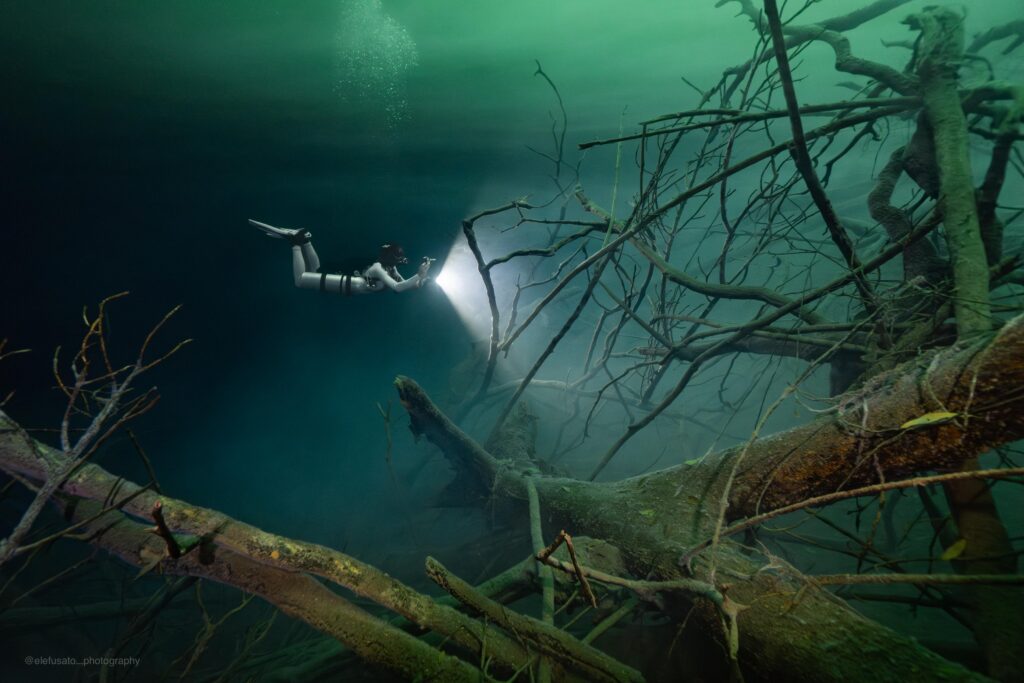
When sidemount first appeared, nobody was trying to create a new diving discipline or revolutionize scuba diving.
The first divers who adopted this configuration were simply looking for a solution to a problem.
How could they progress through passages where a back-mounted twinset simply could not fit?
Some caves contained extremely narrow restrictions.
Others required divers to negotiate low, winding passages or areas obstructed by rocks.
Under these conditions, carrying two cylinders on the back quickly became a limitation.
Explorers began attaching their cylinders to the sides of their bodies so they could temporarily remove one when necessary, pass through difficult restrictions and then reposition it a few metres farther into the cave.
This approach, born out of necessity, would gradually influence the development of cave diving.
What began as a practical solution evolved over the years into a complete equipment philosophy.
Divers quickly discovered that this configuration also provided excellent underwater stability, direct access to cylinder valves, effective equipment redundancy and exceptional freedom of movement in confined environments.
In other words, sidemount did not become popular simply because it was new.
It became popular because it addressed the real challenges of underwater cave exploration.
From British Caves to the Cenotes of Mexico: A Logical Evolution
The early use of sidemount can be traced back to exploration of the flooded caves of the United Kingdom, where divers needed to negotiate extremely narrow passages before reaching larger underwater sections.
At the time, diving equipment was heavy, relatively inflexible and poorly suited to this kind of environment.
Carrying cylinders at the sides of the body already provided valuable freedom of movement.
Years later, this philosophy was adopted and refined by divers exploring the extensive underwater cave systems of Florida.
As technical diving developed, sidemount configurations became increasingly sophisticated, balanced and comfortable.
Harnesses evolved.
Attachment systems improved.
Procedures became standardized.
When explorers began mapping the enormous cenote systems of Mexico’s Yucatán Peninsula, this evolution naturally continued.
The cenotes of Mexico provide access to kilometres of passages with extremely varied profiles: huge chambers, tunnels, narrow restrictions, depth changes and long penetrations.
Today, more than 1,500 kilometres of underwater passages have been explored across the Yucatán Peninsula, making the region one of the world’s major destinations for underwater cave exploration. New passages and connections continue to be discovered.
In this environment, sidemount naturally became a preferred configuration for a significant part of the cave-diving community.
Today, it remains extremely common among cave divers exploring the cenotes of Mexico.
Why Has Sidemount Become So Popular in Cave Diving?
Several equipment configurations can be used for cave diving.
Backmount doubles, sidemount and, for appropriately trained divers, closed-circuit rebreathers (CCR) are all used in different situations.
So why do we see so many sidemount divers in the cenotes of Mexico?
The answer is not simply fashion or personal preference.
It comes from a combination of technical advantages that directly address many of the challenges encountered during cave exploration.
Sidemount does not replace every other configuration.
It is simply particularly well suited to many situations encountered in caves and cenotes.
A More Streamlined Profile for Easier Movement
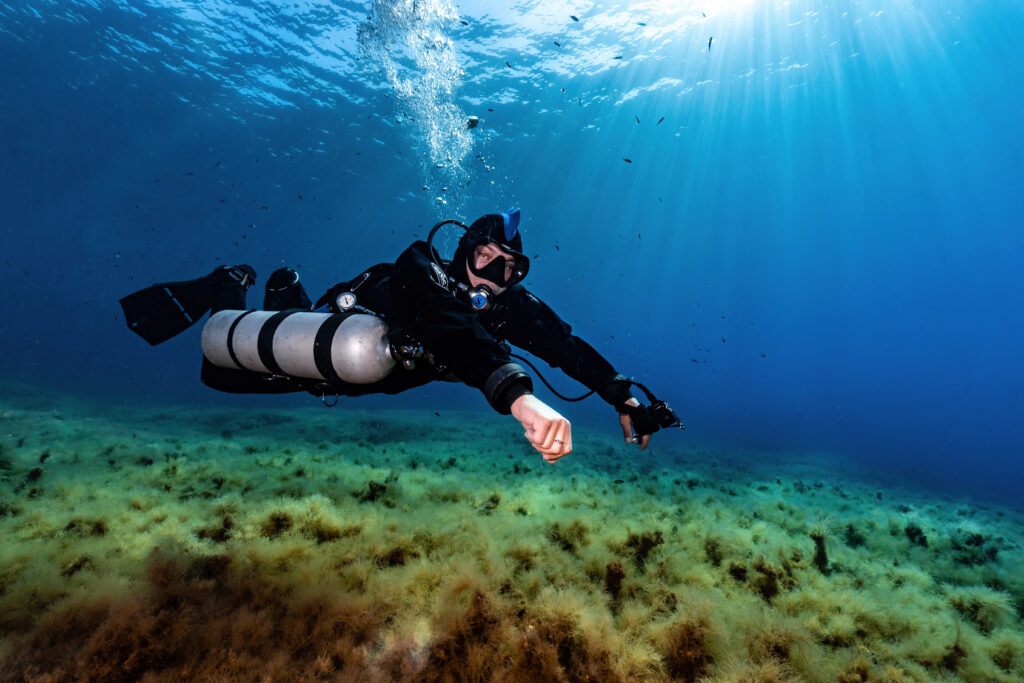
One of the first advantages of sidemount is its streamlining.
Positioning the cylinders along the sides of the body rather than on the back creates a lower and more streamlined profile.
In large passages, the difference may seem relatively minor.
But when a passage becomes narrower, every centimetre matters.
The diver can maintain a horizontal position, reduce overall profile and move through the environment more efficiently.
In some situations, it is even possible to temporarily unclip or reposition a cylinder to negotiate a restriction before returning it to its normal position.
This flexibility is one of the main reasons sidemount became so valuable to cave explorers.
Direct Access to Your Equipment
In sidemount, the valves, first stages, hoses and cylinders remain accessible to the diver.
You can monitor your equipment throughout the dive.
In the event of a leak, free-flowing regulator or another regulator problem, the diver can immediately access the affected equipment without relying entirely on a teammate.
This accessibility also simplifies pre-dive checks and allows equipment to be monitored throughout the dive.
The objective is not simply comfort.
The real advantage is being able to identify a problem quickly and respond before it develops into a more serious situation.
Better Management of Redundancy
A typical sidemount configuration uses two completely independent cylinders.
Each cylinder has its own valve, first stage and regulator.
If one complete system becomes unavailable, the diver still has an independent second gas supply.
This configuration naturally requires disciplined gas management.
Throughout the dive, the diver switches regularly between regulators to maintain appropriate gas balance between the two cylinders and preserve effective redundancy.
These procedures progressively become automatic during proper sidemount training.
More Precise Buoyancy and Trim
Cave diving requires excellent buoyancy control.
Even a small amount of unnecessary movement can disturb fine sediment and reduce visibility dramatically.
A properly adjusted sidemount configuration can make it easier to maintain a stable horizontal position.
Because the cylinders remain aligned with the body, changes in balance can be controlled progressively.
This stability helps reduce unnecessary movement, protect fragile formations and allows the diver to move with greater precision.
For this reason, sidemount training can also be an excellent way to develop buoyancy and trim.
Greater Freedom of Movement
Without a rigid twinset mounted on the back, many divers experience a greater sense of freedom from their very first sidemount dives.
Movement can feel more natural.
The diver can turn their head, look behind them, manipulate equipment and move through different positions without having a large rigid cylinder system directly on the back.
This freedom can be particularly valuable during long dives or extended cave exploration.
For many divers, it can also improve overall comfort underwater.
Sidemount Still Requires Proper Training
All these advantages do not mean sidemount is automatically easier.
A poorly adjusted or poorly managed configuration can quickly become uncomfortable and inefficient.
Incorrect cylinder positioning, a poorly adjusted harness or badly routed hoses can make diving more complicated rather than easier.
That is why specific sidemount training is important.
Good training is not simply about learning where to attach two cylinders.
It teaches you how to adjust the harness, position the cylinders, manage gas, apply appropriate safety procedures, use efficient propulsion techniques and develop precise buoyancy control.
At Halocline Explorers, we dedicate significant attention to these details.
Because these are precisely the details that make the difference later, whether you are diving in the cenotes of Mexico or in another environment.
You can find the dedicated IANTD course here:
Is Sidemount Only for Cave Diving?
This is probably one of the most common misconceptions.
Because sidemount is so common in the cenotes of Mexico and the caves of Florida, many divers assume that it is exclusively a cave-diving configuration.
It is not.
Today, sidemount is used in many areas of scuba diving:
- recreational diving;
- technical diving;
- wreck exploration;
- Trimix diving;
- underwater photography;
- deep diving;
- certain CCR configurations.
Every diver chooses an equipment configuration according to their objectives, environment and personal preferences.
Sidemount is therefore not a configuration reserved for elite or technical divers.
It is another way of diving that provides specific advantages in certain situations.
Divers interested in progressing toward technical diving can also explore our English technical training programs
Is Sidemount More Difficult to Learn?
The simple answer is:
No.
But it requires a different learning process.
A diver accustomed to backmount quickly discovers that many familiar reference points change.
The cylinders are no longer behind the diver.
Regulator switching becomes a regular part of gas management.
Harness adjustment requires greater precision.
Cylinder attachment techniques are also different.
At first, these procedures can feel unfamiliar.
After several dives, however, they progressively become natural.
Many students are surprised by how quickly they become comfortable with the configuration.
Once properly adjusted, many divers describe a feeling of freedom they had never experienced with a traditional back-mounted configuration.
Does Sidemount Really Improve Buoyancy?
Sidemount does not automatically transform someone into an expert diver.
Poor buoyancy remains poor buoyancy regardless of the equipment configuration.
However, a properly adjusted sidemount system can make maintaining a stable horizontal position considerably easier.
It can also help the diver become more aware of body position and identify small trim or posture problems.
This is why many instructors consider sidemount an excellent training tool.
During training, students learn to control breathing, trim, finning techniques and overall balance with much greater precision.
These skills remain useful throughout a diver’s career, even if they later continue diving in backmount.
Why Are Mexico’s Cenotes Ideal for Learning Sidemount?
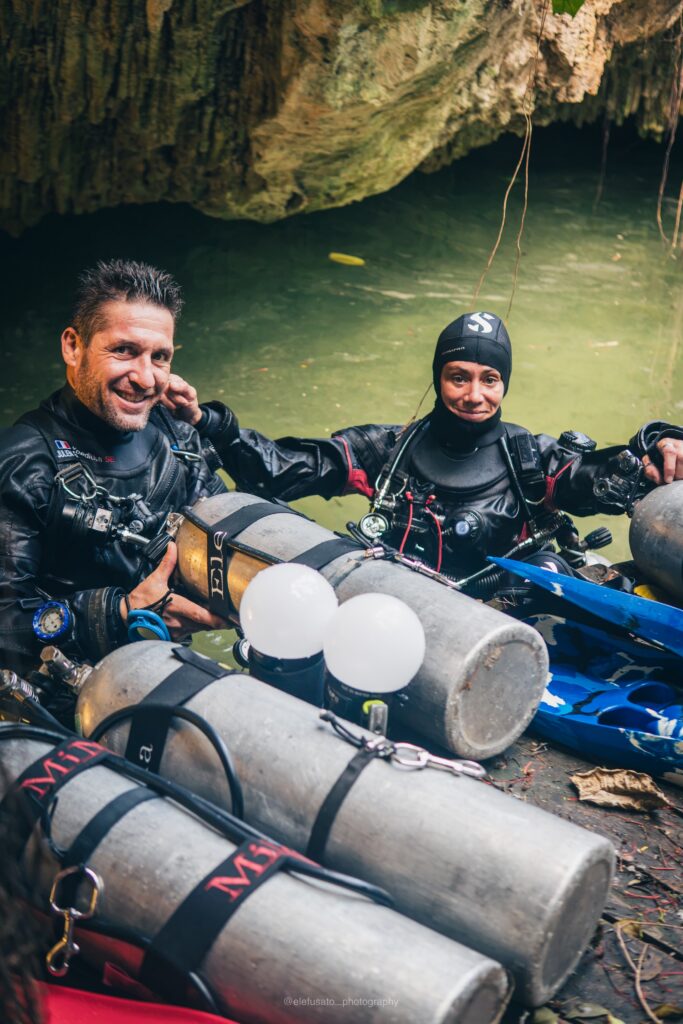
Few places in the world combine so many favorable conditions for training.
The cenotes of the Yucatán Peninsula offer:
- often exceptional visibility;
- stable water temperatures throughout the year;
- no waves;
- little or no current at many training sites;
- a wide variety of environments allowing progressive skill development.
Divers can therefore focus on their technique without many of the environmental factors encountered in open ocean conditions.
Large cavern areas provide excellent environments for developing buoyancy, propulsion techniques, cylinder management and safety procedures.
As the diver progresses, more complex environments can help demonstrate the practical advantages of sidemount in a natural setting.
This diversity is one of the reasons divers from around the world travel to Mexico for sidemount training.
Why More Recreational Divers Are Choosing Sidemount
Even outside cave diving, sidemount attracts more recreational divers every year.
This development is not simply the result of technical-diving influence.
Many divers appreciate:
- better weight distribution before entering the water;
- the ability to transport cylinders separately;
- excellent freedom of movement underwater;
- permanent access to cylinder valves;
- improved comfort for some divers who find heavy back-mounted systems inconvenient.
Sidemount does not replace backmount.
Both configurations have their place.
But sidemount is no longer restricted to cave explorers.
It has become a genuine alternative for divers looking for greater flexibility and a different way to dive.
Sidemount can also be practical for divers who travel regularly. Because cylinders can be carried separately and attached close to the water, transporting equipment to the entry point can be easier in some environments.
The configuration is also appreciated by many underwater photographers and by divers looking for alternatives to carrying a heavy twinset on their back.
What Is Sidemount Training Like at Halocline Explorers?
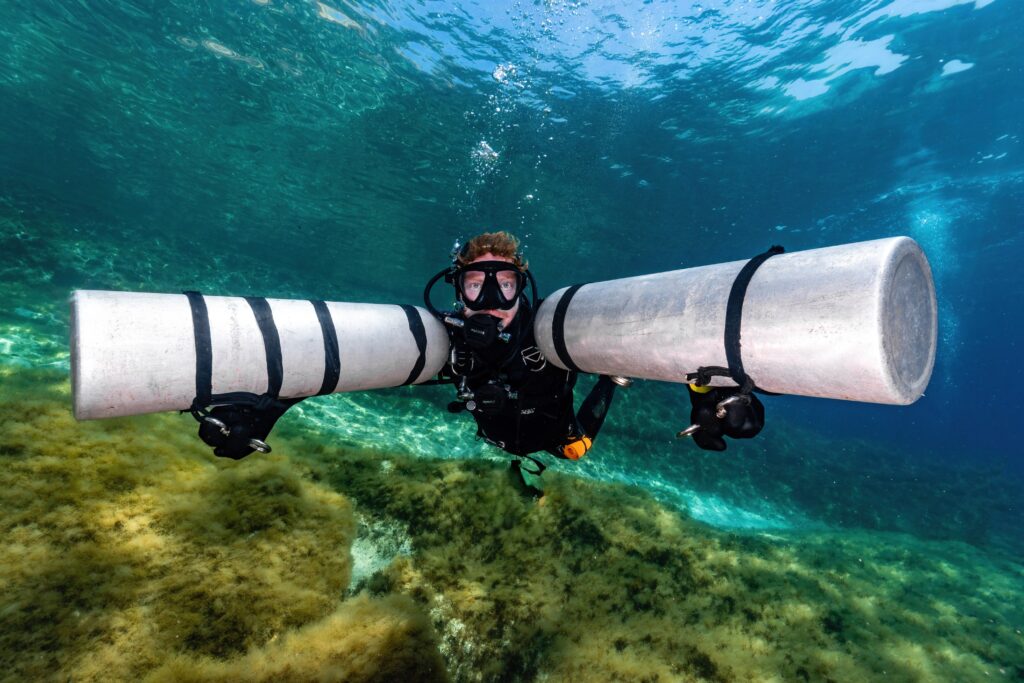
At Halocline Explorers, we do not consider sidemount training to be simply about learning how to carry two cylinders at your sides.
The objective is to develop solid foundations that will remain useful throughout your diving progression.
During training, we work on:
- personalized harness adjustment;
- cylinder positioning;
- balance and trim;
- buoyancy control;
- propulsion techniques appropriate for fragile environments;
- gas management;
- assistance procedures;
- safety drills;
- equipment organization.
Each diver progresses at their own pace.
We deliberately keep groups small so that we can correct details and adapt the training to the student’s actual abilities.
This approach develops reliable skills that remain useful in recreational, technical and cave diving.
Is Sidemount Right for You?
Sidemount can be suitable for many different types of divers.
It may be particularly interesting if you want to:
- improve your buoyancy;
- increase comfort underwater;
- discover a new equipment configuration;
- prepare for Cavern or Cave training;
- progress toward technical diving;
- explore the cenotes of Mexico;
- reduce the need to carry a heavy back-mounted twinset.
However, equipment configuration should always be chosen according to your personal objectives.
Sidemount is not mandatory.
It is simply a highly effective solution when it is appropriate for the type of diving being conducted and when the diver is properly trained to use it.
“Sidemount did not change cave diving because it was different. It became established because it addressed the real needs of explorers.”
That ability to respond to the practical challenges of exploration helps explain why sidemount plays such an important role in modern cave diving.
Conclusion
Sidemount did not become an important cave-diving configuration by accident.
Its development in British caves, its evolution in Florida and its widespread use in the cenotes of Mexico reflect real needs encountered by cave explorers: greater freedom of movement, direct access to equipment, excellent underwater stability and effective redundancy.
Over the years, the configuration has expanded far beyond cave diving.
Today, sidemount is used across numerous diving disciplines and attracts divers looking to improve their comfort, technique and equipment management.
Whatever configuration you choose, the essentials remain the same: quality training, strong fundamental skills and progression appropriate to your experience.
Sidemount is not an end in itself.
It is a highly effective tool that, when properly configured and used, can transform the way you dive.
Discover Sidemount Diving in the Cenotes of Mexico
Would you like to discover sidemount or prepare for future Cavern, Introductory Cave or Cave Diver training?
At Halocline Explorers, we offer IANTD Sidemount training in small groups, adapted to your experience and objectives.
You will learn how to adjust your equipment, improve your buoyancy, manage your gas supply and develop reliable skills that will support your progression in recreational, technical or cave diving.
Explore Cave Diving Training in Mexico
Whether your objective is to improve your technique or prepare for a progression through Cavern, Introductory Cave and Cave Diver, we can help you develop the appropriate skills step by step.
Whether you are a recreational diver, a technical diver or considering cave diving in the future, mastering sidemount can become a valuable part of your diving development.
Sidemount vs Backmount: Which Configuration Should You Choose?
| Criteria | Sidemount | Backmount Doubles |
|---|---|---|
| Cylinder position | Along each side of the diver | Mounted on the diver’s back |
| Valve access | Direct access throughout the dive | Can require greater mobility depending on the diver |
| Narrow passages / restrictions | Highly adaptable, with cylinders that can be repositioned when appropriate | Can be more limiting in very narrow passages |
| Streamlining | Low, streamlined profile | Excellent in large passages when properly configured |
| Buoyancy and trim | Very precise after proper adjustment | Very stable with a correctly balanced configuration |
| Gas management | Two independent cylinders with regular regulator switching | Two cylinders connected through a manifold |
| Redundancy | Two independent gas-delivery systems | Redundancy provided by the twinset/manifold system and appropriate procedures |
| Transport before diving | Cylinders can be transported separately and attached near or in the water | Complete system is heavier to carry |
| Comfort underwater | Excellent freedom of movement | Familiar configuration for many divers |
| Cave diving | Widely used in cenotes and cave exploration | Also widely used depending on objectives and environment |
| Recreational diving | Increasingly popular | The most common configuration worldwide |
| Underwater photography | Appreciated for freedom of movement | Also successfully used |
| Progression toward technical diving | Well suited to many technical and cave pathways | Equally suitable depending on the chosen training pathway |
| Specific training | Recommended to learn sidemount-specific configuration and procedures | Technical backmount training is required when progressing beyond standard recreational configurations |
💡 Key Point
Sidemount and backmount are not competing configurations.
Each has advantages and responds to different needs. The best choice depends on the type of diving you do, your experience, your body type and your objectives. A good diver is first and foremost a diver who has mastered the configuration they use.
Frequently Asked Questions About Sidemount Diving
What Is Sidemount Diving?
Sidemount is a scuba configuration in which cylinders are attached along the sides of the diver rather than mounted on the back.
Originally developed for cave exploration, the configuration is now used in recreational, technical, cave and wreck diving.
Why Is Sidemount Used for Cave Diving?
Sidemount provides excellent freedom of movement, can facilitate passage through certain restrictions, provides direct access to cylinder valves and allows two independent gas supplies to be managed separately.
These characteristics can be particularly valuable in overhead environments.
Is Sidemount Only for Technical Divers?
No.
More recreational divers are choosing sidemount for its comfort, stability and transport flexibility.
It can also provide a useful foundation for divers who later want to progress toward technical or cave diving.
Can You Dive in the Ocean with Sidemount?
Yes.
Sidemount can be used for recreational ocean diving, reefs, wrecks, underwater photography and technical diving.
Its use is not limited to caves or cenotes.
Is Sidemount More Comfortable Than Backmount?
That depends on the individual diver.
Many appreciate the weight distribution, freedom of movement and direct access to their equipment.
Others prefer a traditional back-mounted configuration.
The important point is to choose the configuration best suited to your diving.
Do You Need Specific Training for Sidemount?
Yes.
Proper training teaches you how to adjust the harness, position and balance the cylinders, manage gas, develop buoyancy and trim, and apply procedures specific to sidemount.
The Halocline Explorers IANTD Sidemount Diver course is available here:
How Long Does Sidemount Training Take?
At Halocline Explorers, the course is generally organized over two to three days, with the exact duration depending on the diver’s experience, buoyancy control and progression.
Does Sidemount Improve Buoyancy?
A properly adjusted sidemount configuration can make it easier to maintain excellent trim and a stable horizontal position.
However, buoyancy quality ultimately depends on the diver’s technique and training.
Can You Learn Sidemount After Open Water?
Sidemount can be part of a diver’s progression once the applicable course prerequisites are met.
The important point is to have sufficient fundamental diving skills to benefit from the training.
Why Learn Sidemount in Mexico?
The cenotes of the Yucatán Peninsula offer excellent visibility, calm conditions, stable water temperatures and a wide range of environments suitable for developing precise diving techniques.
These characteristics make the Riviera Maya an excellent destination for sidemount training.
Is Sidemount Mandatory to Become a Cave Diver?
No.
Cave diving can be conducted using different appropriate redundant equipment configurations.
Your current English Cave Diver page specifically identifies doubles or sidemount as appropriate configurations for the IANTD Cave Diver course.
What Is the Difference Between Sidemount and Backmount?
Backmount places the cylinders on the diver’s back, while sidemount positions them along the sides of the body.
Each configuration has its advantages and appropriate applications.
The choice primarily depends on the type of diving, environment, training and personal preference.