
What Is a Halocline? The Magical Phenomenon of Mexico’s Cenotes
Among the many natural wonders hidden beneath the cenotes of Mexico’s Yucatan Peninsula, one of the most fascinating is undoubtedly the halocline.
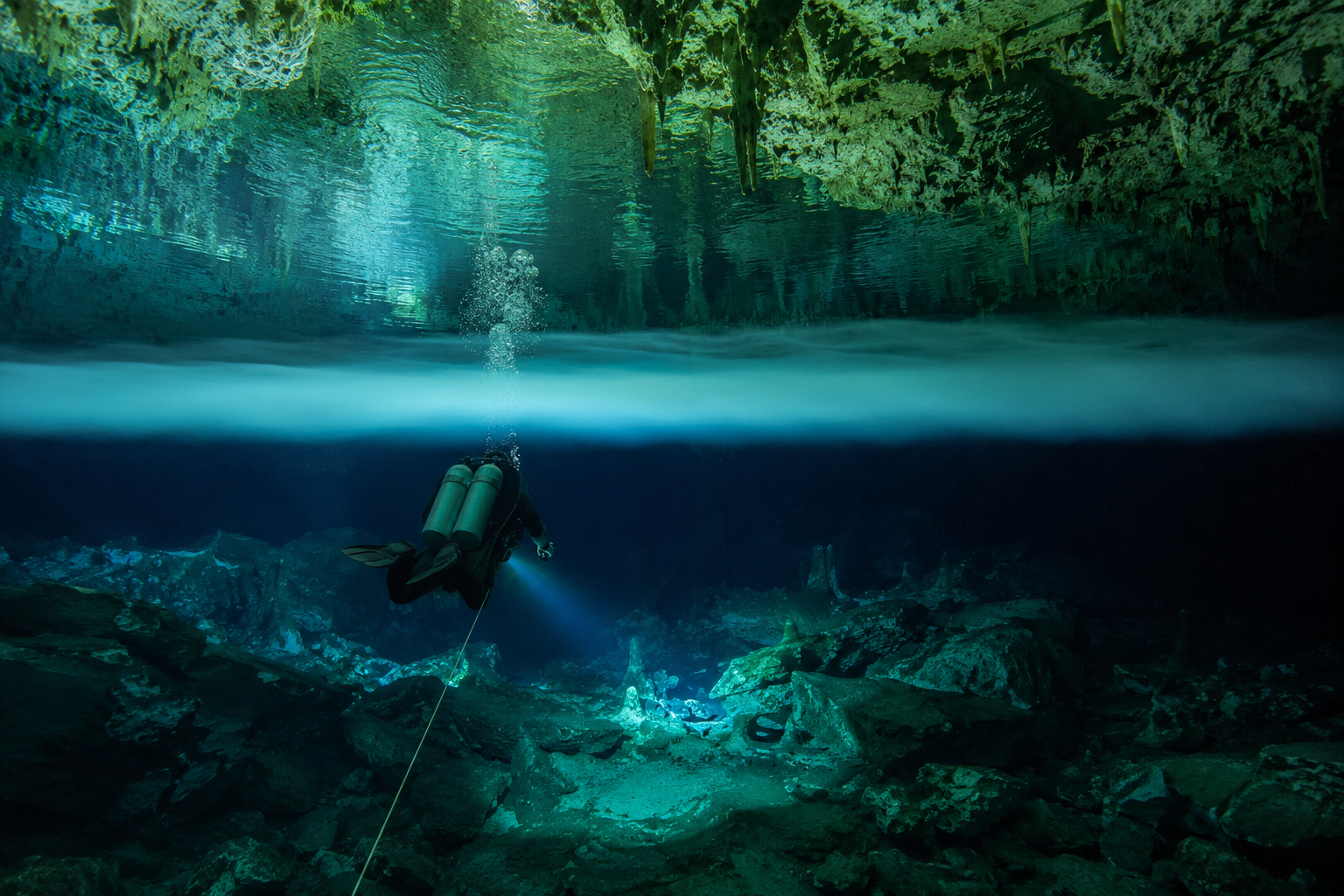
This spectacular natural phenomenon creates a unique underwater visual experience, sometimes compared to an optical illusion or an underwater mirage.
For many divers, crossing a halocline for the first time is one of the most memorable moments of cenote diving in Mexico.
What Is a Halocline?
A halocline is a transition zone between two bodies of water with different levels of salinity.
In the cenotes of the Yucatan Peninsula, freshwater from rainfall and the underground aquifer lies above denser salt water connected to the Caribbean Sea.
Where these two layers meet, the salinity changes rapidly over a relatively short vertical distance.
This transition zone is known as the halocline.
Why Can You See a Halocline Underwater?
Freshwater and salt water have different physical properties, including different densities and refractive indices.
When light passes through the transition between these layers, it bends differently.
For a diver crossing the halocline, the surrounding environment can suddenly appear blurred or distorted, almost as though looking through oil, heat waves or a mirage.
The underwater landscape can seem to shimmer, move or lose its sharpness.
Once the diver moves completely through the transition layer and enters the water below, visibility becomes clear again.
This strange visual distortion is what makes crossing a halocline in a cenote such an unusual experience.
Where Can You See a Halocline in Mexico?
Haloclines can be observed in several famous cenotes throughout the Riviera Maya, including:
- Angelita
- Carwash
- Casa Cenote
- Chac Mool
- Kukulkan
- Ponderosa (Jardín del Edén)
Depending on the cenote, depth and local conditions, the effect can range from relatively subtle to extremely pronounced.
Each site offers a different way of experiencing the interaction between the freshwater aquifer and the deeper saltwater layer.
Why Do Haloclines Exist in the Yucatan Cenotes?
The geology of the Yucatan Peninsula plays an important role in creating these conditions.
Rainwater infiltrates the porous limestone and supplies the vast underground freshwater aquifer beneath the peninsula.
Closer to the coast, this freshwater interacts with salt water connected to the Caribbean Sea.
Because freshwater is less dense than salt water, it generally remains above the denser saline layer.
The transition between them creates the halocline that divers can observe in many cenotes and submerged cave systems of the Riviera Maya.
A Unique Experience for Cenote Divers
Crossing a halocline is often one of the highlights of a cenote dive.
Combined with crystal-clear water, limestone formations and spectacular natural light, the phenomenon contributes to the extraordinary atmosphere of Mexico’s underwater world.
One moment, visibility can appear almost unlimited.
A few seconds later, while crossing the halocline, the entire underwater landscape may become distorted and dreamlike.
Then, after passing completely through the transition, the water suddenly becomes clear again.
For underwater photographers and videographers, haloclines can also create unusual and surreal images that are difficult to reproduce anywhere else.
Is It Safe to Dive Through a Halocline?
A halocline is a natural physical phenomenon and is not inherently dangerous to divers.
However, crossing the transition can temporarily distort vision, which may feel unusual or slightly disorienting for someone experiencing it for the first time.
This is one reason why good buoyancy, awareness and proper diving procedures remain important when exploring cenotes.
Experienced cenote guides are familiar with these environments and can explain what divers should expect before entering the water.
Understanding the phenomenon beforehand often makes the experience even more fascinating when you finally see it underwater.
Discover Haloclines with Halocline Explorers
The name Halocline Explorers was inspired by one of the most fascinating phenomena found beneath the Yucatan Peninsula.
We take divers into the cenotes of the Riviera Maya to discover the geological formations, crystal-clear water and natural phenomena that make this underground environment so extraordinary.
Whether you are a recreational diver discovering cenotes for the first time or an experienced technical diver exploring more advanced environments, Mexico’s underwater world offers experiences unlike almost anywhere else.
Ready to experience a halocline for yourself?
➜ Discover our cenote diving experiences from Playa del Carmen