
Travellers planning a trip to Playa del Carmen, Tulum or elsewhere on the Riviera Maya often worry about sargassum. Photos of beaches covered in brown seaweed can make you wonder whether to change your plans or cancel your trip to Mexico.
Conditions vary with the season, winds, currents, weather and the location of each beach. One stretch of coast can see a heavy influx while a beach only a few kilometres away remains relatively clear. For divers, it helps to distinguish beach conditions from offshore diving conditions and from diving in inland cenotes.
What is sargassum?
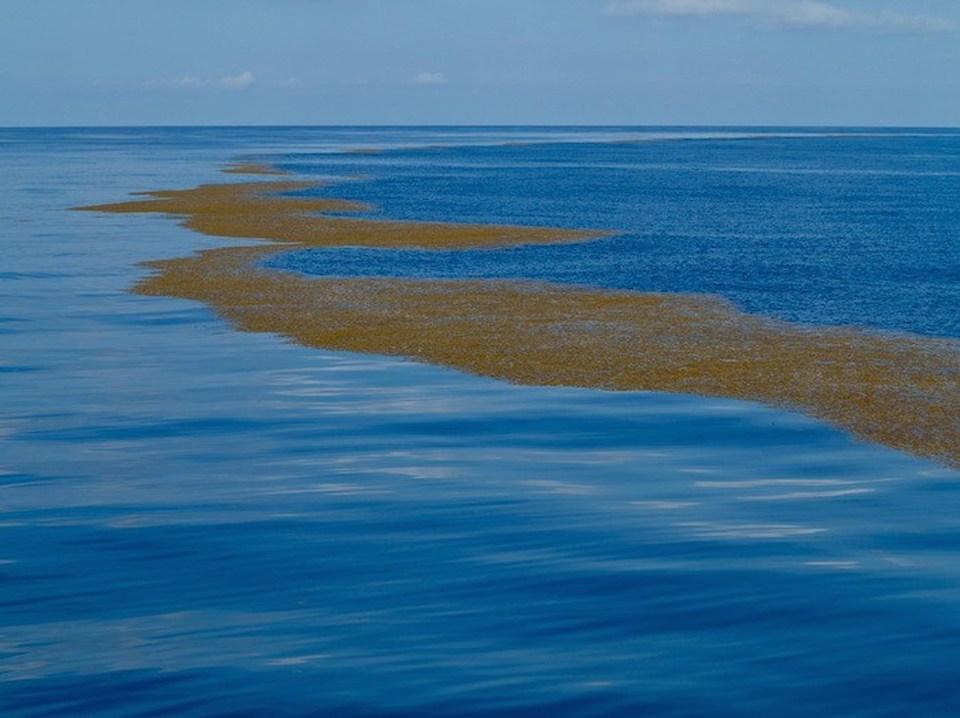
Sargassum is a floating brown seaweed. Small gas-filled bladders keep it at the surface, where it can form long streaks or broad mats carried by winds and currents.
In the open ocean, these mats provide shelter and feeding grounds, and sometimes breeding habitat, for fish, crabs, shrimp, seabirds and young turtles. Sargassum is a natural part of this ecosystem. Problems arise when large amounts wash ashore, build up and begin to decompose.
Why does so much sargassum reach the Caribbean?
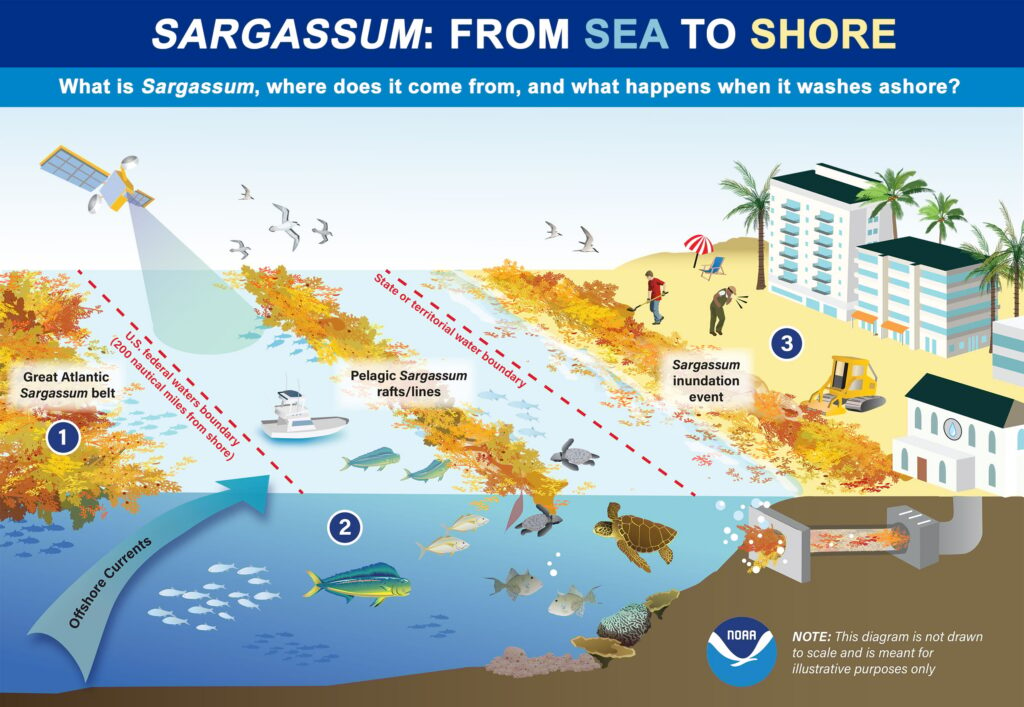
The large influxes recorded in the Caribbean since 2011 are a complex phenomenon. Researchers are studying warmer water, increased availability of nutrients such as nitrogen and phosphorus, agricultural runoff and wastewater, major rivers, ocean currents and Saharan dust. The relative contribution of these factors and their interactions remain under study.
Satellite observations track sargassum across the Atlantic and Caribbean. The University of South Florida issues regular bulletins on observed amounts and regional beaching risk. They show broad trends, but cannot reliably tell you what a particular beach will look like several weeks in advance.
When is sargassum season in Mexico?
Arrivals are generally heavier in the warmer months, often from spring through summer, but there is no fixed calendar. Conditions can vary from year to year, week to week and even from one day to the next.
Wind and currents can push seaweed onto a beach or temporarily carry it offshore. A photo or comment posted several weeks ago may bear little resemblance to the conditions you encounter on your trip.
Can sargassum affect your health?
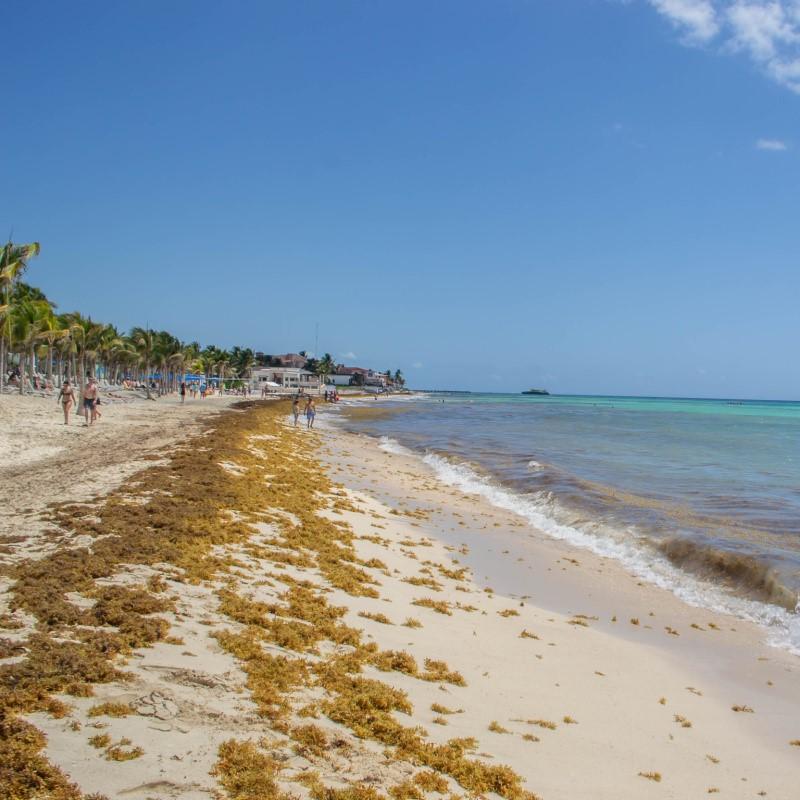
The main concern is heavy accumulations that sit on the beach and decompose. They can release hydrogen sulfide, which smells like rotten eggs, and ammonia. Exposure to gases from large piles can irritate the eyes, nose and airways. Children, older adults and people with respiratory or cardiovascular conditions may be more sensitive.
Avoid spending long periods near large, strongly smelling accumulations. Sargassum can also accumulate some heavy metals, so collection, processing and reuse need appropriate controls.
How does it affect beaches and coastal ecosystems?
Large amounts of seaweed can cover beaches, produce strong odours and make swimming difficult. As the seaweed decomposes, it can reduce oxygen in nearshore water and affect fish, seagrass beds, reefs, mangroves, breeding areas and nesting sites.
Cleanup can create problems of its own. Poorly managed use of heavy machinery can remove sand, increase erosion and disturb turtle nesting areas. Local authorities and tourism businesses use floating barriers, collection boats, manual and mechanical removal, satellite monitoring and projects that find uses for recovered seaweed. The right approach depends on local conditions.
Can you still scuba dive in the ocean?
Often, yes. Sargassum is mainly present at the surface and on beaches. A beach with heavy seaweed can be near offshore reefs with good underwater visibility, and boats can often reach those sites.
A heavy influx may complicate beach departures, hinder smaller boats, affect nearshore water quality and change the choice of sites or departure times. Operators in Playa del Carmen and Cozumel adjust their trips according to winds, currents, sea state and local observations. Ask a local operator for a current assessment before relying on an old post or regional forecast.
Does sargassum affect cenote diving?
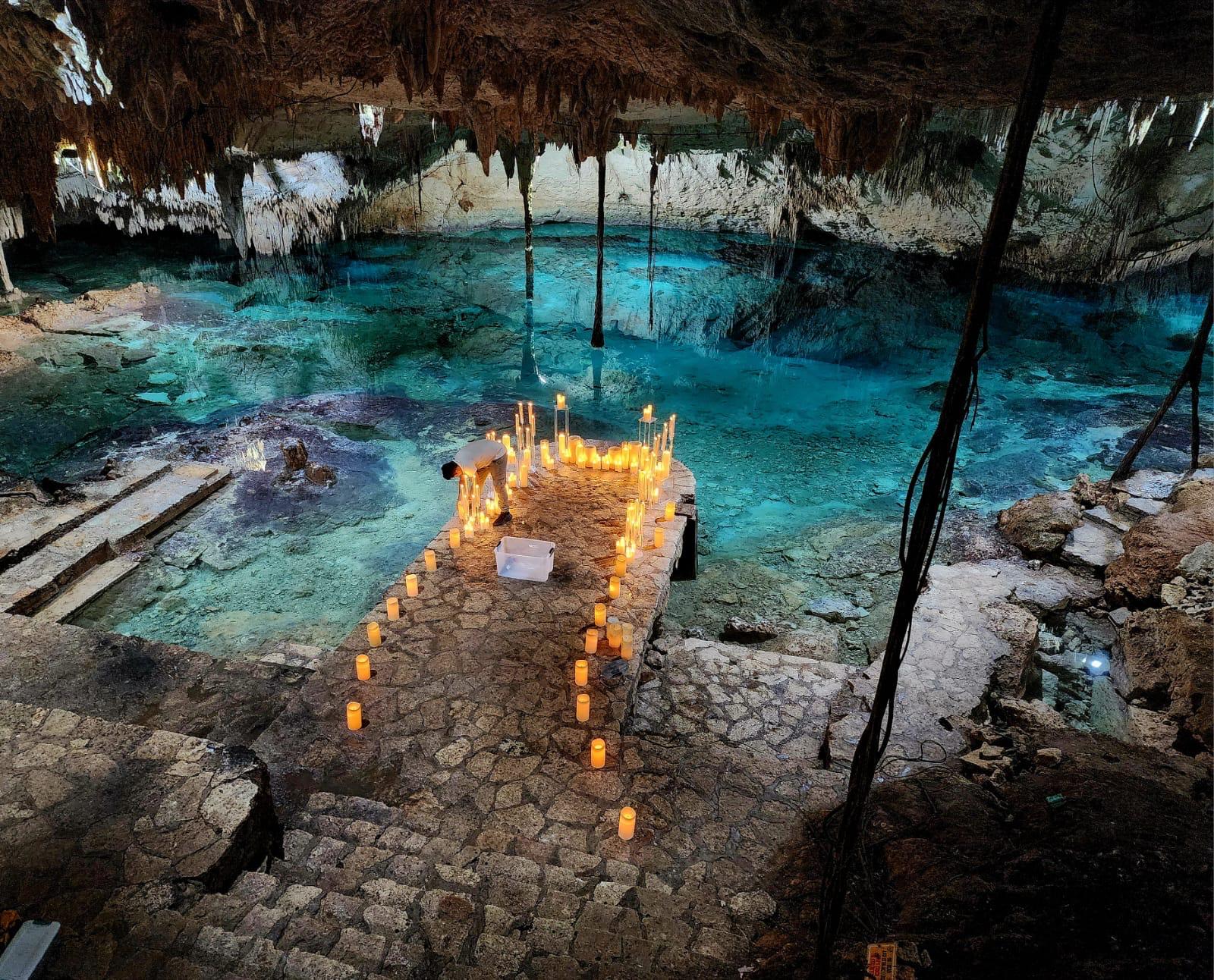
Most cenotes used for diving are inland and fed by the Yucatán Peninsula’s underground freshwater network. The seaweed that washes up on Caribbean beaches does not cover these inland sites.
Cenote diving is available year-round. Depending on the site, you can find clear freshwater, relatively stable temperatures, excellent visibility, limestone formations, haloclines and striking beams of sunlight. Cenotes are an alternative when sea conditions are less favourable. Choose your site according to your certification, experience, buoyancy and the conditions on the day.
Should you cancel a trip to Mexico because of sargassum?
In most cases you can keep your trip and adjust your plans. Options include cenote diving, sea dives around Playa del Carmen or Cozumel if conditions allow, Maya sites and inland excursions to Valladolid, Cobá or Chichén Itzá. Staying flexible lets you pick the area with the best local conditions each day. A difficult day on one beach does not describe the whole week or region.
How to check conditions before you travel
NOAA and the University of South Florida publish satellite observations and regional estimates of beaching risk for the Atlantic, Caribbean and Gulf of Mexico. Use these to understand regional patterns, then check local webcams, recent hotel or beach club updates, municipal reports and same-day photos and videos. Local dive centres can advise on actual departure and site conditions.
Explore a different side of the Riviera Maya
Sargassum presents real environmental, economic and health challenges on the coast. The Riviera Maya also offers clear freshwater diving with limestone formations, haloclines and natural caverns. Halocline Explorers selects sites according to your certification, experience, interests and conditions on the day.
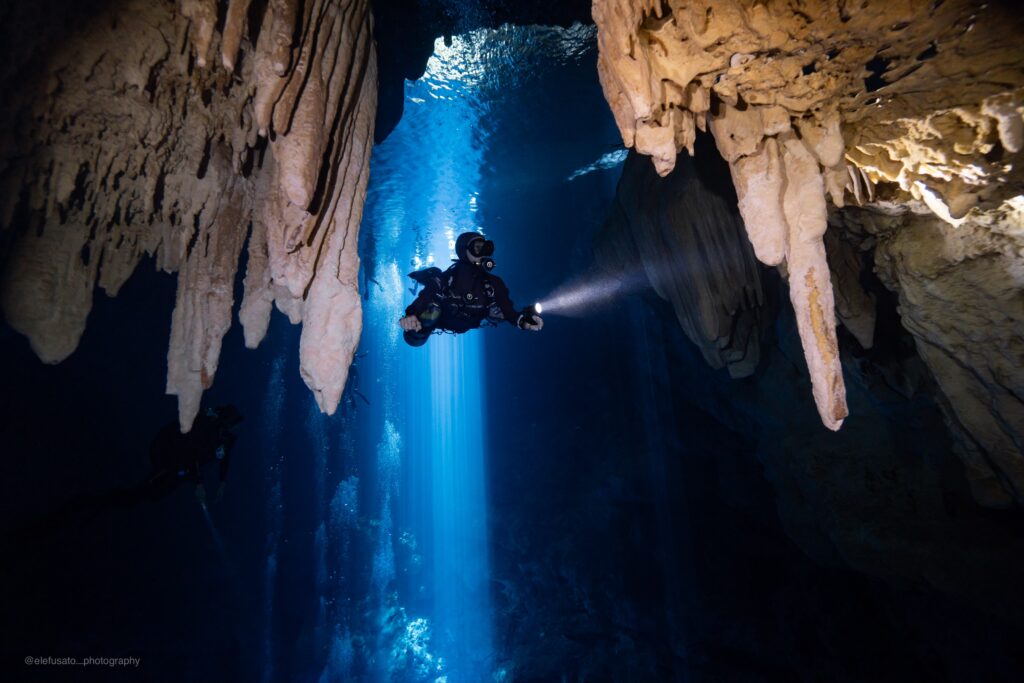
Explore guided cenote dives from Playa del Carmen.
Frequently asked questions about sargassum in Mexico
Is sargassum present all year?
It can appear year-round. Arrivals tend to be heavier between spring and summer, but amounts vary with winds, currents and weather.
Can sargassum affect your health?
Large amounts decomposing on a beach can release gases that irritate the eyes, nose or airways. Floating sargassum offshore is usually of less concern.
Can you swim at a beach with sargassum?
It depends on local conditions and the amount present. Heavy arrivals may bring odours and reduce water clarity. Many beaches are cleaned daily and conditions can change quickly.
Does sargassum stop ocean diving?
Often you can still dive offshore. Operators adjust departures and sites based on conditions.
Does sargassum affect cenotes?
The inland freshwater cenotes used for diving are away from coastal wash-ups.
Should you cancel your Mexico trip?
In most cases you can adjust your plans, with options such as cenote diving, Cozumel when sea conditions allow, archaeological sites, nature reserves and inland excursions.
Is there a sargassum-free season?
There is no guaranteed seaweed-free period. Check conditions locally a few days before arrival.
Where can you check conditions?
Use local webcams, recent hotel and beach club reports, municipal information, and updates from local dive operators.
Does sargassum reduce underwater visibility?
It usually floats at the surface. A heavy influx can affect shallow water near shore, but many offshore dive sites remain usable and inland cenotes are unaffected by coastal wash-ups.
Sources and further information
NOAA: tracking sargassum · University of South Florida: satellite bulletins · US EPA: sargassum inundation events · Sarg’Coop: Caribbean sargassum management