
What Is a Cenote Diving Day Like from Playa del Carmen?
Last updated: August 2026
Diving in Mexico’s cenotes means leaving the Caribbean reefs behind for a few hours and entering an underground world shaped over thousands of years.
Crystal-clear water, beams of sunlight, haloclines, stalactites, stalagmites and immense natural sinkholes: every cenote has its own unique atmosphere. But what does a typical cenote diving day from Playa del Carmen actually look like?
With Halocline Explorers, everything is prepared in advance to avoid unnecessary stops and allow you to make the most of your diving experience.
Pick-Up Directly from Your Accommodation in Playa del Carmen
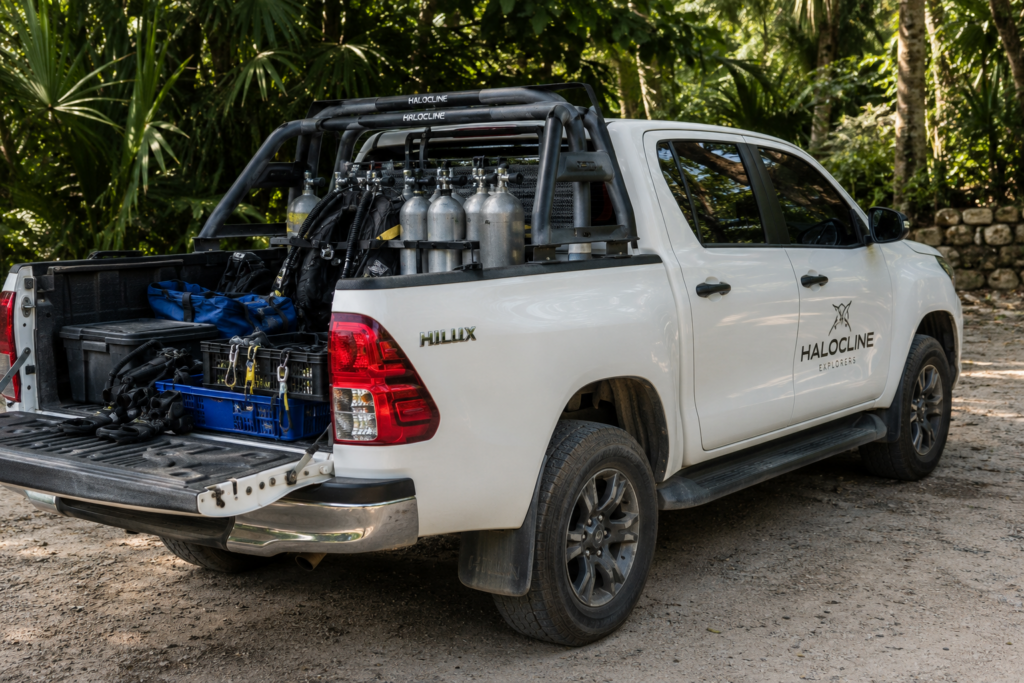
Halocline Explorers has vehicles suitable for transporting divers and diving equipment. In most cases, we pick you up directly from your hotel or accommodation in Playa del Carmen.
There is no need to visit the dive center before departure.
If you have your own equipment, we simply pick you up with your gear. Tanks, weights and everything required for the day are already prepared in the vehicle.
If you need to rent diving equipment, we ask for your sizes and the necessary information in advance so we can prepare:
- your wetsuit;
- your BCD;
- your regulator;
- your fins;
- your mask if required.
Everything is organized before we pick you up. This allows us to drive directly to the cenotes without adding an unnecessary stop at the dive center.
Departure time depends on the cenotes selected, but pick-up is generally around 8:00 a.m.
How Do We Choose the Cenotes for the Day?
The choice of cenotes depends on several factors:
- your certification level;
- your recent diving experience;
- your buoyancy control;
- the number of dives in your logbook;
- the date of your last dive;
- the natural phenomena you would like to experience;
- the conditions observed on the day of the trip.
An Open Water Diver experiencing cenote diving for the first time will generally be guided toward an accessible, bright and relatively shallow site.
A more experienced diver may explore routes featuring more extensive limestone formations, stronger haloclines or deeper environments.
Every program is therefore adapted to the diver’s profile. The final choice is confirmed by the guide to ensure that the experience remains appropriate, enjoyable and safe.
Equipment Preparation and Safety Briefing
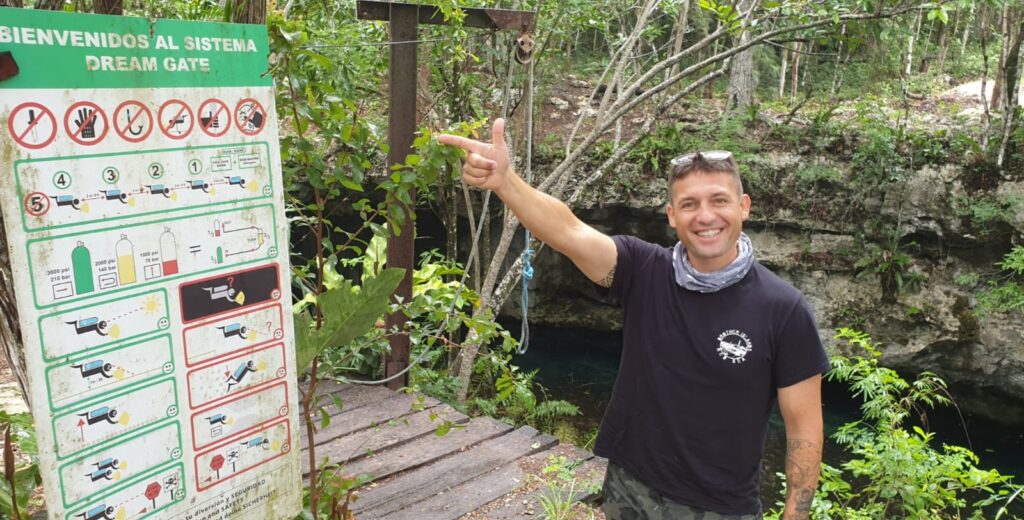
When we arrive at the cenote, we prepare and check the equipment together before going through the planned dives in detail.
Many sites have a map that helps visualize the layout of the cenote. These representations, sometimes called stick maps, may show:
- entrances and exits;
- the cavern zone;
- the planned route;
- main depths;
- changes in direction;
- points of interest;
- possible halocline or hydrogen sulfide areas.
This gives you a clear understanding of the route before entering the water.
A complete safety briefing is then provided. It includes:
- diver positioning within the group;
- hand signals and communication;
- buoyancy control;
- positioning in relation to the guide;
- procedures when diving under an overhead environment;
- gas management;
- procedures in case of a problem;
- rules for protecting the formations.
Gas management generally follows a conservative application of the rule of thirds, adapted to the site, dive profile and gas consumption of the participants.
The objective is simple: every diver should understand the dive plan and essential procedures before entering the water.
The First Cenote Dive
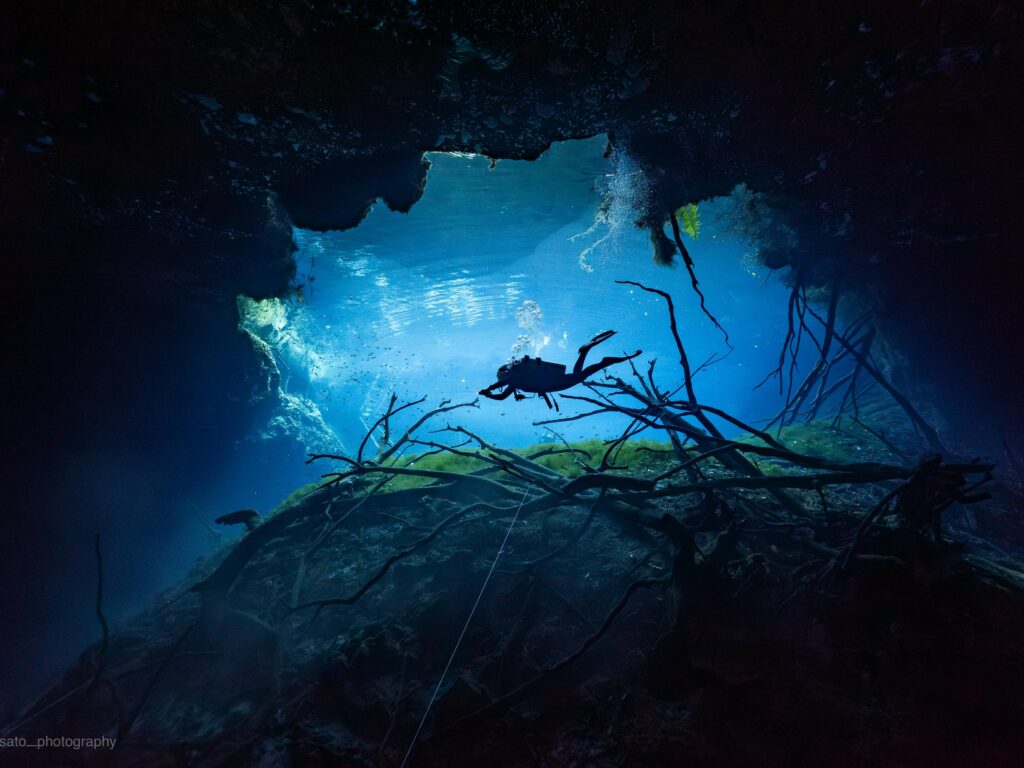
The first dive allows the guide to observe your comfort level, buoyancy and adaptation to this new environment.
For a first cenote experience, we generally favor sites offering:
- moderate depth;
- plenty of natural light;
- comfortable spaces;
- straightforward navigation;
- easy water entry.
Sites such as Dos Ojos, Carwash or Casa Cenote can provide an excellent introduction depending on the conditions and the divers’ profiles.
More experienced divers can explore different environments featuring more extensive formations, haloclines, large chambers or deeper natural sinkholes.
Whatever the site, cenote diving is very different from ocean diving. The transparency of the water, the beams of light and the underground landscapes can sometimes create the sensation of flying between the formations.
How Long Is the Surface Interval?
The length of the surface interval depends on the profile of the first dive, the depth reached and the distance to the second dive site.
When both dives take place at the same site, such as Dos Ojos, no long transfer is required. Because the routes are generally relatively shallow, a surface interval of approximately 30 to 45 minutes may be sufficient depending on the dive plan.
When the first dive is deeper, such as Angelita, or when the second dive takes place at another cenote, the surface interval is longer.
Travel between the sites naturally increases the amount of time spent at the surface. We generally plan between one hour and one and a half hours before the second dive, depending on:
- the depth of the first dive;
- dive time;
- distance between the sites;
- the day’s schedule;
- the needs of the group.
A snack is provided during the surface interval. Divers with specific dietary requirements can let us know before the trip.
The Second Dive
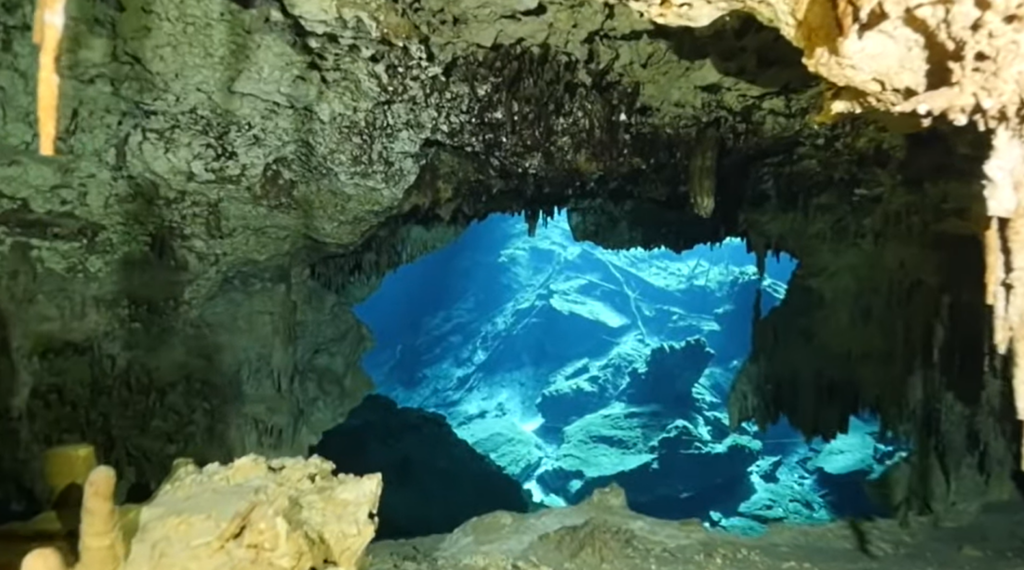
The second dive gives you the opportunity to discover another route or a completely different environment.
A day may, for example, combine:
- a bright site with a cavern rich in formations;
- a halocline with large underground passages;
- a deep sinkhole with a shallower cenote;
- two different routes within the same system.
This contrast is at the heart of our cenote diving packages. The goal is not simply to complete two dives, but to experience two different sides of Mexico’s cenotes.
The route always remains adapted to the level and comfort of the participants. If necessary, the program can be adjusted after the first dive.
What Time Do We Return to Playa del Carmen?
The return time mainly depends on the distance between Playa del Carmen and the selected cenotes.
For relatively nearby sites, we are generally back in Playa del Carmen at around 2:00 p.m.
For days involving more distant cenotes such as Angelita, or programs requiring more travel time and a longer surface interval, the return may be around 4:00 p.m.
These times are approximate. Traffic conditions, site logistics and the pace of the group can affect the schedule.
What Is Included in Your Cenote Diving Day?
Your diving day includes:
- pick-up and return to Playa del Carmen;
- transportation to the cenotes;
- two dives;
- scuba tanks;
- weights;
- cenote entrance fees;
- a light snack;
- supervision by a qualified professional guide.
If you do not have your own diving equipment, individual equipment rental can be arranged in advance. Simply send us your sizes so everything can be prepared before we pick you up.
Special meals, additional drinks and specific dietary requests are not included in the price but can be arranged upon request.
What Certification Do You Need to Dive in a Cenote?
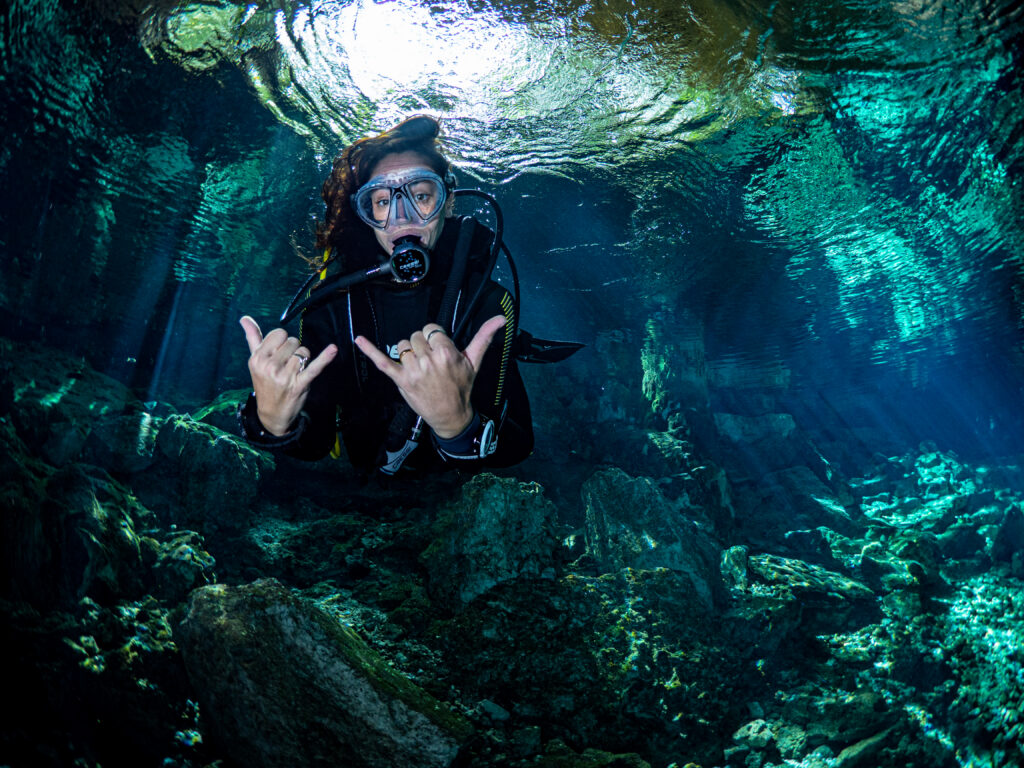
Cenote diving is accessible from Open Water Diver level, provided that the site is appropriate for your experience.
Open Water Divers can discover shallow cenotes with large spaces, abundant natural light and accessible routes within the cavern zone.
An Advanced Open Water Diver certification is recommended or required for deeper cenotes, particularly sinkhole-type sites where recreational dives may reach a maximum depth of 30 meters.
Certification, however, is not the only consideration. We also take into account:
- your number of dives;
- your recent diving experience;
- your gas consumption;
- your buoyancy control;
- your overall comfort underwater;
- the conditions observed on the day of the trip.
You do not need to be a cave diver to enjoy recreational cenote diving. The dives remain within the permitted cavern zone, where natural light is present and direct access to the exit is maintained.
How to Choose Your Cenote Diving Package
The best package depends on your certification level, experience and the natural phenomena you would like to discover.
For Your First Cenote Diving Experience
Choose bright, relatively shallow sites with large spaces and accessible routes.
These dives allow you to comfortably discover limestone formations, your first halocline effects and the unique cavern environment of the Yucatán Peninsula.
To Discover the Deeper Cenotes
If you are an Advanced Open Water Diver and enjoy descending into large natural sinkholes, choose a program including sites such as The Pit, Angelita, Zapote or Maravilla.
These dives may feature spectacular beams of sunlight, hydrogen sulfide layers, submerged trees or immense underground spaces.
To See the Most Beautiful Formations
If your priority is to discover stalactites, stalagmites and limestone columns, choose richly decorated cenotes such as Dreamgate, Taak Bi Ha or Nohoch Nah Chich.
Excellent buoyancy control is recommended to protect these particularly fragile formations.
To Experience Two Different Environments
Some packages deliberately combine two contrasting environments during the same day: a deep site and a bright cenote, a cavern rich in formations and a route featuring a halocline, or two different lines within the same system.
Halocline Explorers advises you according to your certification, recent diving experience and preferences to create a day suited to your expectations.
Frequently Asked Questions About a Cenote Diving Day
How Many Dives Do We Do During the Day?
A typical cenote diving day generally includes two dives.
Depending on the selected program, they may take place within the same system or in two different cenotes.
Do I Need a Cave Diving Certification?
No. An Open Water Diver certification is sufficient for cenotes accessible to recreational divers.
The dive remains within the cavern zone, and the site is selected according to your certification, experience and buoyancy control.
Can I Dive in a Cenote if I Have Just Completed My Open Water Course?
Yes, provided that an appropriate cenote is selected and you have sufficient control of the basic diving skills.
For a first experience, we generally favor shallow, bright sites with large spaces.
What Is the Difference Between Cavern Diving and Cave Diving?
Recreational cenote diving takes place within the cavern zone, where natural light remains visible and the exit is directly accessible.
Cave diving goes beyond this zone and requires specific training, appropriate equipment configuration and dedicated procedures.
Can I Rent All My Diving Equipment?
Yes. Send us your sizes before the diving day so your equipment can be prepared before we pick you up at your hotel.
Do I Need to Visit the Dive Center Before Departure?
Usually, no. We can pick you up directly from your accommodation with the tanks, weights and equipment already prepared.
Can I Dive with My Own Equipment?
Yes. You can use your own diving equipment as long as it is suitable, properly maintained and compatible with the planned dives.
Can We Choose the Cenotes in Advance?
Yes. You can tell us which sites and natural phenomena interest you.
The final choice will nevertheless depend on your certification, recent experience, buoyancy control and the diving conditions.
What Time Does the Day Start?
Pick-up is generally around 8:00 a.m. from your accommodation in Playa del Carmen.
The exact time is confirmed before the trip.
What Time Are We Back?
For nearby cenotes, we are generally back around 2:00 p.m.
For more distant sites or programs involving a deeper first dive and a longer surface interval, the return may be around 4:00 p.m.
Is Transportation Included?
Yes. Transportation from Playa del Carmen is included in our cenote diving days.
Are Cenote Entrance Fees Included?
Yes. Entrance fees for the cenotes included in your program are covered in the price of the diving day.
Is a Snack Included?
Yes. A light snack is provided during the surface interval.
If you have allergies, dietary requirements or a specific request, please let us know before the trip.
Is the Maximum Depth Always 30 Meters?
No. The depth depends on the cenote selected.
Many routes accessible to Open Water Divers remain relatively shallow. Sinkhole-type cenotes may involve dives to a maximum depth of 30 meters and generally require an Advanced Open Water Diver certification.
Do Cenote Dives Still Take Place When It Rains?
Usually, yes. Rain does not necessarily prevent cenote diving.
However, the program may be adjusted if weather conditions, site access or safety considerations require it.
Book Your Cenote Diving Day from Playa del Carmen
Whether you want to experience your first cenote dive, explore a deep natural sinkhole or discover some of the most beautiful underground formations in the Riviera Maya, Halocline Explorers organizes a diving day adapted to your level and preferences.
You benefit from:
- small groups;
- direct pick-up from your accommodation;
- equipment prepared in advance;
- a detailed briefing;
- two dives selected according to your profile;
- personalized guidance throughout the day.