
IANTD Technical Sidemount Diver Course in Mexico
Learn how to use a sidemount configuration for technical diving with decompression during the IANTD Tek Sidemount Diver course.
Organized in Playa del Carmen, this program develops equipment configuration, independent cylinder management, the use of decompression gases and the procedures required for technical sidemount diving.
✔ Technical Sidemount configuration
✔ Dives with actual or simulated decompression
✔ Gas and equipment-failure management
✔ Training with an IANTD Technical Sidemount Instructor
✔ Available in English, French or Spanish
Technical Sidemount Course: Essential Information
Official certification: IANTD Tek Sidemount Diver
Prerequisite: Advanced EANx Diver or equivalent
Minimum number of dives: 4
Minimum bottom time: 160 minutes
Dives focused on equipment adjustment and techniques: 2
Dives with actual or simulated decompression: 2
Minimum decompression on these dives: 10 minutes
Configuration: two primary sidemount cylinders
Decompression gas: minimum 1 depending on diver certification level
Maximum depth: limited by previous certification
Price: from MXN 5,000 per day
Languages: English, French or Spanish
The Technical Sidemount certification does not automatically allow you to exceed the maximum depth permitted by your previous certifications.
What Is the IANTD Tek Sidemount Diver Course?
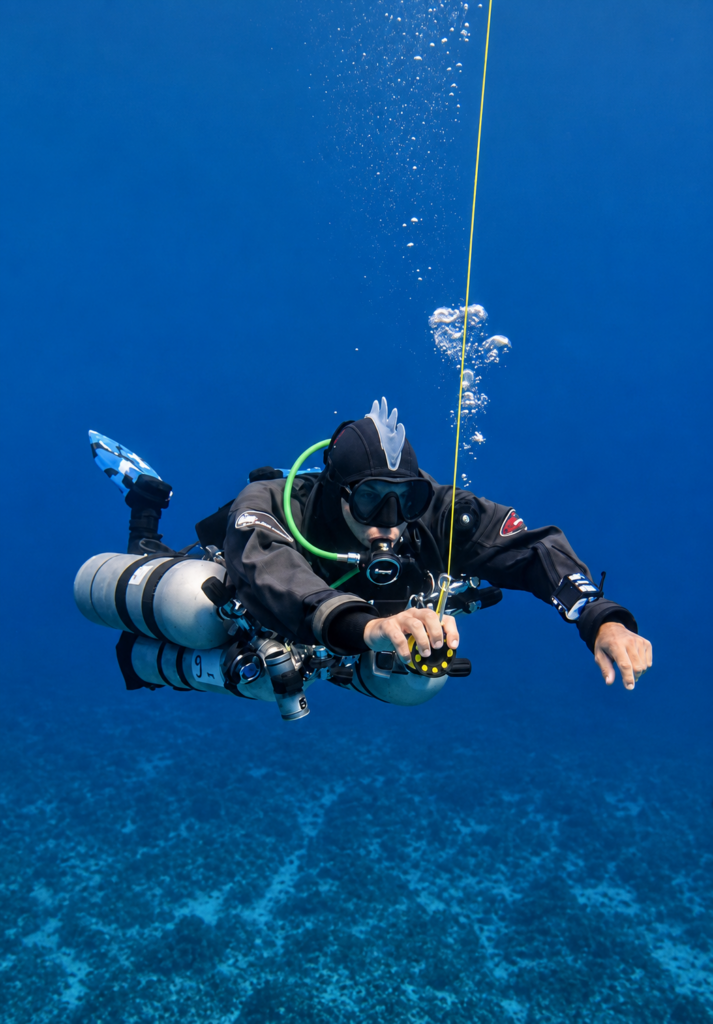
The IANTD Tek Sidemount Diver course teaches you how to use a sidemount configuration during technical dives involving actual or simulated decompression.
The two primary cylinders are positioned along the diver’s sides and managed independently.
One or more additional cylinders may be used for decompression depending on the training program and certifications already held.
The course focuses equally on equipment configuration and technical procedures.
You will learn to maintain a stable position while managing cylinders, valves and decompression gases.
The program develops:
- Technical Sidemount equipment configuration;
- cylinder positioning;
- independent gas management;
- buoyancy and trim;
- regulator switching;
- decompression procedures;
- equipment-failure management;
- gas sharing;
- SMB deployment;
- teamwork.
Tek Sidemount or Technical Sidemount: Which Name Is Correct?
The official name used in the IANTD standards is Tek Sidemount Diver.
However, Technical Sidemount Diver is much more commonly used by divers searching for sidemount training applied to technical diving.
Both terms are therefore used naturally throughout this page, but they refer to the same IANTD program.
Who Is the Technical Sidemount Course For?
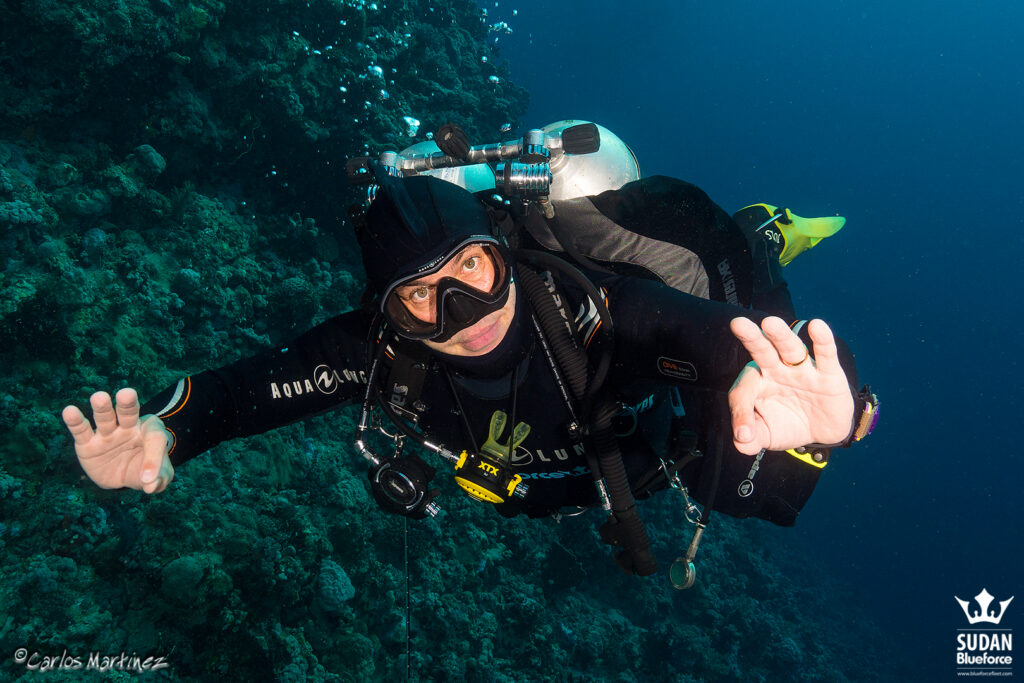
This course is designed for divers who want to:
- use sidemount during decompression dives;
- improve their technical equipment configuration;
- learn to manage multiple gases;
- develop greater equipment autonomy;
- refine trim and buoyancy;
- independently manage two primary cylinders;
- practise regulator and valve-failure procedures;
- progress toward technical sidemount diving;
- combine Advanced EANx and Technical Sidemount training;
- prepare for more advanced technical-diving programs.
Previous sidemount experience is highly beneficial.
However, the official determining prerequisite for the program is Advanced EANx Diver.
Tek Sidemount Diver Course Prerequisites
According to the IANTD standards used for this program, candidates must:
- hold an IANTD Advanced EANx Diver certification;
- or hold an equivalent certification;
- be at least 15 years old with parental authorization;
- or be at least 18 years old without parental authorization.
The Advanced EANx Diver course may be completed in conjunction with the Tek Sidemount Diver program.
Your experience, certifications and mastery of the equipment configuration are reviewed before the program is confirmed.
An evaluation session may be required if you use an unusual sidemount system or if your equipment requires a complete configuration adjustment.
Course Objectives
The objective of the program is to develop your ability to assemble and effectively use a Technical Sidemount configuration during dives involving decompression.
You will learn how to:
- configure the harness and buoyancy system;
- position the primary cylinders;
- adjust bolt snaps and attachment points;
- organize regulators and hoses;
- balance cylinders throughout the dive;
- alternate regulators;
- monitor cylinder pressures;
- apply gas management based on the rule of thirds;
- maintain horizontal trim;
- move into a vertical position when required;
- perform valve shutdowns;
- manage a free-flowing regulator;
- handle a decompression cylinder;
- perform a gas switch;
- share gas;
- deploy an SMB;
- conduct a controlled ascent;
- maintain team cohesion.
Technical Sidemount Course Structure
The program includes theory, confined-water training and open-water dives.
Theory and Equipment Configuration
Initial sessions cover:
- Technical Sidemount principles;
- equipment-system selection;
- harness adjustment;
- cylinder positioning;
- regulator configuration;
- gas volumes;
- independent cylinder management;
- rule of thirds;
- decompression gases;
- dive planning;
- normal and emergency procedures.
Your configuration is adapted to your body, the cylinders being used and your training objectives.
Confined-Water Training
Confined-water sessions develop:
- water entries with or without cylinders;
- attaching cylinders at the surface;
- exiting the water;
- regulator switching;
- buoyancy control;
- horizontal and vertical trim;
- valve shutdowns;
- unclipping a cylinder;
- swimming while holding a cylinder;
- gas sharing;
- equipment-failure procedures;
- decompression-cylinder handling.
Adjustments are made until the configuration is stable, accessible and functional.
Open-Water Training Dives
According to the IANTD standards used for this program, training includes at least:
- four sidemount dives;
- 160 minutes of bottom time;
- two dives focused on equipment adjustment;
- two dives focused on propulsion techniques, trim and buoyancy;
- two dives involving actual or simulated decompression;
- at least 10 minutes of decompression on each of these two dives;
- one decompression-gas switch on each dive;
- SMB deployment.
Different skills may be combined during the same dives as long as all objectives and minimum training times are met.
Maximum Depth Is Limited by Your Previous Certifications
Technical Sidemount is not, by itself, a certification that increases your maximum diving depth.
According to the IANTD standards used for the program, no training dive may exceed the maximum depth permitted by the diver’s previous certification.
For example:
- an Advanced EANx Diver remains within the limits of that certification;
- a Technical Diver may use Technical Sidemount within the limits of that qualification;
- a Normoxic Trimix Diver must remain within the limits of the Trimix qualification;
- the breathing gas used must always be appropriate for the planned depth.
The objective of this course is to teach the Technical Sidemount configuration, not to replace a depth or breathing-gas certification.
Bottom Gas and Decompression Gas
The course uses two primary cylinders carried in sidemount.
Each gas source must have:
- its own regulator;
- an independent pressure gauge;
- clear identification;
- a configuration providing access to the valves.
Decompression Gas
The standards require at least one decompression cylinder appropriate for the program.
For divers certified as Technical Divers, or when completing a combined program at that level, the configuration must include at least two decompression cylinders.
The actual number of gases used therefore depends on:
- your certification;
- training program;
- planned depth;
- planned decompression;
- skills being evaluated.
Gas Management in Sidemount
Because the primary cylinders are independent, you must balance their consumption throughout the dive.
Training develops:
- regular regulator switching;
- monitoring both pressure gauges;
- balancing gas volumes;
- maintaining the required reserve;
- applying the rule of thirds;
- managing the loss of a cylinder;
- managing the loss of a regulator;
- gas sharing;
- team reserve management.
Poor regulator-switching discipline can create a physical imbalance and unnecessarily reduce the available reserve in one cylinder.
Gas management must therefore become regular, anticipated and fully integrated into normal dive procedures.
Practical Skills Developed During the Course
The program includes:
- entering the water with cylinders;
- entering the water without cylinders;
- attaching cylinders at the surface;
- exiting with or without cylinders;
- regulator switching;
- pressure monitoring;
- valve shutdowns;
- managing a first-stage leak;
- managing a free-flowing regulator;
- horizontal and vertical buoyancy control;
- unclipping the rear cylinder attachment;
- swimming while holding a cylinder;
- repositioning the cylinder;
- stationary gas sharing;
- gas sharing while swimming;
- gas sharing during an ascent;
- decompression-cylinder handling;
- gas switches;
- removing and recovering a decompression cylinder;
- SMB deployment;
- controlled ascent to the decompression stop.
All procedures must be performed while maintaining appropriate depth, position and team awareness.
Technical Sidemount vs Sidemount Diver
Sidemount Diver
The Sidemount Diver course teaches the fundamentals of a sidemount configuration for dives without mandatory decompression.
It primarily develops:
- equipment adjustment;
- cylinder positioning;
- buoyancy;
- fundamental sidemount techniques;
- management of two independent gas sources.
Technical Sidemount Diver
Technical Sidemount applies the configuration to technical diving.
It adds:
- actual or simulated decompression;
- additional breathing gases;
- gas switches;
- technical reserve management;
- more advanced equipment-failure procedures;
- a configuration suitable for more complex dives.
Technical Sidemount therefore requires a higher level of experience and certification.
Technical Sidemount and Cave Diving
The Tek Sidemount Diver certification is not a cave-diving certification.
According to the IANTD standards referenced by this program, no training dive may enter an area requiring an Advanced Cave Sidemount qualification.
To use sidemount in restricted cave passages, divers must complete appropriate cave-diving and specialized sidemount training.
Technical Sidemount can nevertheless provide an excellent technical foundation before progressing toward certain overhead-environment training programs.
Combined Advanced EANx and Technical Sidemount Course
The Advanced EANx Diver course may be combined with the Tek Sidemount Diver program.
This pathway allows you to simultaneously develop:
- Technical Sidemount configuration;
- mandatory decompression diving;
- use of a decompression gas;
- gas-switch procedures;
- equipment-failure procedures;
- dive planning;
- buoyancy and trim.
The combined program must meet all standards and skill requirements of both certifications.
It is confirmed after reviewing your experience, current level and initial mastery of sidemount.
What Comes After Technical Sidemount?
Depending on the certifications you already hold, Technical Sidemount can provide a foundation for progression toward:
- Technical Diver;
- Normoxic Trimix Diver;
- Normoxic Trimix Plus Diver;
- technical diving with multiple gases;
- Technical Wreck Diver;
- advanced sidemount training;
- appropriate cave-diving programs.
Each progression has its own prerequisites.
Technical Sidemount does not replace depth, Trimix or overhead-environment certifications.
Why Take Your Technical Sidemount Course in Mexico?
Playa del Carmen and the Riviera Maya offer different environments suitable for developing Technical Sidemount configuration, buoyancy and procedures.
Conditions Well Suited to Equipment Adjustment
Visibility at many sites makes it easier to observe cylinder position, trim and propulsion techniques.
Different Training Environments
Sessions can begin in confined water before progressing to sites appropriate for decompression training.
Personalized Progression
Dive sites are selected according to:
- your certification;
- equipment configuration;
- permitted depth;
- skills being developed;
- weather conditions;
- objectives of the program.
Why Choose Halocline Explorers?
IANTD Technical Sidemount Instructor
Your training is conducted by Julien Garnier, IANTD Instructor Trainer and Technical Sidemount Instructor.
Small Groups
Participant numbers are deliberately limited to allow individual equipment adjustments and precise corrections.
Sidemount Experience
Instruction is supported by experience with recreational, technical and cave sidemount diving.
Training in Three Languages
The program can be taught in English, French or Spanish.
Skills-Based Certification
Certification is not automatically awarded after four dives.
Candidates must demonstrate mastery of the configuration, dive planning and required procedures.
Technical Sidemount Course Price
From MXN 5,000 per Day
The final price depends on:
- number of training days required;
- equipment configuration;
- bottom gases;
- decompression gases;
- cylinders required;
- available equipment;
- dive-site access fees;
- training and certification fees.
A personalized quote is prepared after reviewing your equipment and experience.
Frequently Asked Questions About the Technical Sidemount Diver Course
What Is the Official Name of the Certification?
The official name used in the IANTD standards is Tek Sidemount Diver.
Technical Sidemount Diver refers to the same program.
What Is the Main Prerequisite?
You must hold an Advanced EANx Diver certification or equivalent.
How Many Dives Are Required?
The program requires at least four sidemount dives.
What Is the Minimum Dive Time?
The course requires at least 160 minutes of open-water bottom time.
Does the Course Include Decompression?
Yes.
Two dives must include at least 10 minutes of actual or simulated decompression.
How Deep Can I Dive During the Course?
The course does not allow you to exceed the maximum depth permitted by your previous certification.
How Many Decompression Cylinders Are Used?
At least one decompression cylinder is required.
Two cylinders are required for Technical Divers or when completing a combined program at that level.
Can Technical Sidemount Be Combined with Advanced EANx?
Yes.
IANTD standards allow the programs to be combined when all requirements of both certifications are met.
Does This Certification Allow Me to Cave Dive?
No.
Tek Sidemount Diver is a technical-diving certification.
Specific cave-diving training is required for overhead-environment diving.
Do I Need Previous Sidemount Experience?
The official prerequisite is Advanced EANx Diver.
However, previous sidemount experience is strongly recommended so that the course can focus on technical procedures rather than fundamental equipment adjustment.
Can I Take the Course in English?
Yes.
The entire course can be taught in English, French or Spanish.
Is Certification Guaranteed?
No.
Certification is awarded when the diver demonstrates mastery of the equipment configuration, gas management, planning and required procedures.
Ready to Become a Technical Sidemount Diver?
This course will teach you how to use a sidemount configuration for decompression diving and develop precise management of your cylinders, breathing gases and technical procedures.
To receive a personalized program, send us:
- your certifications;
- previous sidemount experience;
- decompression-diving experience;
- current equipment configuration;
- number of logged dives;
- training objectives;
- travel dates in Playa del Carmen.




