
Cenote Taak Bi Ha: Complete Cenote Diving Guide Near Playa del Carmen
Cenote diving at Taak Bi Ha, near Playa del Carmen, Mexico. Discover one of the most beautiful cavern routes in the Sac Actun system, renowned for its exceptionally well-preserved limestone formations.
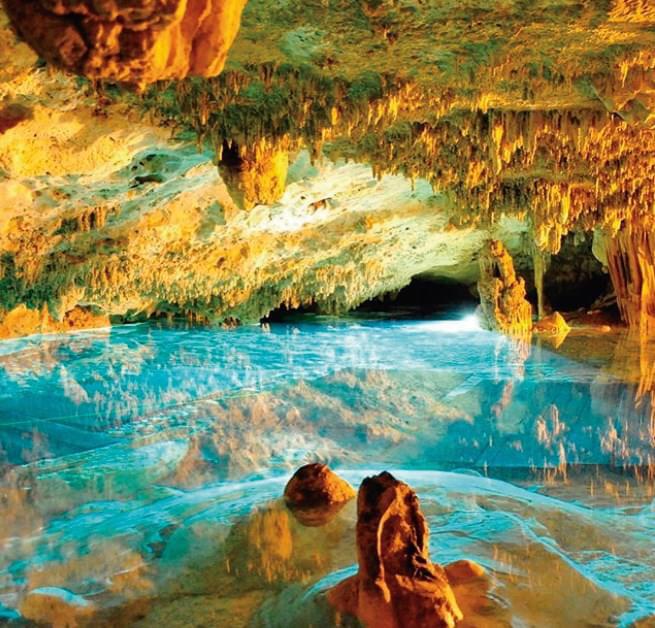
The incredible stalactites and columns of Cenote Taak Bi Ha.
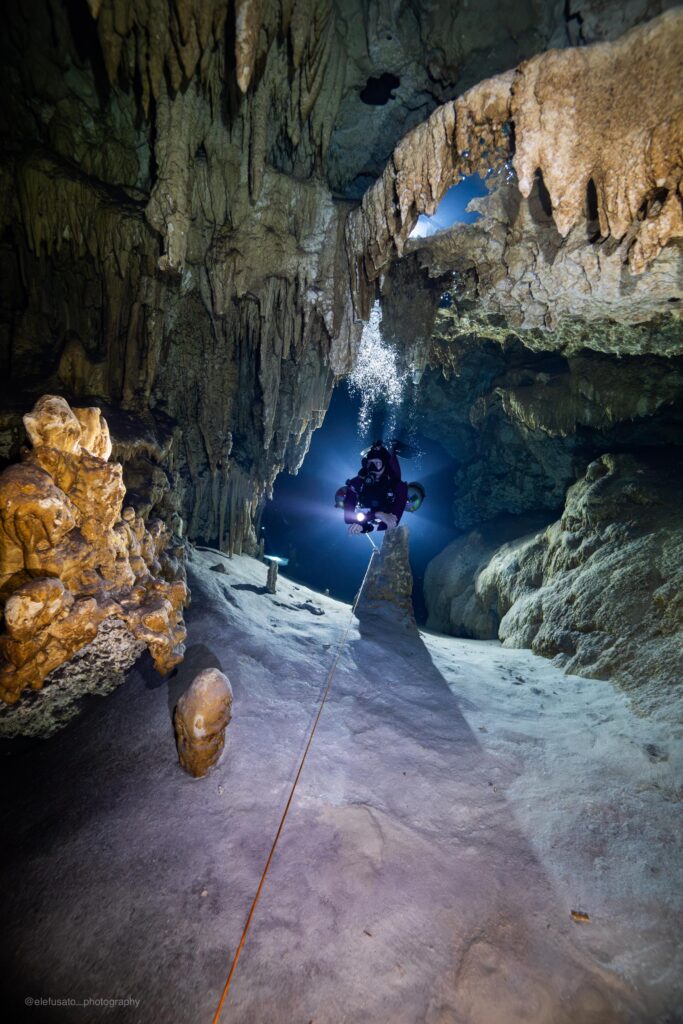
A diver exploring the richly decorated passages of Cenote Taak Bi Ha in the Sac Actun system.
Cenote Taak Bi Ha is one of the most recently opened cavern diving routes in Dos Ojos Park. Its Maya name means “Hidden Route of Water.” Although it is very shallow, it is considered one of the most demanding cenotes in the Riviera Maya due to the extreme fragility of its limestone formations and the precise buoyancy control it requires.
Part of the Sac Actun system, Taak Bi Ha is often described as a genuine underwater museum. Its thousands of perfectly preserved stalactites, stalagmites, columns and fossils make it one of the most beautiful cenote dives in Mexico.
Essential Information
Location
Dos Ojos Park – near Playa del Carmen – Sac Actun System – Mexico
Travel time from Playa del Carmen
Approximately 45 to 50 minutes
Depth
Maximum depth of 7 metres, with an average depth of approximately 5 metres.
Water temperature
Approximately 25°C throughout the year.
Visibility
Exceptional, generally exceeding 30 metres.
Minimum recommended certification
Advanced Open Water Diver with excellent buoyancy control. Many operators also require previous experience in several cenotes before allowing divers to visit this site.
Type of dive
Cenote diving along a cavern route within the natural daylight zone.
Average dive duration
Approximately 50 to 60 minutes.
Availability of This Dive
Cenote Taak Bi Ha is offered by Halocline Explorers only to divers who demonstrate excellent buoyancy control.
Due to the exceptional fragility of the site, this dive is generally reserved for divers who have already completed several cenote dives.
Discover Cenote Taak Bi Ha
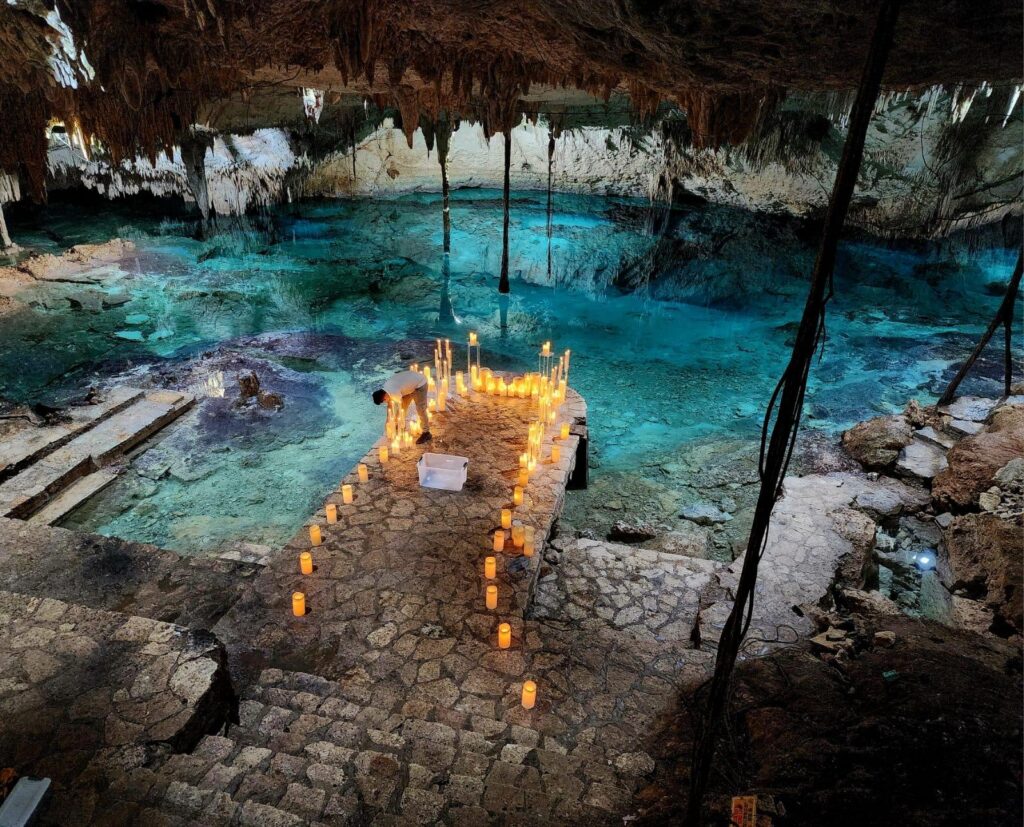
After descending a particularly steep staircase, divers enter a large, naturally illuminated dry chamber. The scuba equipment is generally lowered using a rope to make access to the cenote easier.
The dive begins in shallow water before continuing along a route where every metre reveals new limestone formations.
The passages alternate between vast chambers, natural arches, narrower sections and immense columns. Some areas are so shallow that reflections on the surface create spectacular visual effects.
The entire route gives divers the impression of exploring an immense and remarkably well-preserved mineral cathedral.
Why Dive at Cenote Taak Bi Ha?
Taak Bi Ha is considered one of the most beautiful decorated cenotes near Playa del Carmen and one of the most spectacular cenote dives in Mexico.
Divers come here to discover:
- Thousands of stalactites and stalagmites
- Immense limestone columns
- Spectacular natural arches
- Fossils visible in the walls
- Mirror effects in the shallow areas
- A particularly peaceful and uncrowded atmosphere
What to Expect During Your Dive
After a detailed briefing, your guide explains the planned route, propulsion techniques and the essential rules for protecting the formations.
The dive progresses slowly at a shallow depth, allowing you to observe the numerous limestone formations from different angles.
The route alternates between open chambers and richly decorated passages where every movement must be perfectly controlled.
The shallow depth allows divers to spend a long time exploring the site, with dive times frequently exceeding 50 minutes depending on air consumption.
What Makes Cenote Taak Bi Ha Unique?
Taak Bi Ha has several exceptional characteristics:
- One of the highest concentrations of limestone formations in the Riviera Maya
- A very shallow dive profile
- An extremely photogenic route
- Magnificent mirror effects at the surface
- A particularly fragile environment
- A site reserved for divers with excellent buoyancy control
Tips From Your Guide
The shallow depth makes buoyancy control more challenging than it may initially appear.
A single fin movement can cause contact with the formations or disturb the sediment. A frog kick or equivalent propulsion technique and a perfectly horizontal position are strongly recommended.
At Halocline Explorers, we consider Taak Bi Ha suitable for divers who have already demonstrated their ability and comfort during several other cenote dives.
Frequently Asked Questions
What Does Taak Bi Ha Mean?
Its Maya name means “Hidden Route of Water.”
What Is the Maximum Depth?
The route reaches a maximum depth of 7 metres, with an average depth of approximately 5 metres.
Why Does Cenote Taak Bi Ha Require Excellent Buoyancy Control?
Because the shallow depth makes buoyancy more difficult to control and the formations are extremely fragile. Excellent control of propulsion techniques is essential.
Can You See a Halocline?
No. The route does not feature a clearly visible halocline.
Is This Dive Suitable for Open Water Divers?
Halocline Explorers recommends a minimum Advanced Open Water Diver certification, excellent buoyancy control and previous cenote diving experience.
Does the Route Enter a Cave?
No. The recreational dive remains entirely within the naturally illuminated cavern zone.
Why Choose Halocline Explorers?
At Halocline Explorers, we offer dives at Taak Bi Ha only to divers whose ability allows them to fully enjoy this exceptional site while respecting its extremely fragile environment.
Our small groups allow for calm progression, better buoyancy control and more time to observe the geological details that make this cenote unique.
Our priority is to preserve this exceptional natural heritage while introducing you to one of the most beautiful cenote dives in the Riviera Maya.




Discover Cenote Taak Bi Ha Near Playa del Carmen With Halocline Explorers
Its immense columns, remarkably well-preserved passages and unique atmosphere make it one of the most beautiful cenote dives in Mexico.
Contact Halocline Explorers to discover this exceptional site in a small group accompanied by a professional guide.