
Kukulkan Cenote – Complete Cenote Diving Guide near Playa del Carmen
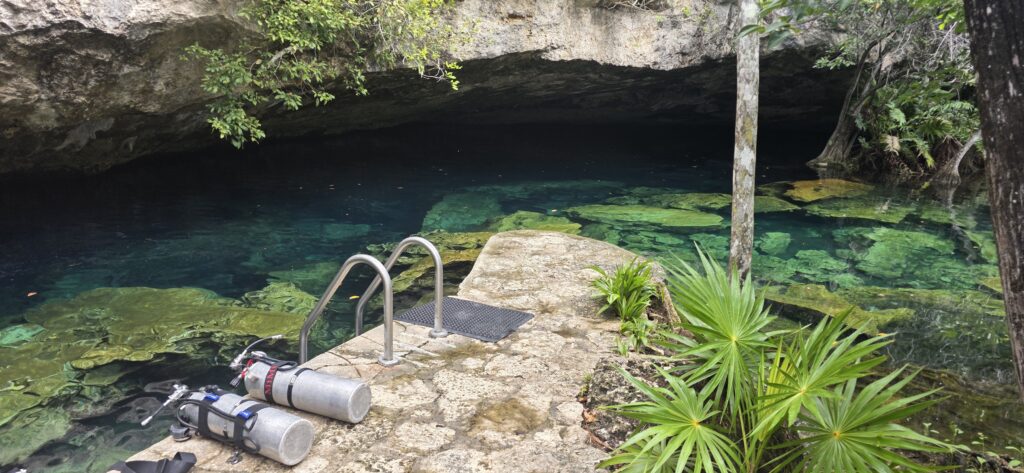
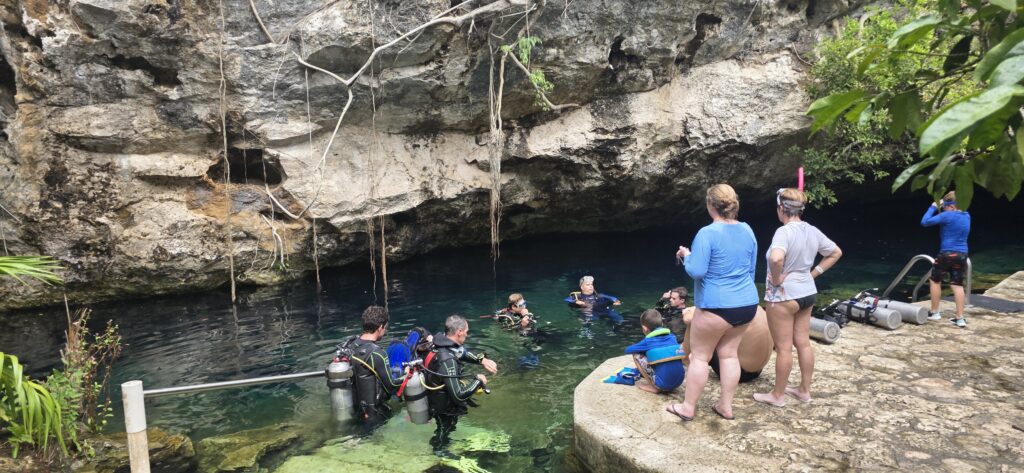
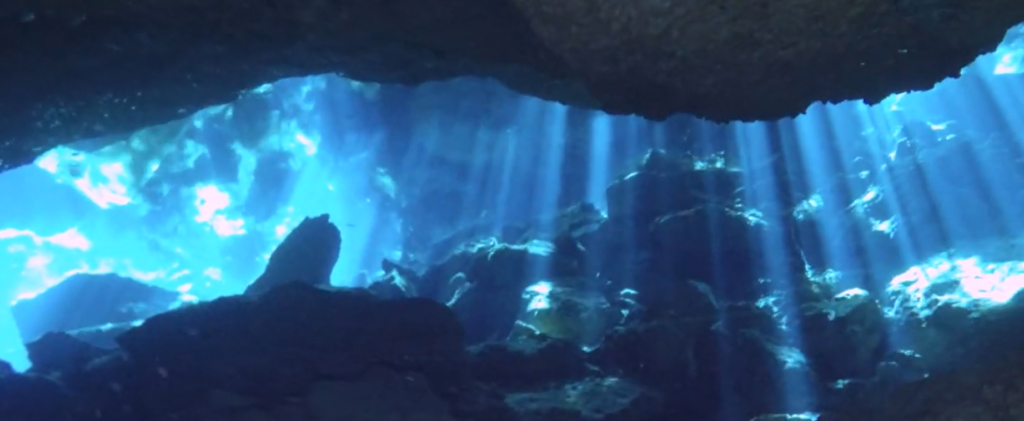
Kukulkan Cenote is one of the brightest and most accessible cenote diving routes in the Riviera Maya. Located in the same park as Chaac Mool, approximately 40 minutes from Playa del Carmen, it is especially renowned for its vast entrance area, impressive sunlight beams and the halocline visible in the deeper sections of the route.
Thanks to its spacious environment, exceptional visibility and constant presence of natural daylight, Kukulkan provides an excellent introduction to cavern diving in Mexico. The site allows divers to progressively discover the distinctive cenote environment while remaining in an open and comfortable space.
Essential Information
Location
Puerto Aventuras area – Riviera Maya, Mexico
Travel time from Playa del Carmen
Approximately 40 minutes
Depth
Up to approximately 14 metres
Water temperature
24–25°C throughout the year
Visibility
Exceptional, often exceeding 30 metres
Minimum recommended certification
Open Water Diver with good buoyancy control
Type of diving
Cenote diving along a cavern route within the natural daylight zone
Average dive duration
45–60 minutes
Discover Kukulkan Cenote
Kukulkan Cenote is located just a few minutes’ walk from the entrances to Chaac Mool and Little Brother. Although these routes are within the same site, each one offers a distinct atmosphere and diving experience.
The Kukulkan entrance resembles a vast natural pool surrounded by the tropical vegetation of the Riviera Maya. Its large opening allows sunlight to penetrate deep into the water and illuminate much of the route.
After entering the water, divers progress through a wide cavern that circles the cenote entrance. Natural daylight remains visible throughout the dive, creating powerful contrasts between the crystal-clear water, limestone walls and darker areas beneath the ceiling.
This open and brightly illuminated configuration makes Kukulkan an excellent choice for divers who want to discover cenote diving in an impressive environment without experiencing a strong sense of confinement.
Why Dive at Kukulkan Cenote?
Kukulkan is primarily renowned for the quality of its natural light.
When weather conditions are favourable, sunlight passes directly through the surface and descends into the cavern. These beams become particularly visible in the crystal-clear water and create a spectacular atmosphere appreciated by both divers and underwater photographers.
The route also offers the opportunity to observe a halocline, a phenomenon characteristic of some cenotes located near the coast. Here, freshwater in the upper layers meets saltwater at greater depth, temporarily distorting the underwater landscape.
Its shallow depth, spacious environment and constant proximity to natural daylight make Kukulkan an accessible and reassuring choice for a first cenote diving experience.
Your Dive Experience
The dive begins in the large open area of Kukulkan Cenote. Before entering the cavern route, the guide checks each diver’s buoyancy, weighting and comfort in freshwater.
The dive then follows the permanent guideline through a spacious gallery that circles the cenote entrance. Natural daylight remains visible throughout the route, maintaining a visual connection with the exit.
Divers move between limestone walls and formations created when these spaces were still dry. The generous dimensions of the cavern provide time to observe the ceiling contours, changing light and remarkable clarity of the water.
Near the maximum depth, generally between 10 and 13 metres, divers may pass through the halocline. For a few moments, the mixing of freshwater and saltwater can blur vision and make the walls appear to ripple.
As the route returns towards the entrance, the sunlight gradually becomes more intense. This final section often provides the most beautiful contrasts of the dive and reveals the silhouettes of divers against the natural light.
The dive generally lasts between 45 minutes and one hour, depending on the group’s air consumption and the conditions on the day.
What Makes Kukulkan Cenote Unique?
Kukulkan’s defining feature is its immense natural opening, which allows sunlight to penetrate directly into the cavern.
Unlike more enclosed or heavily decorated routes, this dive is primarily distinguished by its spacious environment, dramatic light contrasts, exceptional visibility and the sense of openness created by the entrance area.
The halocline provides a second experience characteristic of the Riviera Maya’s cenotes. During a single dive, you can observe the effects of sunlight in freshwater, cross the boundary between two different layers of water and discover the contours of an ancient limestone cavity that is now submerged.
This combination of natural light, spacious passages and hydrological phenomena makes Kukulkan one of the best routes for understanding what makes cenote diving so different from ocean diving.
Tips from Your Guide
The most impressive sunlight beams depend on the position of the sun and the weather. Whenever possible, we organise the day to visit Kukulkan at the most favourable time.
Visibility can become temporarily blurred while crossing the halocline. Stay close to the guide, maintain a steady pace and avoid sudden movements.
Good buoyancy control allows you to fully enjoy the route, protect the environment and maintain a comfortable distance from the walls and ceiling.
Although Kukulkan is especially open and bright, it remains an overhead environment. The route must therefore always be completed with a qualified professional cavern guide and entirely within the natural daylight zone.
Frequently Asked Questions
Is Kukulkan Cenote suitable for Open Water Divers?
Yes. Kukulkan is accessible to certified Open Water Divers with good buoyancy control when accompanied by a qualified professional cavern guide.
What is the maximum depth at Kukulkan Cenote?
The maximum depth of the route is approximately 14 metres.
Is Kukulkan suitable for a first cenote dive?
Yes. Its spacious environment, shallow depth and constant natural daylight make it one of the most suitable routes for a first cenote diving experience.
Why is Kukulkan Cenote famous?
Kukulkan is primarily known for its powerful sunlight beams, immense entrance area, crystal-clear water and halocline.
Can you observe a halocline at Kukulkan?
Yes. The halocline is generally found between 10 and 13 metres. Its visibility and intensity can vary depending on current conditions.
What is the difference between Kukulkan and Chaac Mool?
Both routes are located in the same park, but their atmospheres are different. Kukulkan is distinguished by its large opening, spacious environment and powerful sunlight beams. Chaac Mool and Little Brother offer different routes with more extensive overhead sections and a greater variety of limestone formations.
Is underwater photography allowed at Kukulkan?
Yes. The natural light, water clarity and size of the entrance area provide excellent conditions for underwater photography and video. Any applicable cenote photography rules or fees must be respected.
Does the route enter a cave?
No. The recreational route remains within the cavern zone, where natural daylight and the exit remain visible. Passages beyond this zone are exclusively reserved for divers with the appropriate cave diving training and certification.
Can you dive at Kukulkan Cenote throughout the year?
Yes. Water temperature and visibility generally remain stable throughout the year. However, the intensity of the sunlight beams depends on the time of day, season and cloud cover.
Why Choose Halocline Explorers?
At Halocline Explorers, we organise Kukulkan dives in small groups to provide a personalised and comfortable experience adapted to your level.
Before entering the water, your guide explains the characteristics of the route, the procedures associated with cavern diving and the correct behaviour when crossing the halocline.
We organise the day according to the divers’ experience, weather conditions and position of the sun to make the most of the light effects for which Kukulkan is renowned.
Our goal is to introduce you to the cenotes of the Riviera Maya through an authentic and unhurried experience that respects the environment and applies demanding safety standards.
What Our Divers Say
For several years, Halocline Explorers has guided divers from around the world through some of the most beautiful cenotes in the Riviera Maya.
Their feedback reflects our commitment to personalised experiences, small groups and professional guidance on every dive.




Book Your Dive at Kukulkan Cenote
With its immense natural entrance, impressive sunlight beams, halocline and crystal-clear water, Kukulkan Cenote offers a spectacular introduction to cenote diving in the Riviera Maya.
Combined with the Chaac Mool or Little Brother route, this dive allows you to discover two complementary environments during the same day without a long transfer between the sites.
Join Halocline Explorers and explore one of the brightest and most accessible cenotes near Playa del Carmen, accompanied by a professional guide in a small group.
Rejoignez Halocline Explorers
Notre équipe vous accompagne pour vivre une expérience sûre, personnalisée et inoubliable.
Cénotes • Cozumel • Playa del Carmen • Plongée technique • Formations IANTD
Petits groupes. Sécurité maximale. Encadrement professionnel.
Join Halocline Explorers
Our experienced team provides safe, personalized, and unforgettable diving experiences.
Cenotes • Cozumel • Playa del Carmen • Technical Diving • IANTD Training
Small groups. Maximum safety. Professional instruction.
Únete a Halocline Explorers
Nuestro equipo te acompaña para vivir una experiencia segura, personalizada e inolvidable.
Cenotes • Cozumel • Playa del Carmen • Buceo técnico • Formación IANTD
Grupos reducidos. Máxima seguridad. Atención profesional.