
IANTD Introductory Cave Diver Course in Playa del Carmen
Progress beyond the natural-light zone and discover the foundations of cave diving with the IANTD Introductory Cave Diver course in Playa del Carmen, training in the extraordinary cenotes of Mexico.
Also known as the Intro to Cave course, this certification teaches you how to plan and conduct simple cave dives while maintaining a continuous guideline to the exit.
You will develop essential cave-diving skills including gas management, buoyancy, propulsion techniques and the ability to exit a cave while sharing gas or in zero visibility.
Program: theory, land drills, confined-water training and cave dives
Required dives: minimum 4 after Cavern Diver, or 6 if this is your first overhead-environment training program
Minimum cave bottom time: 100 minutes
Prerequisites: IANTD Wreck Diver, Cavern Diver, Limited Mine Diver or equivalent certification
Minimum experience: 30 logged dives
Maximum depth: 40 metres / 130 feet
Navigation: continuous main guideline, with no jumps to another line
Price: from MXN 5,000 per day
Certification: IANTD Introductory Cave Diver
Languages: English, French or Spanish
Enter the World of Cave Diving
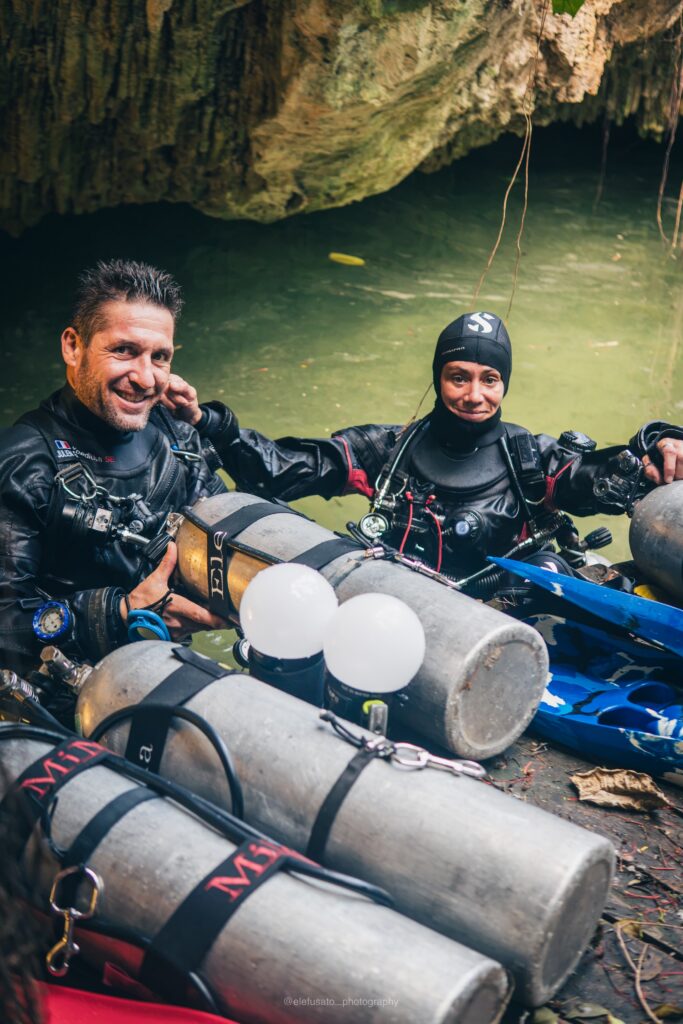
The Cavern Diver course teaches you to dive within the portion of an overhead environment where natural light from the exit remains visible.
The Introductory Cave Diver course allows you to progress beyond this limit and begin diving within the actual cave zone, where natural light may disappear completely.
This progression fundamentally changes the nature of the dive.
Inside the cave zone:
- the exit can no longer be located using natural light;
- the guideline becomes your permanent reference toward the exit;
- a direct ascent to the surface is impossible;
- gas management must allow the team to deal with an emergency;
- loss of a light or visibility must be manageable;
- every team member must understand their role and limits.
Intro to Cave is therefore a true cave diving training program, not simply an extension of a guided cenote dive.
What Is the IANTD Introductory Cave Diver Certification?
The IANTD Introductory Cave Diver program is designed to provide recreational divers with a structured introduction to the cave environment.
It teaches the knowledge, techniques and procedures required to conduct simple cave penetrations while remaining on a continuous guideline.
The certification is deliberately limited.
It does not allow you to conduct:
- jumps between different lines;
- complex navigation;
- circuits requiring a change of guideline;
- dives beyond the limits of your certification;
- dives using an equipment configuration different from the one in which you were trained.
These limitations allow you to progressively build genuine cave-diving experience before continuing toward a more advanced Cave Diver level.
Who Is the Intro to Cave Course For?
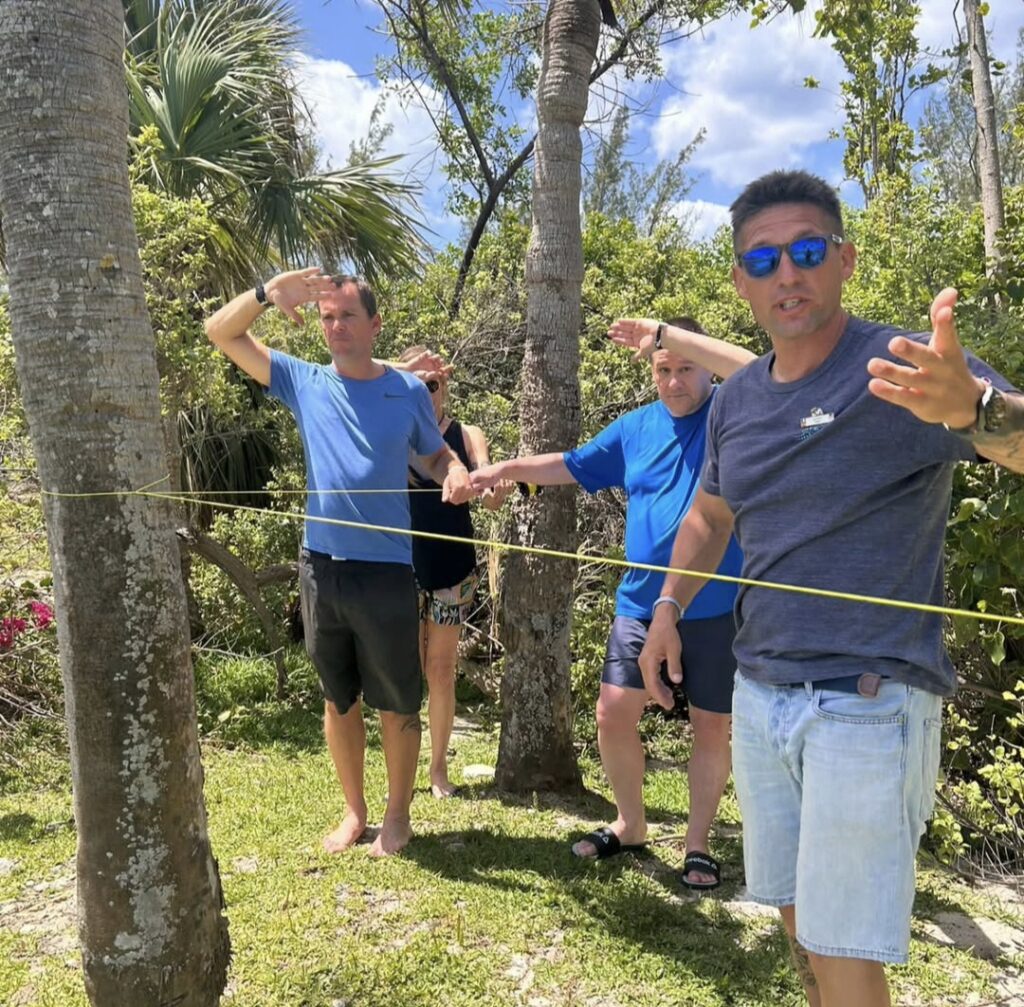
This course is designed for divers who want to:
- progress beyond the natural-light zone;
- learn fundamental cave-diving procedures;
- gain genuine experience in an overhead environment;
- improve their guideline skills;
- refine their buoyancy and propulsion;
- learn zero-visibility exit procedures;
- master gas-sharing procedures;
- develop the ability to manage light or regulator failures;
- prepare for future Cave Diver training.
The course requires good mastery of fundamental diving skills.
Meeting the administrative minimums does not automatically mean that a diver is ready to begin cave training.
Your buoyancy, trim, propulsion, comfort level and ability to manage multiple tasks will be assessed before and throughout the course.
Why Take an Intro to Cave Course in Mexico?
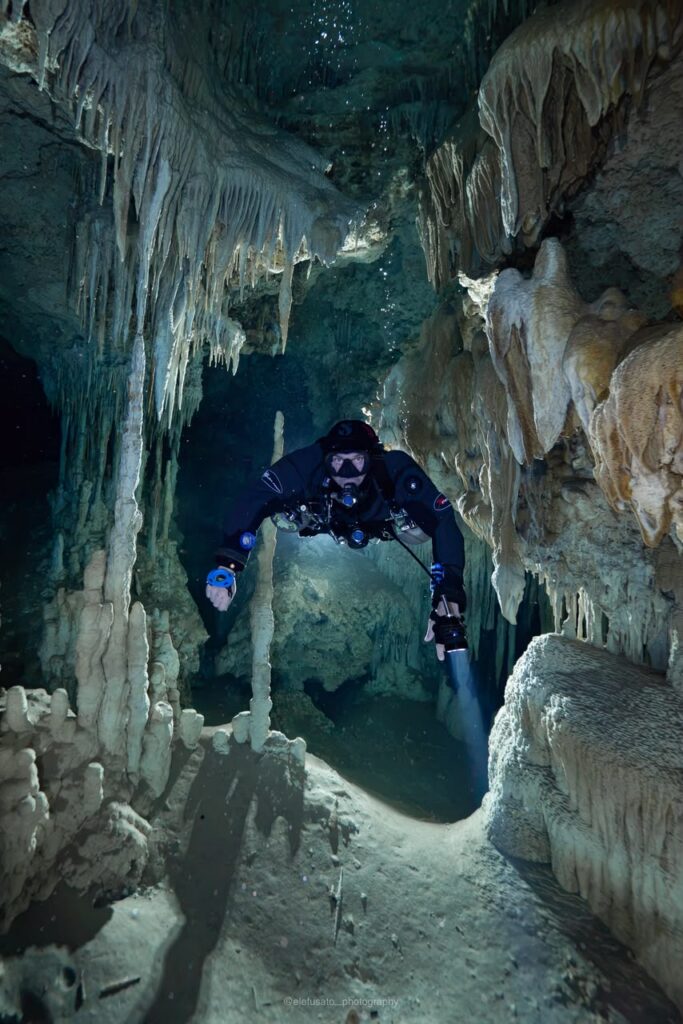
The Riviera Maya is home to some of the largest known flooded cave systems in the world.
The cenotes between Playa del Carmen and Tulum provide access to an extraordinary variety of passages, depths and cave configurations.
This environment allows us to progressively develop:
- guideline techniques;
- team communication;
- propulsion techniques;
- gas management;
- zero-visibility exits;
- lost-line procedures;
- lost-diver procedures;
- gas sharing;
- valve and regulator management.
The exceptional visibility found in many Mexican cenotes makes it easier to observe, analyse and correct techniques during training.
However, clear water does not remove any of the inherent risks of cave diving.
Safety always depends on training, planning, equipment, teamwork and respect for your limits.
Why Choose the IANTD Introductory Cave Diver Certification?
IANTD — the International Association of Nitrox and Technical Divers — provides a progressive training pathway for overhead-environment and cave diving.
The IANTD Introductory Cave Diver program introduces recreational divers to the cave environment while developing practical skills in dive planning and emergency management.
The program includes:
- theory sessions;
- land drills;
- one or more confined-water sessions;
- cave-training dives;
- a minimum of 100 minutes of cave bottom time;
- four or six dives depending on your previous training;
- gas-management procedures specific to your equipment configuration;
- zero-visibility exit drills;
- lost-line and lost-diver procedures;
- appropriate cave-diving equipment.
Certification is awarded only when the required skills can be demonstrated consistently and to the required standard.
Intro to Cave Training in English in Mexico
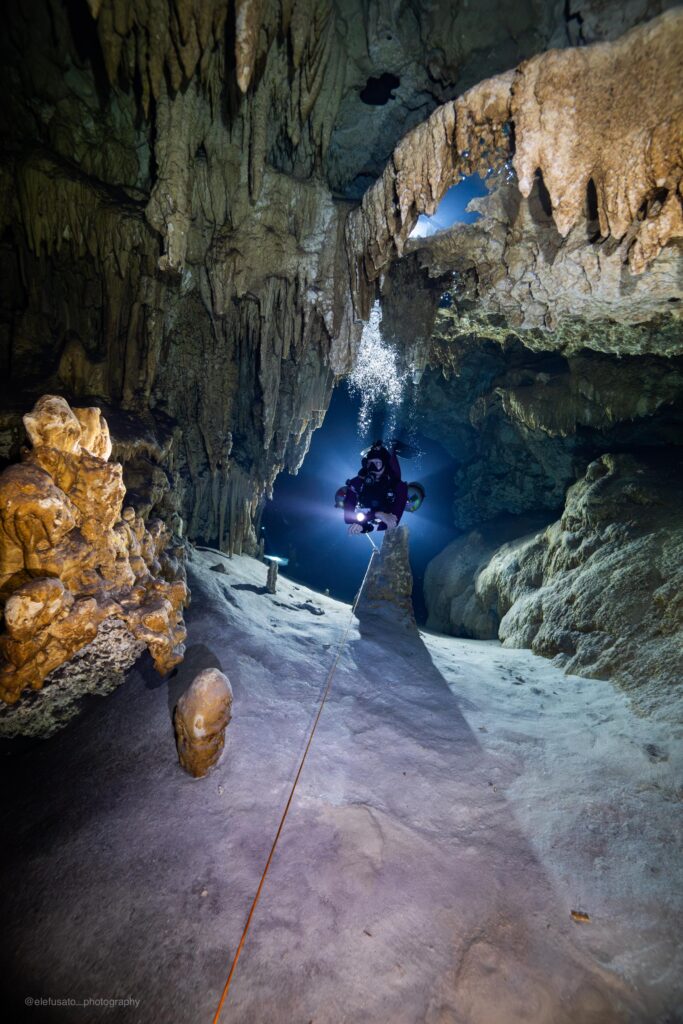
Cave-diving procedures must be understood without ambiguity.
Training covers subjects such as gas management, penetration limits, emergency procedures and communication in zero visibility.
At Halocline Explorers, your Introductory Cave Diver course in Playa del Carmen can be taught entirely in English.
Every skill is:
- explained during theory;
- practised on land;
- repeated in confined water;
- progressively applied inside the cave;
- analysed during the debriefing.
Training is also available in French and Spanish.
IANTD Introductory Cave Diver Course Program
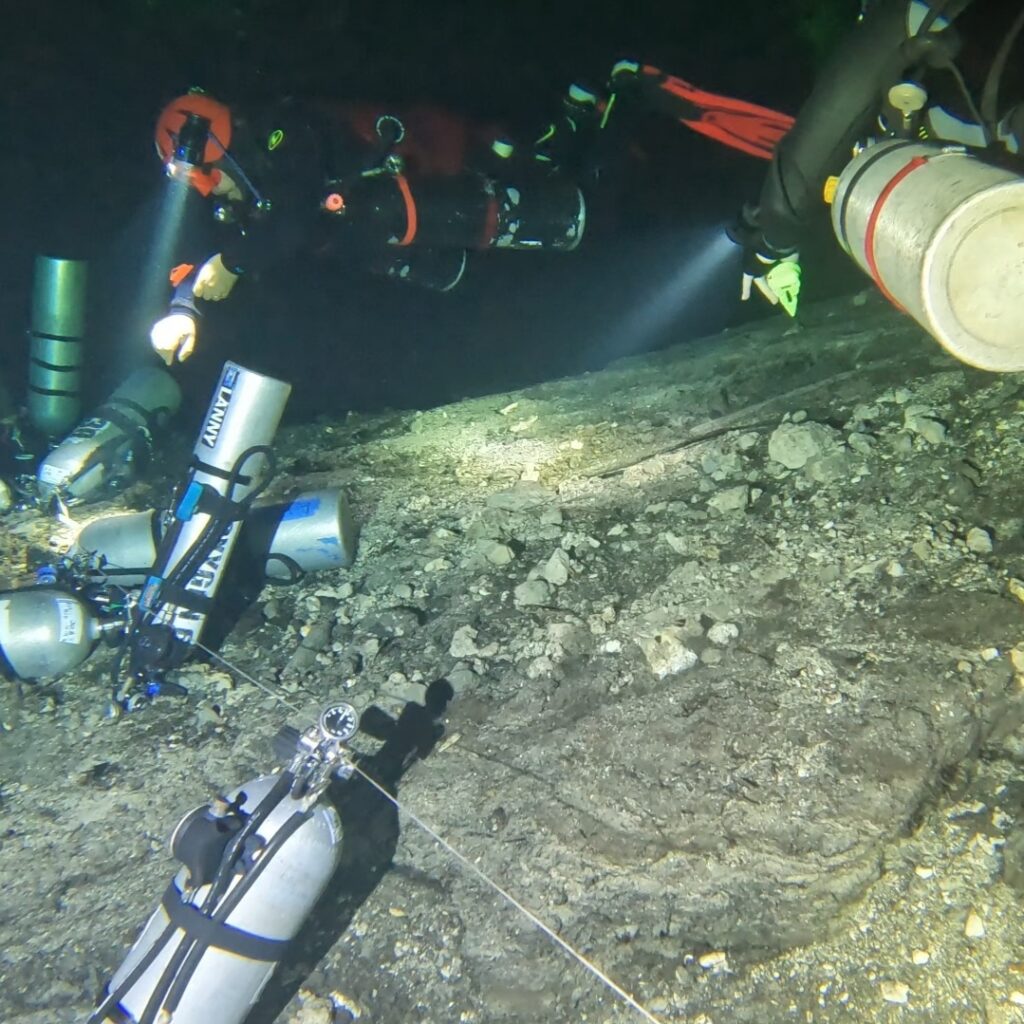
The exact program depends on your previous certification, equipment configuration, experience and progression.
Theory Sessions
Theory covers subjects including:
- characteristics of the cave environment;
- differences between Cavern, Introductory Cave and Cave Diver;
- individual responsibility;
- risk analysis;
- team procedures;
- gas management;
- calculation of turn pressures;
- use of line markers;
- communication;
- equipment configuration;
- light-failure procedures;
- loss of visibility;
- lost-line procedures;
- lost-diver procedures;
- regulator failures;
- protection of caves and formations.
Land Drills
Before performing these skills underwater, you will practise:
- handling the primary reel;
- installing a guideline;
- making tie-offs;
- following the line with visibility;
- following the line without visibility;
- lost-line procedures;
- lost-diver procedures;
- use of directional arrows;
- use of non-directional markers;
- touch communication;
- gas-sharing procedures.
These repetitions help establish logical and efficient procedures before adding the pressure of a real cave environment.
Confined-Water Training
Confined-water sessions are used to assess and develop:
- buoyancy;
- horizontal trim;
- propulsion techniques;
- stability while performing skills;
- following the guideline with a blacked-out mask or closed eyes;
- following the line without a mask;
- regulator switching;
- valve shutdowns;
- gas sharing;
- touch communication;
- teamwork.
The standards require, among other skills, following a guideline for at least 12 metres / 40 feet with a blacked-out mask or closed eyes, and then without a mask.
Cave Dives
During the cave dives, you will apply these procedures in a real overhead environment.
Training includes:
- dive planning;
- checking and balancing team gas;
- guideline installation;
- communication;
- team positioning;
- progression management;
- light-failure drills;
- zero-visibility exits;
- touch-contact exits;
- Bump and Go exits;
- gas sharing while following the line;
- regulator-failure management;
- valve shutdowns;
- lost-line procedures;
- lost-diver procedures.
How Many Dives Are Required?
The minimum number of dives depends on your previous training.
If You Are Already Cavern Diver or Limited Mine Diver
The Introductory Cave Diver program requires at least:
- four cave dives;
- 100 minutes of cave bottom time.
If Introductory Cave Is Your First Overhead-Environment Course
The program requires at least:
- six dives;
- 100 minutes of cave bottom time.
This second pathway may apply, for example, to a diver holding a Wreck Diver certification or equivalent that meets IANTD prerequisites but who has not previously completed Cavern Diver or Limited Mine Diver training.
These are minimum requirements.
Additional dives or training days may be necessary to reach the required level of proficiency.
Guideline Management
Beyond natural light, the guideline is your continuous reference back to the exit.
You will learn how to:
- use a primary reel;
- select an appropriate starting point;
- make secure tie-offs;
- install a line without creating line traps;
- maintain a continuous guideline to the exit;
- maintain contact with the line;
- follow the guideline with or without visibility;
- communicate while on the line;
- share gas while following the guideline;
- correctly use directional and non-directional markers.
The Introductory Cave program is limited to simple navigation.
No jumps from one guideline to another are permitted during the course or within the limits of this certification.
Lost-Line Procedures
Losing the guideline can make locating the exit extremely difficult.
The course teaches you to react methodically rather than moving through the cave without a structured plan.
You will practise:
- stopping and controlling the situation;
- communicating with the team;
- using a safety reel;
- conducting a structured search for the guideline;
- maintaining your position;
- managing gas and time;
- securing the line once it has been located.
The procedure is first practised on land and in a controlled environment before being integrated into overhead-environment exercises.
Lost-Diver Procedures
Separation from a team member is a serious situation in a cave environment.
You will learn how to:
- quickly identify that a teammate is missing;
- maintain contact with the main guideline;
- communicate with the remaining team;
- organize a limited and structured search;
- use available references and markers;
- monitor your gas and limits;
- end the search when the reserve required for a safe exit is reached.
The objective is to develop a disciplined response without placing the remaining members of the team at unnecessary risk.
Gas Management and Turn-Pressure Calculations
Before every dive, students must determine appropriate turn pressures based on the breathing rates of the members of the team.
Planning takes RMV — Respiratory Minute Volume — into account.
Each diver must have at least 60 cubic feet, approximately 1,700 litres, of breathable gas available.
The IANTD rules used on this program are:
- single cylinder: rule of thirds;
- double cylinders or sidemount: rule of sixths.
You will learn how to:
- determine your gas consumption;
- compare the consumption rates of team members;
- balance available reserves;
- calculate an appropriate turn pressure;
- regularly monitor cylinder pressures;
- communicate gas information;
- begin the exit as soon as the first limit is reached;
- preserve sufficient gas for an emergency gas-sharing exit.
Gas Sharing in a Cave
An out-of-gas emergency inside a cave cannot be solved by making a direct ascent.
The diver must reach a teammate, receive gas and follow the guideline toward the exit.
During training, you will practise:
- approaching a teammate without breathing while slowly exhaling;
- following the guideline with your eyes closed;
- initiating gas sharing;
- exiting while maintaining contact with the line;
- gas sharing with visibility;
- gas sharing without visibility;
- touch communication;
- maintaining appropriate team positioning.
The exercises include situations in which two divers begin approximately 12 metres / 40 feet apart, reach their teammate while following the guideline and initiate gas sharing.
Zero-Visibility Exit Procedures
A complete loss of visibility may be caused by disturbed sediment, a general lighting failure or another emergency.
The training includes several exit procedures.
Touch Contact
Team members remain in physical contact and communicate through tactile signals while following the guideline toward the exit.
Bump and Go
Divers maintain progression and team cohesion using intermittent physical contact appropriate to the situation.
Gas Sharing in Zero Visibility
The team must simultaneously maintain:
- gas sharing;
- contact with the guideline;
- contact between divers;
- controlled swimming speed;
- effective communication.
These exercises require excellent buoyancy and positional control.
Light and Regulator Failures
The course includes simulated equipment failures.
You will learn how to:
- identify a primary-light failure;
- switch to a backup light;
- communicate the failure;
- begin the exit;
- manage a regulator failure;
- close the affected valve;
- switch to a functioning gas source;
- continue the procedure without losing buoyancy control.
The standards require the complete valve-shutdown exercise simulating a gas failure to be completed in less than one minute.
Valve shutdowns must also be practised while swimming without significantly changing swimming speed.
Equipment Configurations
The course may be completed using one of the configurations permitted by the IANTD standards:
- single cylinder with a dual-outlet valve;
- double cylinders with a dual-outlet manifold;
- sidemount configuration.
The certification remains linked to the configuration used during training:
- a diver trained in a single-cylinder configuration is qualified only in that configuration;
- a diver trained in doubles is qualified only in doubles;
- a diver trained in sidemount is qualified only in sidemount.
Additional training or an appropriate evaluation is therefore required before changing configuration for Introductory Cave dives.
Required Personal Equipment
IANTD standards require equipment including:
- one primary reel;
- one safety reel;
- one primary light;
- two backup lights;
- three directional arrows;
- three non-directional markers;
- a slate or wetnotes;
- one primary cutting device;
- one backup cutting device;
- a compliant cylinder configuration;
- instruments for monitoring time, depth and gas.
All equipment must be accessible, correctly positioned and appropriate for the cave environment.
Your configuration will be inspected and adjusted before the cave dives.
Propulsion Techniques
Poor finning technique can disturb sediment and cause a rapid loss of visibility.
You will need to demonstrate good control of the propulsion techniques taught during overhead-environment training.
Depending on your configuration and the environment, these may include:
- frog kick;
- modified frog kick;
- modified flutter kick;
- backward kick;
- controlled turns;
- propulsion techniques designed to minimize water movement toward the bottom.
The objective is to move efficiently without damaging formations or compromising visibility for the team.
Essential Course Information
Course: IANTD Introductory Cave Diver
Location: cenotes around Playa del Carmen and the Riviera Maya, Mexico
Certification prerequisites: IANTD Wreck Diver, Cavern Diver, Limited Mine Diver or equivalent
Minimum experience: 30 logged dives
Dives after Cavern/Limited Mine: minimum 4
First overhead-training pathway: minimum 6 dives
Minimum cave bottom time: 100 minutes
Maximum depth: 40 metres / 130 feet
Navigation: continuous guideline, no jumps permitted
Available gas: minimum 1,700 litres / 60 cu ft per diver
Maximum ratio: 3 students per instructor with at least 9 metres / 30 feet of initial visibility
Price: from MXN 5,000 per day
Languages: English, French or Spanish
When initial visibility is between 6 and 9 metres / 20–30 feet, the maximum ratio is reduced to two students per instructor.
No training dive may be conducted with less than 6 metres / 20 feet of initial visibility.
Course Requirements
To begin the IANTD Introductory Cave Diver course, you must:
- hold an IANTD Wreck Diver, Cavern Diver, Limited Mine Diver or equivalent certification;
- have at least 30 logged dives;
- have appropriate recent diving experience;
- demonstrate stable buoyancy and trim;
- use appropriate propulsion techniques;
- be capable of managing multiple tasks;
- be medically fit to dive;
- complete the medical questionnaire;
- provide your certification and logbook;
- use an equipment configuration that complies with the standards.
The minimum age is:
- 15 years old with permission from a parent or legal guardian;
- 18 years old without parental permission.
Your instructor will assess your ability before and throughout the course.
Additional preparation may be recommended if your fundamental diving skills are not yet sufficiently developed for cave training.
How Deep Can You Dive?
IANTD standards establish a maximum depth of 40 metres / 130 feet for the Introductory Cave Diver program.
This is a maximum limit, not a training objective.
The actual depth used during the course depends on:
- your certification;
- your experience;
- your gas consumption;
- the dive site;
- conditions;
- equipment configuration;
- training objectives;
- the instructor’s assessment.
Most of the skills required for the course do not require reaching the maximum depth.
What Can You Do After Your Introductory Cave Diver Certification?
After certification, you can conduct simple cave dives within the limits of your training and with appropriately qualified dive partners.
You must:
- maintain a continuous guideline to the exit;
- remain on the main guideline;
- make no jumps to another line;
- respect the gas-management rule applicable to your configuration;
- remain within the maximum depth limit;
- use the equipment configuration in which you were certified;
- carry the required cave-diving equipment;
- respect the limits of your other certifications and your actual experience.
The certification does not authorize complex navigation or diving beyond the limits of an Introductory Cave Diver.
Introductory Cave Diver or Full Cave Diver?
These levels do not provide the same diving privileges.
Introductory Cave Diver
An Introductory Cave Diver follows a continuous guideline while respecting conservative gas-management and navigation limits.
Jumps between different lines are not permitted.
Cave Diver
Cave Diver training develops more advanced planning, procedures and navigation skills for cave environments.
It allows more complex cave dives within the limits of the specific training program and the diver’s experience.
Introductory Cave Diver is a progressive training level and should not be considered equivalent to Full Cave certification.
Why Train with Halocline Explorers?
Cave diving requires far more than simply performing a series of drills.
It demands:
- excellent environmental awareness;
- clear communication;
- conservative gas management;
- a well-mastered equipment configuration;
- stable buoyancy;
- organized reactions under stress;
- the ability to end a dive when necessary;
- a responsible attitude toward risk.
At Halocline Explorers, we focus on:
- small groups;
- an honest assessment of your initial level;
- personalized progression;
- repetition of essential procedures;
- high-quality guideline work;
- mastery of emergency exits;
- understanding the limits of your certification;
- protection of the cenotes;
- preparing for future training without rushing progression.
Julien Garnier is an IANTD Instructor Trainer specializing in technical diving, sidemount, rebreather and cave diving.
Course Duration and Price
IANTD standards establish a minimum number of dives and minimum cave bottom time, but the total duration depends on your previous training and progression.
Price: from MXN 5,000 per day.
The total cost depends on:
- the number of training days required;
- whether you follow the four- or six-dive pathway;
- your equipment configuration;
- rental equipment requirements;
- cenote entrance fees;
- gases used;
- training materials;
- applicable certification fees.
All inclusions, exclusions and the final price are confirmed before booking.
Frequently Asked Questions About the Intro to Cave Course
What Is the Difference Between Cavern Diver and Intro to Cave?
A Cavern Diver remains within the area where natural light from the exit is continuously visible.
An Introductory Cave Diver can progress beyond natural light while following a continuous guideline and respecting the limits of the certification.
Is Cavern Diver Certification Required?
Not for every training pathway permitted by the IANTD standards.
Candidates must hold an IANTD Wreck Diver, Cavern Diver, Limited Mine Diver or equivalent qualification.
A diver who already holds Cavern Diver or Limited Mine Diver certification must complete at least four Introductory Cave dives.
When Introductory Cave is the diver’s first overhead-environment training program, six dives are required.
How Many Logged Dives Do I Need?
You must have at least 30 logged dives.
How Many Dives Are Required?
The program requires at least four dives if you are already a Cavern Diver or Limited Mine Diver, and six dives when it is your first overhead-environment training program.
What Is the Minimum Cave Bottom Time?
The program requires at least 100 minutes of cave bottom time.
How Many Days Does the Intro to Cave Course Take?
IANTD establishes minimum dive and bottom-time requirements rather than an identical number of training days for every student.
Course duration depends on your previous training, experience, equipment configuration and progression.
Can I Make Jumps Between Two Guidelines?
No.
Jumps from one guideline to another are not permitted at the Introductory Cave Diver level.
What Is the Maximum Depth?
The maximum program depth is 40 metres / 130 feet.
This is not a mandatory target and remains subject to dive planning, conditions and instructor assessment.
What Gas Rule Is Used?
The rule of thirds applies when using a single cylinder.
The rule of sixths applies with double cylinders or a sidemount configuration.
Can I Change Equipment Configuration After Certification?
Your qualification remains linked to the equipment configuration used during training.
A diver trained in a single cylinder, doubles or sidemount is qualified only for that configuration at the Introductory Cave level.
How Many Lights Do I Need?
The standards require one primary light and two backup lights, for a total of three lights.
What Line Markers Are Required?
The required equipment includes three directional arrows and three non-directional markers.
Do I Need Two Cutting Devices?
Yes.
The standards require a primary cutting device and a backup cutting device.
Is Introductory Cave Diver a Full Cave Certification?
No.
Introductory Cave Diver is limited to simple navigation on a continuous guideline, without jumps to another line.
Can I Take the Course in English?
Yes.
The complete course can be taught in English, as well as French or Spanish.
How Much Does the Intro to Cave Course Cost?
Training starts from MXN 5,000 per day.
The total cost depends on the number of training days, training pathway, equipment configuration and logistical requirements.
How Do I Book the Intro to Cave Course?
Send us your preferred dates, certifications, number of logged dives, previous overhead-environment experience, equipment configuration and training objectives.
We will verify the prerequisites before confirming your training program.
Check Availability
Start Your Intro to Cave Training in Mexico
Would you like to progress beyond natural light and begin exploring the flooded cave systems of Mexico’s cenotes through structured cave-diving training?
The IANTD Introductory Cave Diver course in Playa del Carmen develops the skills, discipline and procedures required to begin genuine cave diving.
You will benefit from personalized instruction, small groups and the experience of an IANTD Instructor Trainer specializing in cave diving.
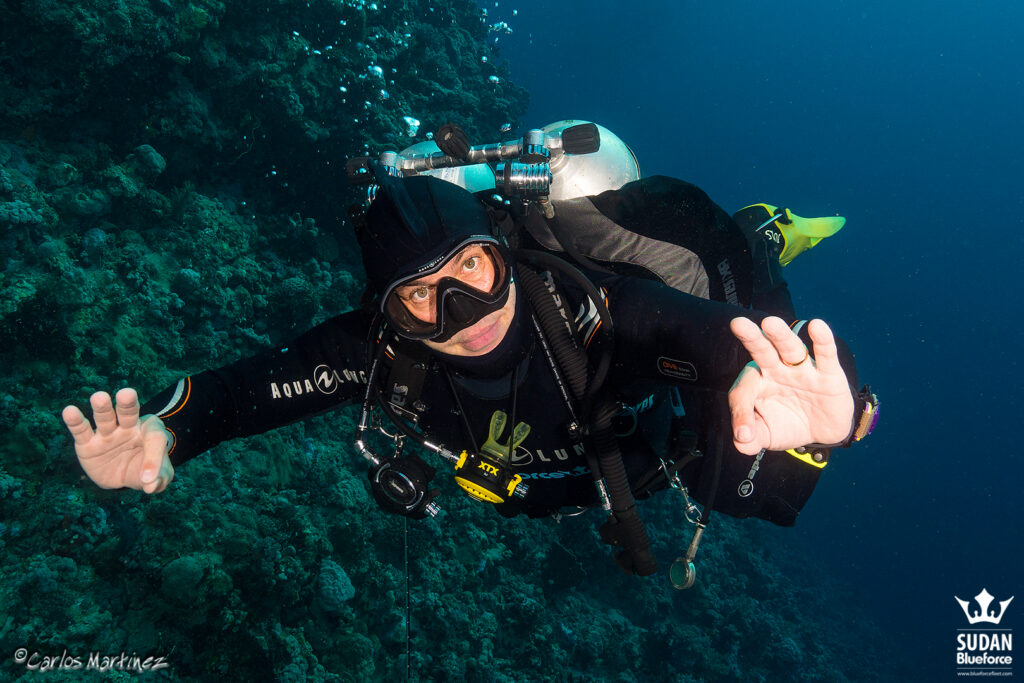
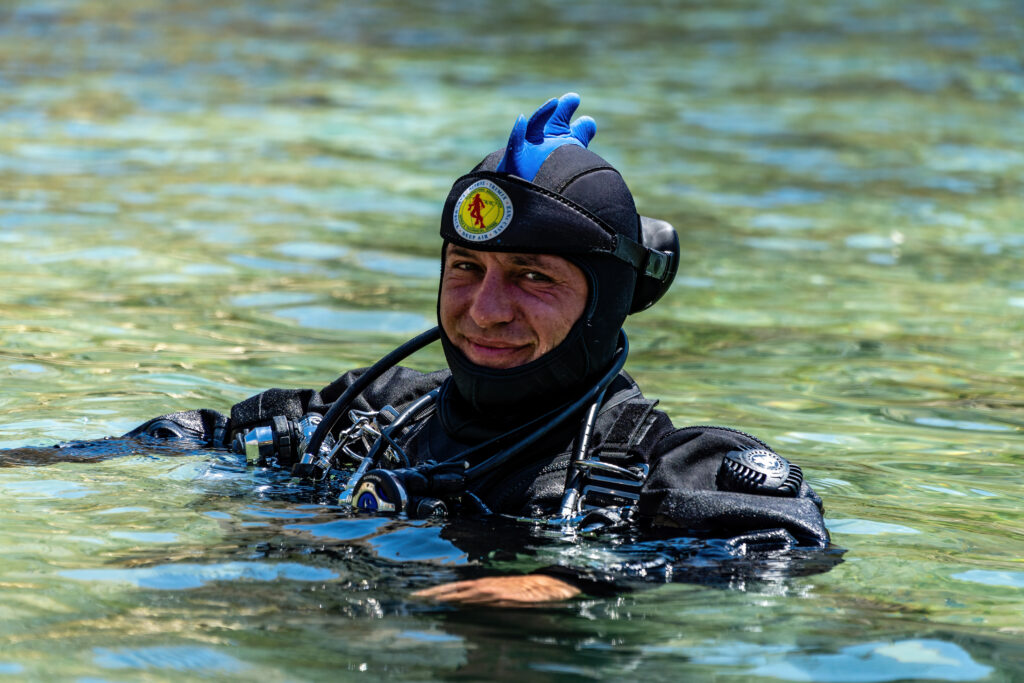
Join Halocline Explorers
Ready to explore some of the most spectacular diving environments in the Riviera Maya?
Our team will help you enjoy a safe, personalized and unforgettable diving experience.
Cenotes • Cozumel • Playa del Carmen • Technical Diving • IANTD Training
Small groups. High safety standards. Professional instruction.




