
IANTD Cavern Diver Course in Playa del Carmen
Start your overhead-environment training with the IANTD Cavern Diver course in Playa del Carmen, in the extraordinary cenotes of Mexico.
The Cavern Diver course in Playa del Carmen teaches you how to safely dive within the natural-light zone of an overhead environment while maintaining a clear and continuously visible exit.
You will develop the essential foundations of cavern diving: guideline use, buoyancy, propulsion, communication, gas management and emergency procedures.
Minimum IANTD program: theory, land drills, confined-water training and cavern dives
Required dives: minimum 4
Minimum overhead bottom time: 100 minutes
Prerequisite: Advanced Open Water Diver or equivalent
Minimum experience: 10 logged dives
Maximum depth: limited by your previous certification
Price: from MXN 5,000 per day
Certification: IANTD Cavern Diver
Languages: English, French or Spanish
Discover Cavern Diving in Mexico’s Cenotes
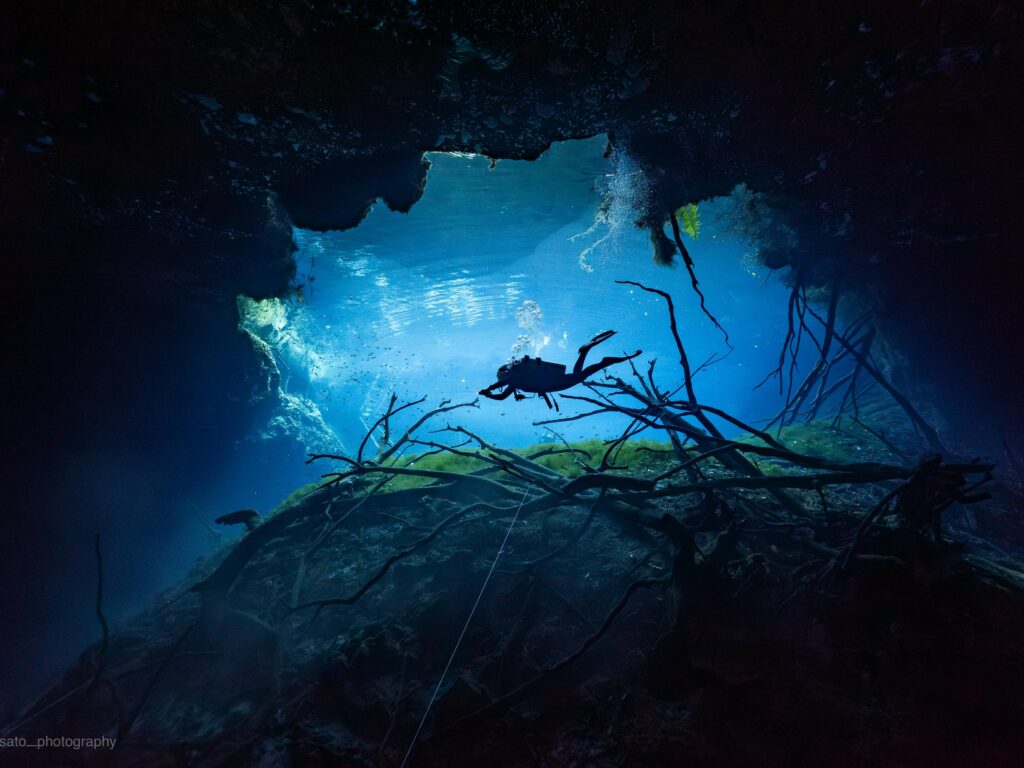
The cenotes of the Riviera Maya provide access to some of the most spectacular flooded cave systems in the world.
Crystal-clear water, limestone passages and spectacular natural-light effects create an exceptional environment in which to discover the fundamental principles of overhead-environment diving.
However, cavern diving should never be confused with ordinary open-water diving. A physical ceiling prevents a direct ascent to the surface, making prevention, planning and respect for established limits essential.
The IANTD Cavern Diver course introduces you to this environment through structured training while remaining within the zone where natural light from the exit is continuously visible.
What Is the Cavern Zone?
The cavern zone is the part of a flooded cave where the exit and its natural light remain continuously visible.
Throughout the dive:
- natural light from the exit must remain visible;
- the route to the exit must remain free of restrictions or obstacles;
- depth must not exceed the limit of your previous certification;
- gas management must follow the rules of the training program;
- the diver must remain connected to the exit by a continuous guideline;
- all Cavern Diver training limits must be respected.
Once natural light from the exit disappears, you leave the cavern zone and enter a true cave-diving environment requiring a higher level of certification.
The Cavern Diver course is therefore not a Full Cave Diver certification.
Your First Step Toward Cave Diving
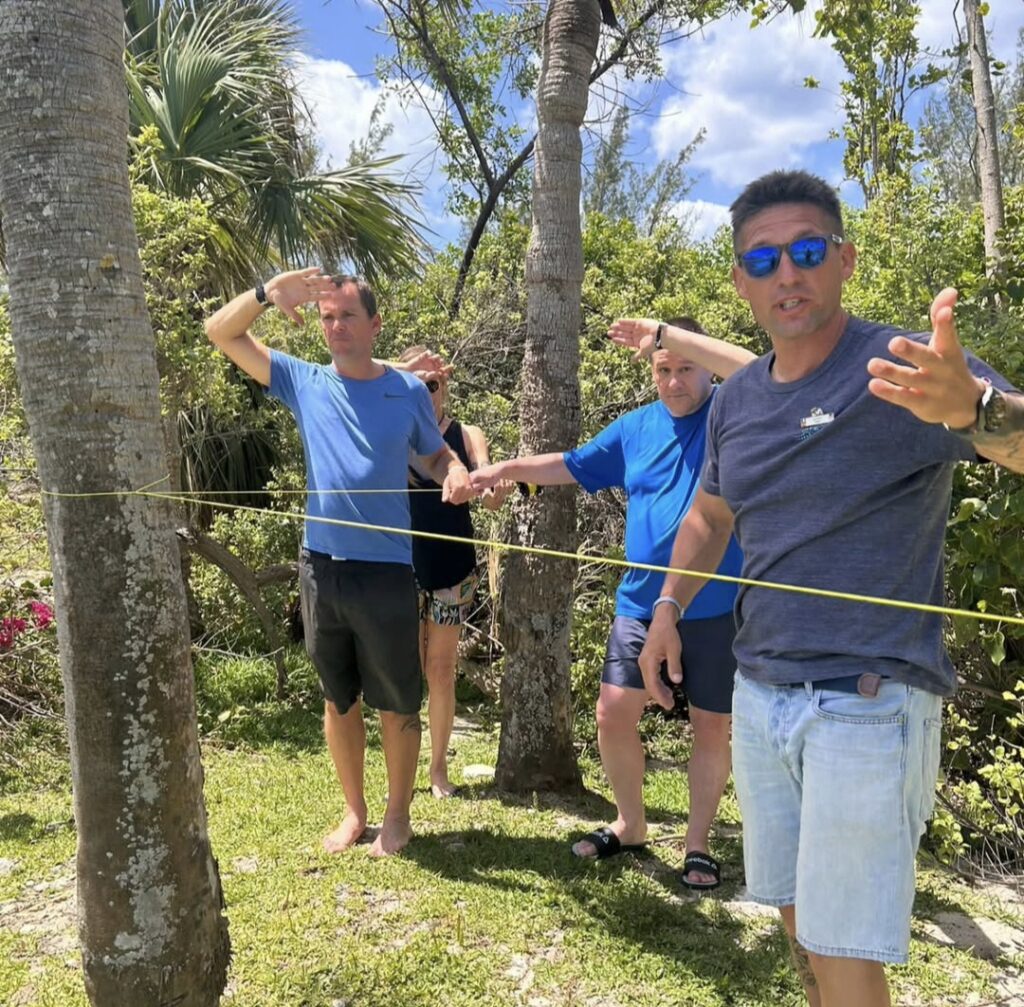
The Cavern Diver course represents the first structured step in the IANTD overhead-environment training pathway.
This course teaches you to understand the specific risks of cavern diving and develop the habits and procedures required to prevent a minor problem from developing into a critical situation.
You will learn how to:
- install and follow a guideline;
- maintain a continuous reference toward the exit;
- use essential light and touch signals;
- control your buoyancy close to the bottom and ceiling;
- use appropriate propulsion techniques;
- minimize sediment disturbance;
- manage your gas according to your equipment configuration;
- share gas while following the guideline;
- exit in zero visibility while maintaining contact with the line;
- work effectively with your buddy or team.
This training provides an essential foundation before progressing toward Introductory Cave Diver, Tek Lite Cave Diver or other cave-diving programs.
Why Take a Cavern Diver Course?
A guided cenote dive and a Cavern Diver course have very different objectives.
During a guided cenote dive, your guide selects the route, plans the dive and supervises the participants. During training, you learn to understand, practise and master the fundamental principles of overhead-environment diving yourself.
The Cavern Diver course helps you develop:
- greater environmental awareness;
- more precise buoyancy control;
- a more stable diving position;
- appropriate propulsion techniques;
- disciplined gas management;
- clear communication;
- better equipment awareness;
- reel and guideline skills;
- zero-visibility exit procedures;
- a more responsible approach to overhead-environment diving.
These skills can also improve your overall diving ability when you return to open-water environments.
Why Train in the Cenotes of the Riviera Maya?
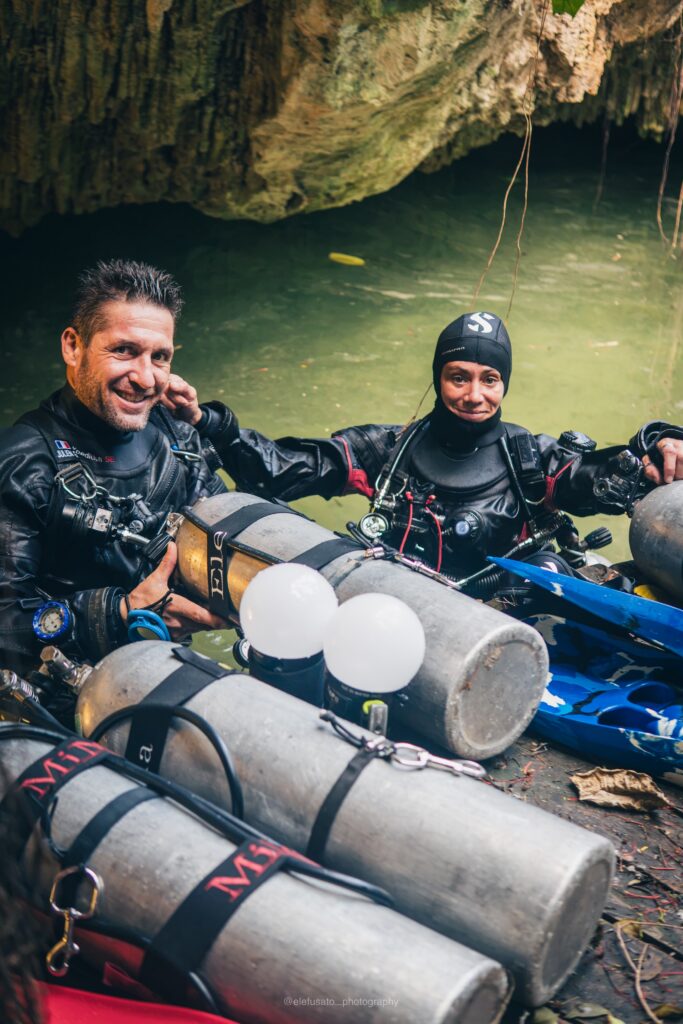
The Riviera Maya is particularly well suited to cavern diving training.
The diversity of its cenotes allows us to select environments according to the objectives of each training session and the student’s individual progression.
The region offers:
- generally exceptional visibility;
- numerous sites suitable for overhead-environment training;
- passages with different configurations;
- areas where skills can be developed progressively;
- excellent conditions for observing the guideline and team;
- fragile limestone environments that demand excellent buoyancy control.
Clear water, however, should never create a false sense of security.
Visibility can deteriorate rapidly after contact with the bottom, inappropriate finning techniques or the disturbance of accumulated sediment.
Your training specifically teaches you how to prevent and manage these situations.
Why Choose the IANTD Cavern Diver Certification?
IANTD — the International Association of Nitrox and Technical Divers — provides a progressive training pathway for recreational, technical and overhead-environment diving.
The IANTD Cavern Diver program develops the skills required to dive within the limits of natural-light penetration while emphasizing individual responsibility and risk management in overhead environments.
The training includes:
- theory sessions;
- land drills;
- one or more confined-water sessions;
- cavern-diving sessions;
- a minimum of four overhead-environment dives;
- a minimum of 100 minutes of overhead bottom time.
Certification is based on mastery of the required skills.
Simply completing four dives does not automatically guarantee certification.
Cavern Diver Training in English, French or Spanish
Overhead-environment diving uses specific terminology, procedures and techniques.
To make appropriate decisions, you must clearly understand:
- the limits of the cavern zone;
- gas management;
- guideline use;
- gas-sharing procedures;
- risks associated with loss of visibility;
- communication techniques;
- exit procedures.
At Halocline Explorers, your Cavern Diver course in Mexico can be taught entirely in English.
Training is also available in French and Spanish.
Every skill is explained, demonstrated, practised and then reviewed during the debriefing.
Progression is adapted to your actual level without reducing the standards required for your safety.
IANTD Cavern Diver Course Program
The exact program is organized according to your experience, equipment configuration and progression.
IANTD standards establish minimum training requirements but do not impose an identical number of training days for every student.
Additional sessions may be necessary if the required skills have not yet been mastered.
Theory and dive planning
Theory sessions include:
- differences between open water, cavern and cave environments;
- hazards specific to overhead environments;
- individual responsibility;
- risk analysis and management;
- dive planning;
- gas management;
- communication;
- team procedures;
- equipment selection and configuration;
- prevention of visibility loss;
- protection of cave formations and the environment.
Land drills
Before performing the skills underwater, you will practise on land:
- guideline use;
- reel handling;
- line placement;
- tie-offs;
- following a guideline with visibility;
- following a guideline without visibility;
- touch communication;
- simulated loss of visibility;
- gas-sharing procedures.
These exercises allow you to understand each procedure before performing it in an overhead environment.
Confined-water session
The confined-water session allows us to check your equipment configuration and practise fundamental skills in a controlled environment.
You will work on:
- buoyancy control;
- maintaining a constant depth;
- horizontal trim;
- propulsion techniques;
- regulator switching;
- gas sharing;
- following a guideline;
- mask-removal procedures;
- buddy communication;
- safety drills before cavern dives.
Cavern dives
The cavern dives allow you to progressively apply these procedures in a real overhead environment.
The program includes at least:
- four cavern dives;
- 100 minutes of overhead bottom time;
- guideline installation and following;
- correctly executed tie-offs;
- following the line with your eyes closed;
- gas sharing with visibility;
- gas sharing without visibility;
- exit procedures;
- an S-drill before the beginning of each dive.
All dives must remain within the zone where natural light from the exit remains visible.
Guideline Skills
The guideline provides a continuous reference back toward the exit.
You will learn how to:
- select an appropriate starting point;
- make a primary tie-off;
- install additional tie-offs;
- maintain appropriate line positioning;
- avoid traps and entanglement hazards;
- maintain contact with the line;
- follow the guideline with or without visibility;
- communicate with your team during an exit;
- correctly retrieve the line.
An incorrectly installed guideline can create additional hazards.
Its use therefore requires method, precision and anticipation.
Gas Management for Cavern Diving
IANTD standards establish different gas-management rules according to the equipment configuration being used.
Each diver must have at least 60 cubic feet, approximately 1,700 litres, of breathable gas available.
The applicable rules are:
- single cylinder: rule of thirds;
- double cylinders or sidemount: rule of sixths.
These rules establish the maximum amount of gas that may be used for penetration.
They preserve sufficient reserves to exit the cavern and manage a potential gas-sharing emergency.
During training, you will learn how to:
- determine your gas consumption;
- calculate your reserve;
- regularly monitor your pressure gauges;
- communicate remaining pressure;
- determine turn pressure;
- apply the appropriate rule for your configuration;
- end penetration as soon as a limit is reached.
Buoyancy, Trim and Propulsion
The bottom of many cenotes is covered with extremely fine sediment.
Inappropriate finning techniques can reduce visibility for the entire team within seconds.
Precise buoyancy control is also essential to prevent contact with fragile limestone formations.
You will work on:
- neutral buoyancy;
- maintaining a constant depth;
- a three-minute stationary hover;
- horizontal trim;
- controlled movement;
- frog kick;
- propulsion techniques designed to minimize sediment disturbance;
- movement close to the bottom and ceiling;
- controlled ascents.
IANTD standards also include a timed ascent at a rate of six metres per minute.
Zero-Visibility Procedures
Loss of visibility can result from sediment, a lighting problem or another unexpected situation.
The exit must then be completed while maintaining contact with the guideline.
During the course, you will learn how to:
- locate and maintain contact with the line;
- close your eyes to simulate zero visibility;
- follow the guideline toward the exit;
- communicate using touch contact;
- maintain a stable position;
- remain in contact with your buddy or team;
- share gas while following the guideline without visibility.
These exercises are introduced progressively under the direct supervision of your instructor.
Gas Sharing in an Overhead Environment
In an overhead environment, an out-of-gas emergency cannot be resolved by making an immediate vertical ascent.
You must be able to share gas while following the guideline toward the exit.
Training includes:
- swimming without breathing for at least 12 metres before beginning gas sharing;
- continuing to move while sharing gas for at least two minutes;
- maintaining a controlled swimming speed;
- gas sharing with visibility;
- gas sharing without visibility;
- maintaining contact with the guideline and team.
These exercises demonstrate the importance of proper equipment configuration, communication and conservative gas management.
Required Equipment for the Cavern Diver Course
IANTD standards permit different equipment configurations:
- a single cylinder equipped with a dual-outlet valve;
- double cylinders with a dual-outlet manifold;
- sidemount configuration.
The selected configuration must meet the redundancy and safety requirements of the program.
Required equipment also includes:
- a primary and/or safety reel;
- a primary light;
- a backup light;
- an appropriate diving mask;
- a backup mask according to the selected configuration;
- instruments for monitoring depth and time;
- correctly fitted diving equipment;
- appropriate accessories and cutting devices.
Your equipment will be inspected and adjusted before the beginning of the dives.
Equipment compatibility, rental requirements and any necessary adjustments should be confirmed before training begins.
Essential Course Information
Course: IANTD Cavern Diver
Location: cenotes around Playa del Carmen and the Riviera Maya, Mexico
Prerequisite: Advanced Open Water Diver or equivalent
Minimum experience: 10 logged dives
Required dives: minimum 4
Minimum overhead bottom time: 100 minutes
Exit light: must remain continuously visible
Maximum depth: limited by your previous certification
Available gas: minimum 1,700 litres per diver
Maximum IANTD ratio: 4 students to 1 instructor
Price: from MXN 5,000 per day
Languages: English, French or Spanish
Course Requirements
To participate in the IANTD Cavern Diver course, you must:
- be an IANTD Advanced Open Water Diver or hold an equivalent certification;
- have at least 10 logged dives;
- have appropriate recent diving experience;
- demonstrate fundamental Advanced Open Water-level skills;
- demonstrate sufficiently stable buoyancy and trim;
- be medically fit to dive;
- complete the medical questionnaire;
- present your current certification;
- use an equipment configuration that meets course requirements.
The minimum age for full Cavern Diver certification is:
- 15 years old with permission from a parent or legal guardian;
- 18 years old without parental permission.
Participants aged 12 to 14 who meet the required performance standards may qualify for Junior Cavern Diver certification.
A Junior Cavern Diver must dive under the supervision of an adult who holds at least a Cavern Diver certification.
Is Excellent Buoyancy Required?
Yes.
Buoyancy is a fundamental skill in any overhead environment.
Before penetration, your instructor will assess:
- your ability to maintain depth;
- your horizontal trim;
- your breathing control;
- your propulsion techniques;
- your stability while performing skills;
- your response to problems.
If your current level requires additional preparation, a dedicated skills-development session or course may be recommended before continuing.
This assessment is not a failure.
It allows you to enter the overhead environment with a stronger technical foundation while helping protect the fragile formations of the cenotes.
What Can You Do After Your Cavern Diver Certification?
After successfully completing all certification requirements, you can plan and conduct cavern dives with appropriately qualified dive partners while respecting the limits of your training.
You must:
- remain within the natural-light zone;
- maintain a visible and unobstructed exit;
- use a continuous guideline;
- respect the depth limit of your previous certification;
- apply the gas-management rule appropriate to your configuration;
- use the required equipment;
- avoid any penetration requiring Cave Diver-level training.
The certification does not authorize you to continue beyond natural light or conduct unrestricted cave exploration.
Cavern Diver, Introductory Cave Diver or Cave Diver?
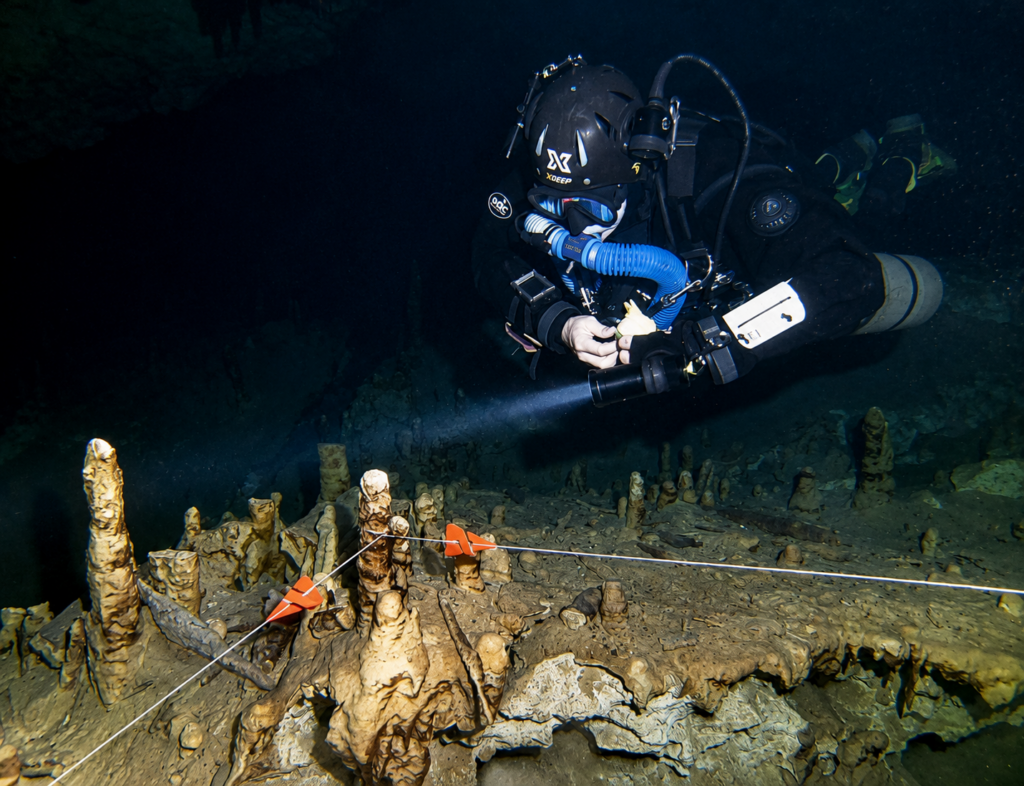
These certifications represent different stages of progression.
Cavern Diver
Cavern Diver training teaches you how to operate within the naturally illuminated portion of an overhead environment.
Natural light from the exit must remain visible at all times.
Introductory Cave Diver
Introductory Cave Diver is the next stage.
It allows you to progress beyond the natural-light zone while respecting specific penetration, navigation and gas-management limits.
Cavern Diver certification is a prerequisite for the IANTD Introductory Cave Diver program.
Cave Diver
Cave Diver develops the skills required for more complete cave dives and more advanced navigation within the limits of the certification.
Each level should be mastered before progressing to the next.
Why Train with Halocline Explorers?
Cave diving cannot be learned simply by memorizing procedures.
It requires precision, repetition and a genuine understanding of every decision you make.
At Halocline Explorers, we focus on:
- an honest assessment of your initial skill level;
- progression adapted to your abilities;
- small groups;
- precise buoyancy control;
- clean and functional equipment configuration;
- conservative gas management;
- high-quality guideline skills;
- communication and teamwork;
- protection of the cenotes;
- understanding the limits of your certification.
Julien Garnier is an IANTD Instructor Trainer specializing in technical diving, sidemount, rebreather and cave diving.
His experience allows us to build demanding, progressive training adapted to your objectives without compromising the standards required for your safety.
Training Adapted to Your Progression
The total course duration depends on your experience, equipment configuration, buoyancy and ability to master the required skills.
IANTD standards establish a minimum of four dives and 100 minutes in an overhead environment, but these minimums do not replace actual skill mastery.
One or more additional sessions may therefore be recommended when necessary.
Before confirming your program, please provide:
- your current certification;
- your number of logged dives;
- the date of your last dive;
- your previous cenote-diving experience;
- your experience using a reel;
- your current equipment configuration;
- your future cave-diving objectives.
This allows us to recommend a program and duration appropriate to your experience.
Cavern Diver Course Price
Price: from MXN 5,000 per day.
The total price depends on:
- the number of training days required;
- your progression;
- the equipment configuration used;
- your equipment requirements;
- entrance fees for the selected cenotes;
- applicable training materials and certification fees.
All inclusions and the final price are confirmed before booking to avoid ambiguity.
Frequently Asked Questions About the Cavern Diver Course
What Is a Cavern Diver Course?
It is a training program dedicated to diving within the naturally illuminated zone of an overhead environment.
The exit and its natural light must remain visible at all times.
What Certification Do I Need to Start?
IANTD standards require an Advanced Open Water Diver certification or equivalent.
How Many Logged Dives Do I Need?
You must have at least 10 logged dives.
However, meeting this minimum does not automatically mean that your buoyancy and experience are sufficient.
Your actual diving ability will be assessed before and during training.
How Many Dives Are Included in the Course?
The IANTD program requires a minimum of four overhead-environment dives.
What Is the Minimum Bottom Time?
The program must include at least 100 minutes of overhead bottom time.
How Many Days Does the Cavern Diver Course Take?
IANTD standards specify a minimum number of dives and bottom time but not an identical course duration for every student.
Duration depends on your experience, equipment configuration and individual progression.
How Deep Can We Dive?
The course does not allow you to exceed the depth limit of your previous certification.
An Advanced Open Water Diver therefore remains subject to the limits of that certification and to decisions made by the instructor according to the site and conditions.
Can We Go Beyond Natural Light?
No.
During all Cavern Diver dives, natural light from the exit must remain visible.
An Introductory Cave Diver certification or higher is required to progress beyond this limit.
What Gas-Management Rule Is Used?
With a single cylinder, IANTD standards require the rule of thirds.
With double cylinders or a sidemount configuration, the rule of sixths applies at IANTD Cavern Diver level.
Can I Take the Course with a Single Cylinder?
Yes, provided that the cylinder is equipped with a dual-outlet valve and all other program requirements are met.
Double cylinders and sidemount configurations are also permitted.
How Many Lights Do I Need?
IANTD standards require a primary light and a backup light, for a total of two light sources.
Is Cavern Diver a Full Cave Certification?
No.
Cavern Diver is restricted to the naturally illuminated cavern zone.
It does not authorize cave exploration beyond the natural-light zone.
Can I Dive Alone After Certification?
No.
This is not a solo-diving certification.
Cavern dives must be planned and conducted with appropriately qualified dive partners.
Can I Take the Course in English?
Yes.
Halocline Explorers offers the Cavern Diver course in English, French and Spanish.
How Much Does the Cavern Diver Course Cost?
Training starts from MXN 5,000 per day.
The total price depends on course duration, required equipment, selected cenotes and applicable fees.
What Course Can I Take Next?
The usual progression can continue toward IANTD Introductory Cave Diver and then toward Cave Diver-level training according to your objectives and prerequisites.
How Do I Book the Course?
Send us your preferred dates, current certification, number of logged dives, recent diving experience, equipment configuration and training objectives.
We will verify the prerequisites before confirming your training program.
Start Your Cavern Diver Course in Mexico
Would you like to discover overhead-environment diving, improve your technical skills and build a solid foundation before progressing toward cave diving?
The cenotes of the Riviera Maya provide an exceptional environment for completing your IANTD Cavern Diver course in Playa del Carmen.
You will benefit from personalized training, small groups and the supervision of an IANTD Instructor Trainer specializing in cave diving.
Join Halocline Explorers
Ready to explore some of the most spectacular diving environments in the Riviera Maya?
Our team will help you enjoy a safe, personalized and unforgettable diving experience.
Cenotes • Cozumel • Playa del Carmen • Technical Diving • IANTD Training
Small groups. High safety standards. Professional instruction.




