
Yaakun Cenote Diving – Complete Riviera Maya Guide
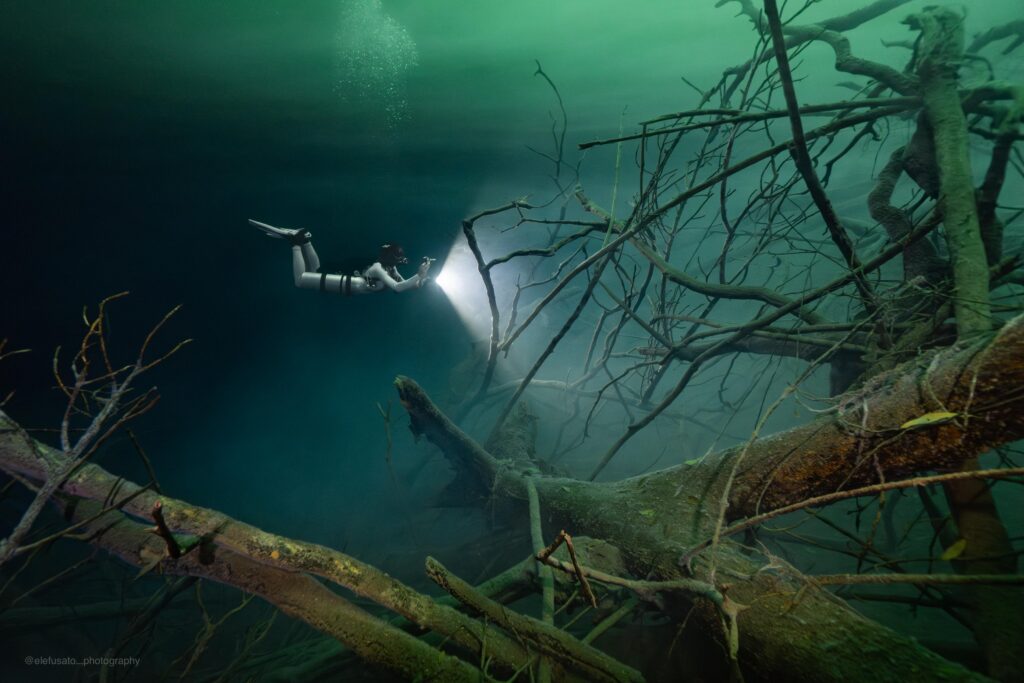
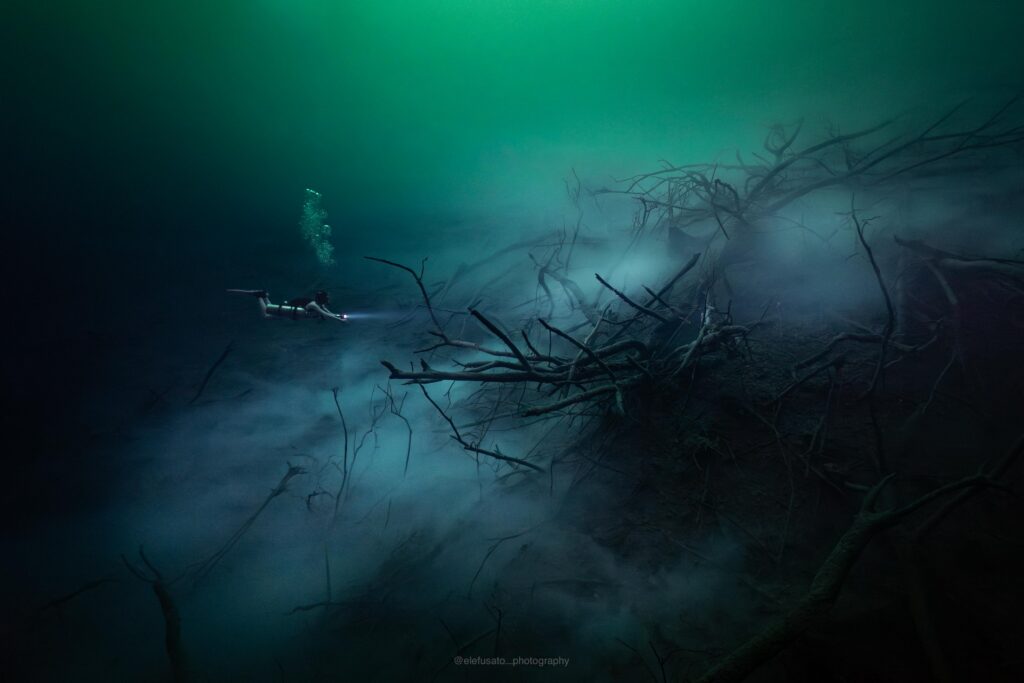
Dive Cenote Yaakun, a remarkable Riviera Maya site combining a vast cavern, dramatic light effects, a halocline, a hydrogen sulfide cloud and extraordinary underwater scenery.
Cenote Yaakun is one of the Riviera Maya’s lesser-known cenote diving sites. Away from the busiest routes, it attracts experienced divers with its immense cavern, natural light effects, pronounced halocline and spectacular hydrogen sulfide cloud.
Its Maya name means “to love.” Beyond its appeal as a dive site, Yaakun is now the subject of an underwater archaeological research project led by Mexico’s National Institute of Anthropology and History (INAH). Human and animal remains and Maya ceramic vessels have been documented in deep areas between approximately 42 and 53 metres. These protected areas are accessible only to authorised technical divers and archaeologists and are not part of the recreational cavern route.
Essential Information
Location
Near Playa del Carmen – Riviera Maya, Mexico
Travel time from Playa del Carmen
Approximately 35–40 minutes, depending on the departure point and road conditions.
Depth
The recreational cavern dive generally reaches 20–25 metres, with a maximum planned depth of approximately 30 metres. The cenote reaches a total depth of about 80 metres, while the protected archaeological areas documented by INAH lie between approximately 42 and 53 metres and are not included in recreational dives.
Water temperature
Approximately 25°C / 77°F
Visibility
Excellent in stable water layers, with temporarily reduced visibility while crossing the halocline and hydrogen sulfide cloud.
Recommended minimum certification
Advanced Open Water Diver with excellent buoyancy control and appropriate recent diving experience.
Type of dive
Guided cenote diving along a cavern route that remains within the natural daylight zone.
Average dive time
Approximately 45–60 minutes.
Dive Availability
Cenote Yaakun is offered by Halocline Explorers when access and diving conditions are suitable.
Because archaeological research is ongoing, deep research areas are strictly protected and access may be regulated. Recreational cavern dives follow only the authorised route and never enter these archaeological zones.
Discover Cenote Yaakun
From a broad opening surrounded by jungle, divers enter an immense cavern filled with natural light.
The route gradually descends toward deeper water, where a pronounced halocline appears before the spectacular hydrogen sulfide cloud. Submerged tree branches rise through this pale layer, creating one of the Riviera Maya’s most striking underwater landscapes.
The vast spaces, clear water and natural light give Yaakun a distinctive atmosphere. Although some features recall the famous deep cenotes of the Riviera Maya, Yaakun retains a unique identity and remains far less crowded than many better-known sites.
Why Dive Cenote Yaakun?
Yaakun offers an experience very different from the Riviera Maya’s busiest cenotes.
Its main attraction is the combination of several natural phenomena:
- a vast cavern;
- beautiful natural light effects;
- a pronounced halocline;
- a hydrogen sulfide cloud;
- submerged trees and branches;
- a wild, secluded atmosphere.
The site also has major scientific value. INAH archaeologists are studying possible ancient human and animal remains and Maya ceramic vessels found in the deeper parts of the cenote. These discoveries are not located along the recreational route and are strictly protected.ndeurs du cénote. Ces découvertes ne sont pas situées sur le parcours loisir et sont strictement protégées.
What to Expect During Your Dive
After the safety briefing, your guide explains the route, communication procedures and the site’s specific characteristics.
The dive begins inside a broad, brightly lit cavern before gradually progressing toward deeper water.
Divers then cross a pronounced halocline before observing the spectacular hydrogen sulfide cloud and submerged branches emerging from the pale layer.
During the ascent, the immense cavern and beams of light passing through the cenote opening can be appreciated once again.
Total dive time is generally between 45 and 60 minutes, depending on gas consumption, conditions and the agreed dive profile.
What Makes Cenote Yaakun Unique?
Yaakun combines several features rarely experienced in a single cenote:
- an immense cavern;
- a pronounced halocline;
- a hydrogen sulfide cloud;
- submerged trees and branches;
- excellent visibility outside the mixing layers;
- a site that remains relatively uncrowded;
- important archaeological research in protected deep areas.
Advice From Your Guide
Yaakun rewards divers with excellent buoyancy, trim and finning control.
When crossing the halocline and approaching the hydrogen sulfide cloud, calm and controlled movement helps preserve visibility for the entire group.
The deep archaeological areas are strictly protected and are not part of the recreational cavern route. Respecting these restrictions is essential to preserve the site and support the scientific research currently under way.
Frequently Asked Questions
What Is Cenote Yaakun Known For?
Yaakun is known for its immense cavern, hydrogen sulfide cloud, natural light effects, pronounced halocline and the archaeological discoveries documented in its deeper areas.
How Deep Is the Yaakun Cenote Dive?
The recreational cavern route generally reaches 20–25 metres, with a maximum planned depth of approximately 30 metres. Yaakun reaches a total depth of about 80 metres, while the archaeological remains documented by INAH lie between approximately 42 and 53 metres.
Can Divers See a Halocline?
Yes. A pronounced halocline can be observed before reaching the hydrogen sulfide cloud.
Is This Dive Suitable for Open Water Divers?
Halocline Explorers requires at least an Advanced Open Water certification, excellent buoyancy control and appropriate recent diving experience for Cenote Yaakun.
Does the Dive Enter a Cave?
No. The recreational dive follows a cavern route and remains within the natural daylight zone. Entering the cave system beyond the cavern limit requires specific cave diving certification and is not part of this excursion.
Why Has Cenote Yaakun Recently Attracted Attention?
INAH is conducting an archaeological research project after possible ancient human and animal remains and Maya ceramic vessels were documented in protected deep areas of the cenote. The research findings remain preliminary and further study is planned.
Why Choose Halocline Explorers?
At Halocline Explorers, we organise Cenote Yaakun dives in small groups to protect the quality of the experience and respect this remarkable environment.
Our detailed briefings help divers understand the geological and hydrological phenomena encountered during the dive, as well as the importance of the archaeological research currently taking place in the cenote’s protected deep areas.
Our priority is to help you discover Yaakun under the best possible conditions, with professional guidance and a responsible approach to this exceptional site.




Discover Cenote Yaakun With Halocline Explorers
With its immense cavern, pronounced halocline, spectacular hydrogen sulfide cloud and exceptional scientific importance, Cenote Yaakun is one of the Riviera Maya’s most distinctive cenote dives.
Contact Halocline Explorers to explore this lesser-known site in a small group with a professional guide.