
Chaac Mool Cenote (Little Brother) – Complete Cenote Diving Guide near Playa del Carmen
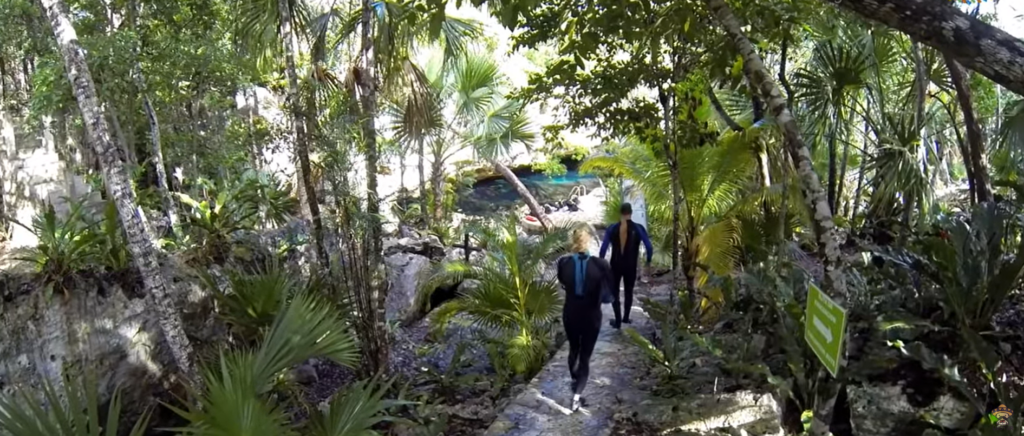
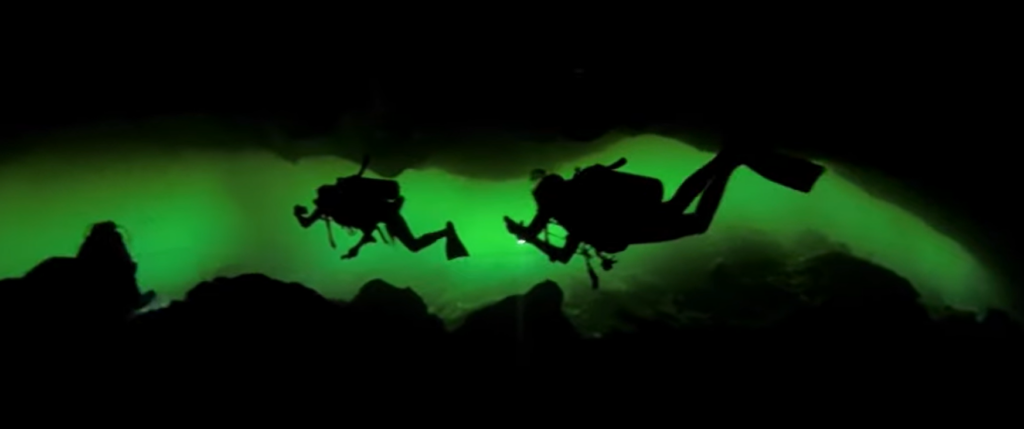
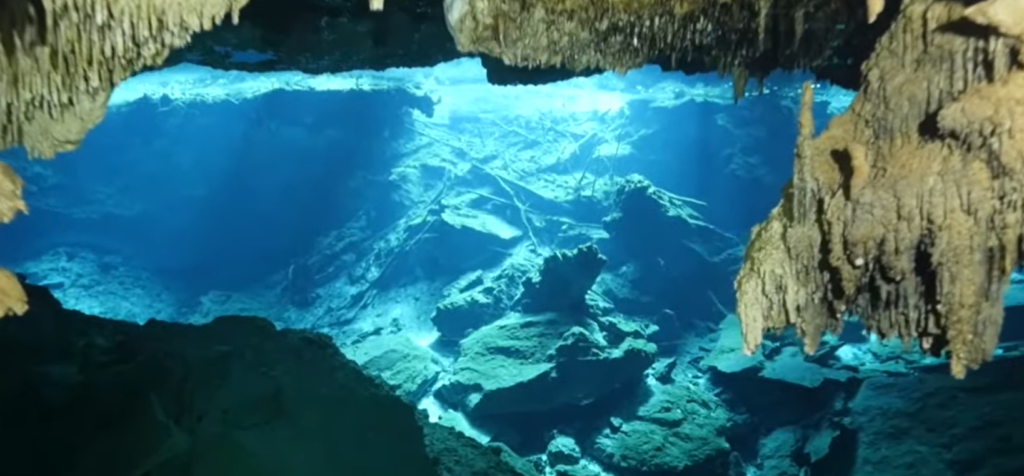
Cenote Chaac Mool is one of the most renowned cenote diving sites in the Riviera Maya. Located only about 40 minutes from Playa del Carmen, it attracts divers from around the world with its spectacular sunlight effects, striking halocline and vast galleries filled with exceptionally clear water.
The Little Brother route is one of the finest introductions to cavern diving in the region. Its impressive spaces, numerous natural openings and limestone formations create an unforgettable experience while keeping recreational divers within the natural daylight zone.
Popular with underwater photographers and divers discovering Mexico’s cenotes for the first time, Chaac Mool offers a spectacular journey through one of the Yucatán Peninsula’s most fascinating environments.
Essential Information
Location
Puerto Aventuras – Riviera Maya, Mexico
Travel time from Playa del Carmen
Approximately 40 minutes
Depth
Between 8 and 14 metres
Water temperature
24–25°C throughout the year
Visibility
Exceptional, often exceeding 30 metres
Minimum recommended certification
Open Water Diver with good buoyancy control. Advanced Open Water certification is recommended to make the most of the site.
Type of diving
Cenote diving along a cavern route within the natural daylight zone
Average dive duration
45–60 minutes
Discover Cenote Chaac Mool
The Chaac Mool system forms part of the extensive underground networks characteristic of the Riviera Maya. It offers a spectacular environment combining large chambers, limestone formations and passages illuminated by natural daylight.
The Little Brother route begins at a discreet entrance before gradually opening into a vast underground world. Several natural openings allow sunlight to penetrate the galleries throughout the dive, creating an atmosphere that changes with the time of day.
The combination of freshwater, saltwater and natural light makes Chaac Mool one of the most photogenic cenotes in the Riviera Maya.
Why Dive at Cenote Chaac Mool?
Chaac Mool is especially appreciated for the variety of its underwater scenery.
Within just a few minutes, divers encounter wide galleries, richly decorated ceilings, beautiful sunlight effects and a frequently spectacular halocline that completely transforms their perception of the surroundings.
Its spacious passages and exceptional visibility make the dive comfortable while providing a genuine introduction to the fascinating world of Mexico’s cenotes.
Your Dive Experience
The dive begins at one of the entrances to the Chaac Mool system, where the crystal-clear water immediately reveals the first limestone formations. After a short distance, the passages gradually open into vast chambers illuminated by natural daylight.
Following the permanent guideline, you move through beautiful passages decorated with stalactites, stalagmites and limestone columns formed over thousands of years.
One of the most memorable moments is crossing the different layers of water. Depending on the day’s conditions, the meeting of freshwater and saltwater can produce a spectacular halocline, creating a unique visual effect that makes the entire underwater landscape appear to shimmer.
Depending on the time of day and weather conditions, sunlight enters through the natural openings and creates some of the most impressive light beams in the Riviera Maya.
The dive generally lasts between 45 minutes and one hour, depending on the group’s air consumption and the conditions on the day.
What Makes Cenote Chaac Mool Unique?
Chaac Mool is considered one of the best cenotes in the Riviera Maya for observing several natural features associated with the Yucatán’s karst systems during a single dive.
Its large, illuminated galleries reveal remarkably well-preserved limestone formations, while the numerous natural openings produce powerful sunlight beams that are especially popular with underwater photographers.
A clearly defined halocline is frequently present, adding another dimension to the exploration through the remarkable visual effects created where freshwater and saltwater meet.
This unique combination of sunlight beams, spacious galleries, halocline and exceptional visibility makes Chaac Mool one of the Riviera Maya’s most iconic cenote dives.
Tips from Your Guide
Chaac Mool reveals very different atmospheres depending on the time of day. Take time to observe the sunlight beams, the effects of the halocline and the details of the limestone formations that have made the site internationally famous.
Maintain excellent buoyancy to protect the limestone formations and preserve optimal visibility for the entire group.
Although the Little Brother route is accessible to recreational divers, parts of the route are under an overhead environment and the dive must always be conducted with a qualified professional cavern guide.
Frequently Asked Questions
Is Cenote Chaac Mool suitable for Open Water Divers?
Yes, provided that the diver has good buoyancy control and is accompanied by a qualified professional cavern guide.
What is the maximum depth?
The route generally ranges from 8 to 14 metres.
Why is Chaac Mool famous?
It is renowned for its beautiful sunlight beams, spectacular halocline, spacious galleries and crystal-clear water.
Can you see a halocline?
Yes. Depending on the day’s conditions, Chaac Mool is one of the best cenotes in the Riviera Maya for observing this natural phenomenon.
Is underwater photography allowed?
Yes. The sunlight effects and exceptional visibility make it a favourite site for underwater photographers. Any applicable cenote photography rules or fees must be respected.
Does the route enter a cave?
No. The recreational Little Brother route remains entirely within the cavern zone, where natural daylight is always visible. Cave diving beyond the daylight zone requires specific cave diving certification.
Can you dive here throughout the year?
Yes. Conditions remain excellent year-round, with a stable water temperature and generally outstanding visibility.
Why Choose Halocline Explorers?
At Halocline Explorers, we organise dives in small groups so that you can discover Cenote Chaac Mool in the best possible conditions of safety, comfort and tranquillity.
Our specialised guides adapt each trip to the divers’ experience and the conditions on the day, allowing you to fully enjoy the sunlight beams, halocline and remarkable limestone formations for which Chaac Mool is known.
Our goal is to provide an authentic, personalised experience that respects this fragile environment while applying demanding safety standards.
What Our Divers Say
For several years, Halocline Explorers has guided divers from around the world through some of the most beautiful cenotes in the Riviera Maya.
Their feedback reflects our commitment to personalised experiences, small groups and professional guidance on every dive.




Book Your Dive at Cenote Chaac Mool
With its impressive galleries, spectacular halocline, beautiful sunlight effects and crystal-clear water, Cenote Chaac Mool offers one of the finest cenote diving experiences in the Riviera Maya.
Join Halocline Explorers and discover why Chaac Mool is considered an essential site for exploring Mexico’s cenotes.
Whether this is your first cenote dive or another Riviera Maya adventure, Chaac Mool offers a spectacular journey through one of the region’s most iconic cavern systems.
Rejoignez Halocline Explorers
Notre équipe vous accompagne pour vivre une expérience sûre, personnalisée et inoubliable.
Cénotes • Cozumel • Playa del Carmen • Plongée technique • Formations IANTD
Petits groupes. Sécurité maximale. Encadrement professionnel.
Join Halocline Explorers
Our experienced team provides safe, personalized, and unforgettable diving experiences.
Cenotes • Cozumel • Playa del Carmen • Technical Diving • IANTD Training
Small groups. Maximum safety. Professional instruction.
Únete a Halocline Explorers
Nuestro equipo te acompaña para vivir una experiencia segura, personalizada e inolvidable.
Cenotes • Cozumel • Playa del Carmen • Buceo técnico • Formación IANTD
Grupos reducidos. Máxima seguridad. Atención profesional.